Build Your First AI Marketing Assistant With Hermes Agent
The setup is the easy part. The context is the part everyone skips.
A few months ago, I thought the answer was more agents.
More roles. More automations. More scheduled jobs. More little AI employees running around my Mac Mini doing whatever little AI employees do when I'm asleep.
That instinct cost me 45+ hours, a lot of late nights, and at least a few moments where I genuinely wanted to throw the whole setup in the trash.
Here's the punchline.
If I were helping you start today, I would not tell you to build an AI company.
I would tell you to build one marketing assistant that actually knows your business.
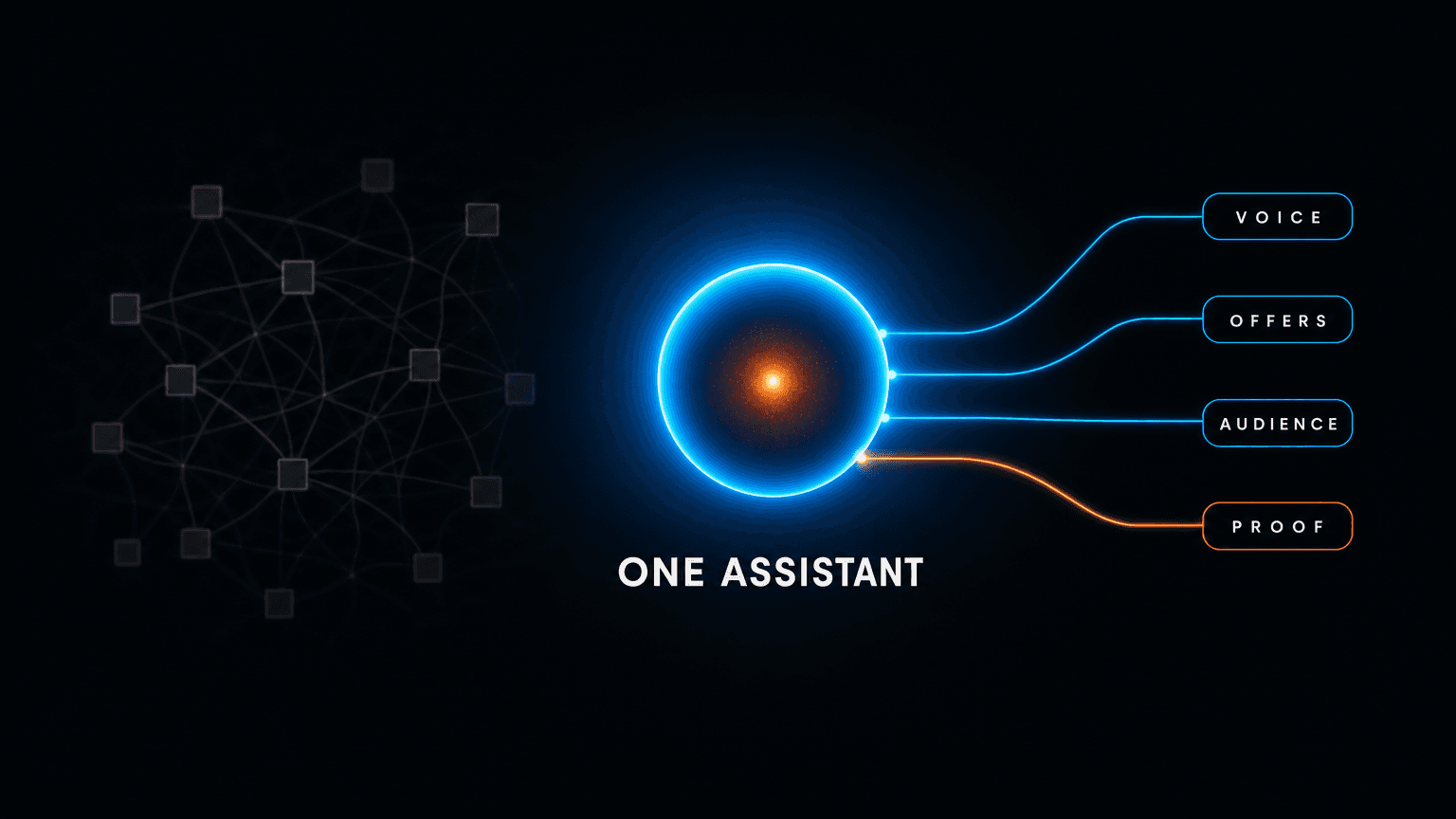
One assistant. One workflow. One place where your voice, offers, audience, stories, and process live.
Because the mistake most people make with AI is not picking the wrong model.
It's walking up to a blank chatbot, typing "write me a newsletter," and expecting it to magically understand ten years of context it has never seen.
Of course the output sounds generic.
You gave it nothing to work with.
How we got here
Two weeks ago, I gave you the field report on 13 weeks with my AI team.
That was the ugly one.
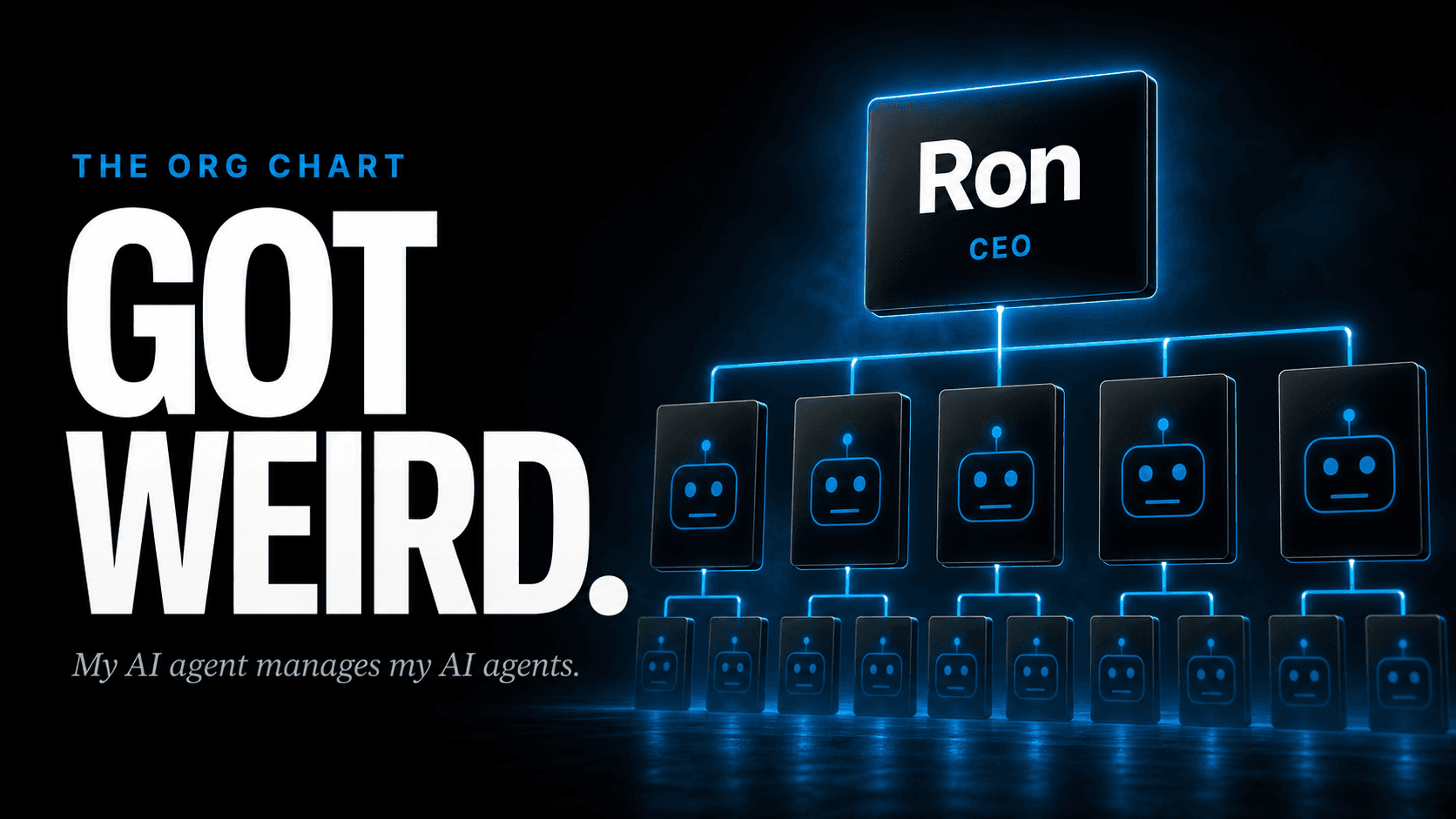
The 13-agent Frankenstein. The OpenClaw memory problems. The gateway crashes. The 45-hour setup. The C+ stress test. Ron getting promoted to CEO because Hermes was the first thing that actually felt like it remembered what the hell was going on.
Last week, I showed you the one-day Hermes workflow I'd build if I were starting over.
One agent. One content workflow. One day to get the first version working.
This week is the missing piece.
What do you actually feed Hermes so it becomes useful?
Because installing Hermes is not the hard part. The Nous Research team made the setup pretty straightforward. Pick where it lives. Pick a model. Pick a chat surface. Connect the basics.
That's plumbing.
The thing that turns Hermes from "another AI tool" into a marketing assistant you can actually use is context.
Your business. Your audience. Your offers. Your voice. Your proof. Your weird opinions. Your stories. Your constraints. The things you would never say. The things only you would say.
That's your Brand DNA.
And if Hermes does not have it, you are going to get the same beige AI slop everyone else gets.
A quick word on which model to use
People love to get stuck here. So let me answer it before we go any further.
Hermes connects to your model via OAuth or API. The OAuth options right now are ChatGPT and SuperGrok. That's it. If you want Claude, you're going through the API directly or through OpenRouter.
Here's how I'd think about it:
Already pay for ChatGPT? Use it. $20 Plus, $100 Business, or $200 Pro... whatever you're on works fine. (I'm on the $200 plan. Almost certainly overkill for most people. I have a problem.) OAuth in, done in five minutes.
Want Claude? Get an OpenRouter account. Takes five minutes. You pay per use instead of a flat subscription. If you go this route, use Sonnet 4.6. It's the best price-to-quality ratio for this kind of work and writes better than the alternatives.
Don't have any of the above? OpenRouter with Sonnet 4.6. Easiest entry point, lowest commitment, best output.
That's the whole decision. Move on.
The generic AI trap
Here's the fastest way to understand why context matters more than the model you pick.
Open any AI tool and type:
Write me a newsletter about AI marketing automation.You already know what comes back.
Something about "streamlining your workflow," "unlocking productivity," "leveraging AI-powered tools," and "staying ahead in today's fast-paced digital landscape."
Kill me.
It's not wrong exactly. That's the annoying part. The sentences are usually coherent. The grammar is fine. The structure makes sense.
But it has no pulse.
No scar tissue. No specificity. No reason for anyone to believe it came from you.
Now compare that to a prompt like this after Hermes knows your business:
Turn my idea about starting with one Hermes marketing assistant into a newsletter brief.

Use my story about trying to build a 13-agent OpenClaw system, spending 45+ hours getting it partially functional, giving the stress test a C+, and eventually promoting Ron because Hermes actually remembered what I taught it.

Make the core lesson: don't start with tools, models, or a pile of agents. Start with one assistant trained on your Brand DNA and one workflow that saves real time.

Connect it to the previous two issues in this series. Bridge naturally to Magnetic Brand System without making the whole thing feel like an ad.

Give me:
- a hook;
- the core thesis;
- the section outline;
- the stories/proof to include;
- the CTA;
- social angles;
- and a YouTube outline.
Different animal.
Now Hermes isn't guessing from the internet's average opinion about AI marketing.
It's using your actual experience. Your prior content. Your offers. Your language. Your proof.
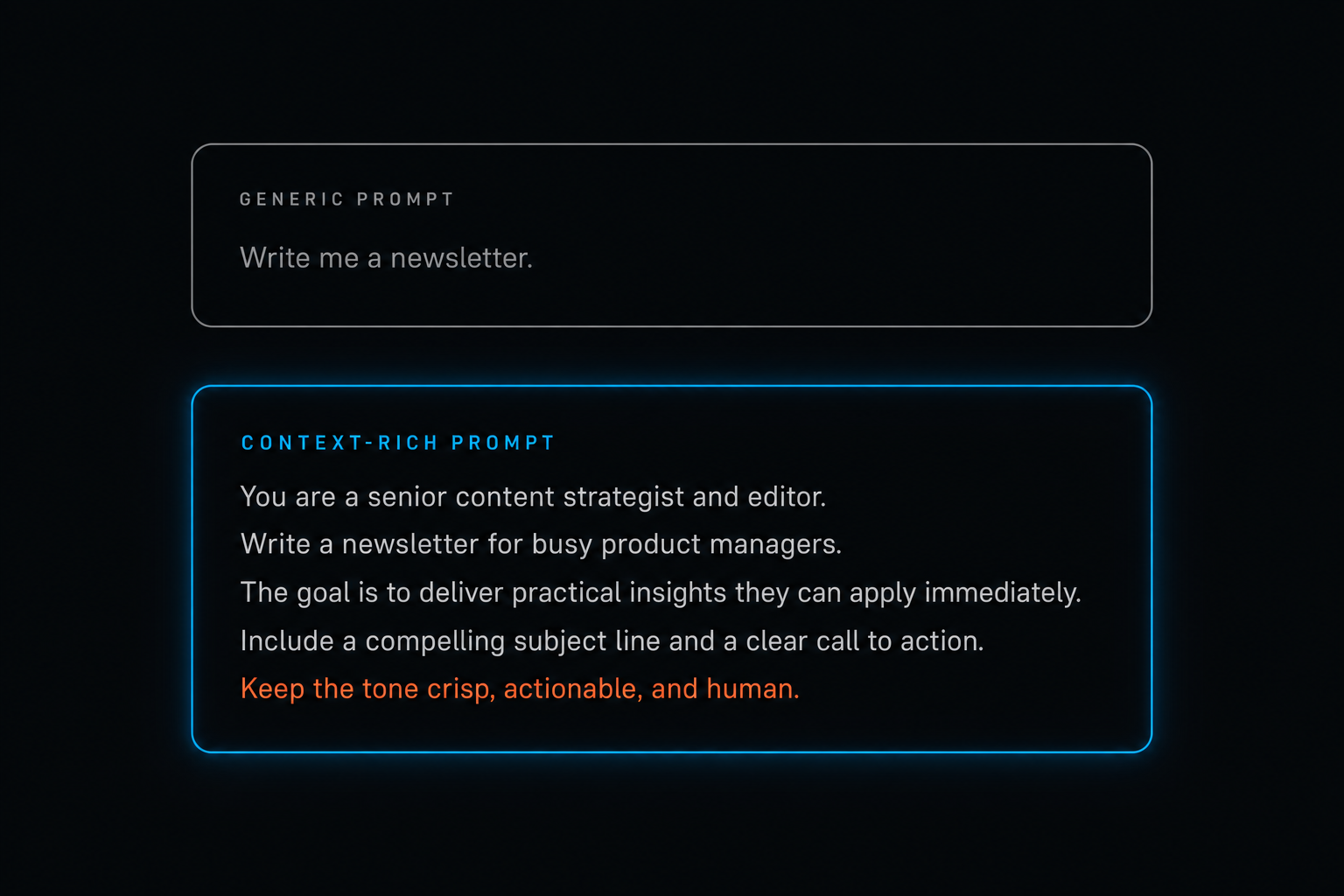
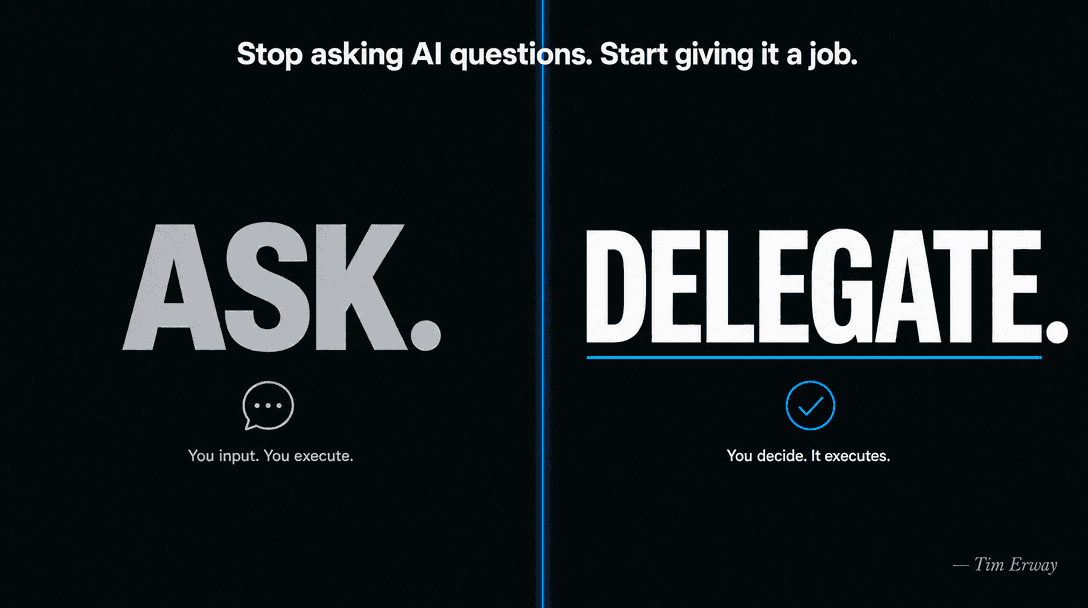
That's the difference between a chatbot and an assistant.
A chatbot completes text.
An assistant understands the job.
What I'd give Hermes before anything else
Forget connecting a dozen apps. Forget the 47-page corporate brand bible. You don't need any of that to start.
What you need is enough about the business that Hermes can stop making generic recommendations.
Here's the short version of what to load in first:
What the business does. Plain English. Who you help and what result you help them get.
Who the audience actually is. Not "entrepreneurs." Be specific. Coaches with an audience but no backend offer. Consultants who need better lead flow. Whatever the actual person looks like.
What you sell. Offers, prices, delivery, what makes it different.
3-5 pieces of your best content. Newsletters, posts, emails, sales pages... the stuff that actually sounds like you.
Content you hate. This matters more than people think. The phrases, hooks, formats, and tones you never want to sound like.
Your proof. Real stories. Real numbers. Real client wins. No fake testimonials. No invented case studies. Ever.
Your CTA. Where attention should go. A lead magnet, a sales page, an application, a waitlist. Something specific.
That's the foundation. Everything else can be added later.
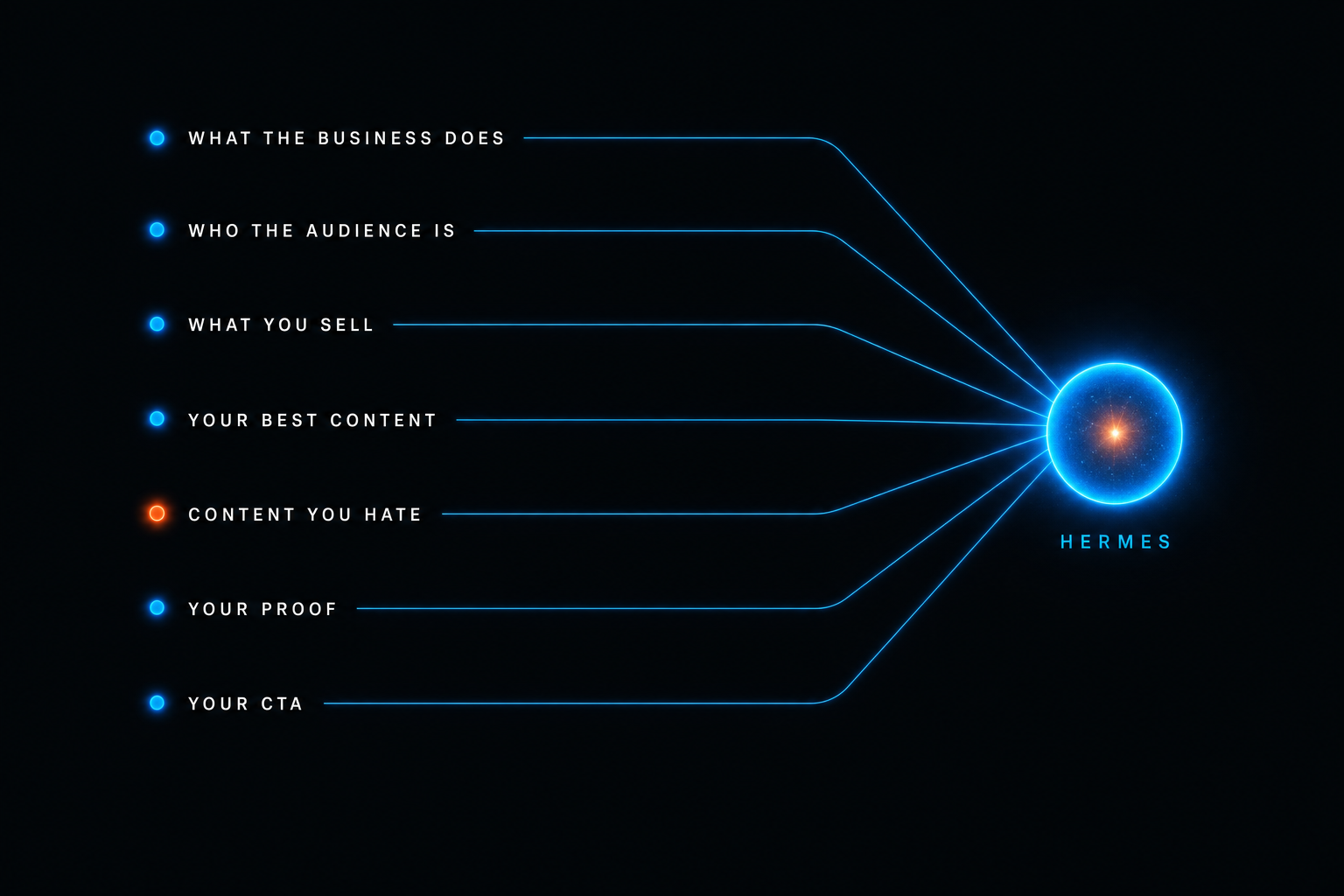
When Hermes has that, the briefs get sharper, the social angles stop sounding like motivational quote sludge, and the YouTube outlines start with the actual hook instead of three minutes of throat-clearing.
And when it gets something wrong, you correct it once and tell Hermes to remember the correction.
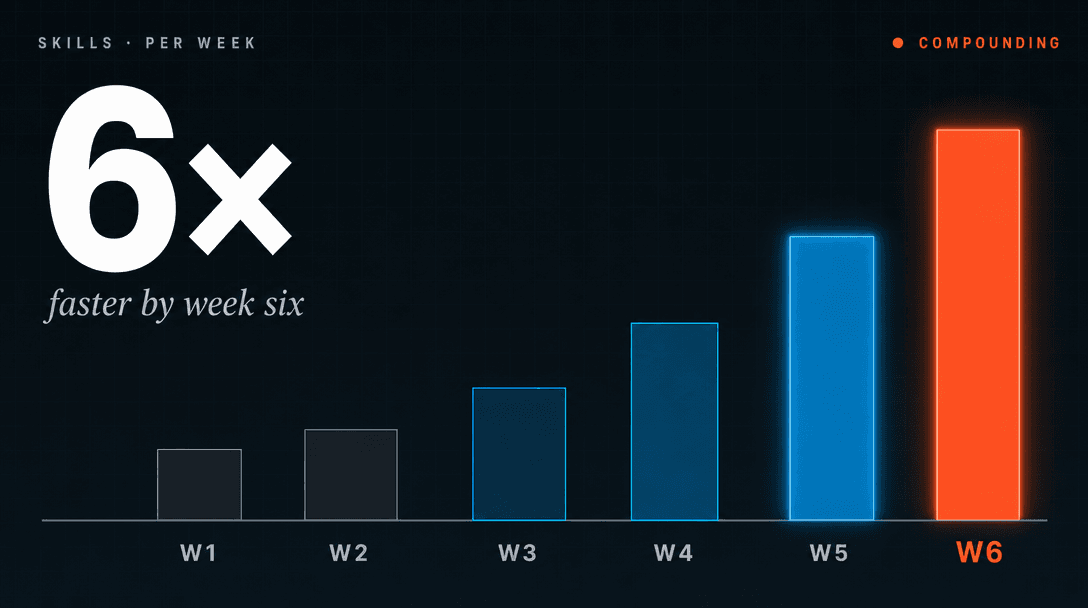
That's where the compounding starts.
Let Hermes interview you
You don't have to sit down and write all of this from scratch.
In fact, I wouldn't.
I'd let Hermes pull it out of you.
Copy this into your first real conversation with your marketing assistant:
Interview me to identify the highest-leverage marketing workflows in my business.

Ask one question at a time.

First, learn:
- who I help;
- what problem I solve;
- what I sell;
- my core offers and prices;
- how people currently buy from me;
- what content I publish;
- which channels matter most;
- what content has worked in the past;
- what content I hate;
- what my voice sounds like;
- what proof or stories I can actually use;
- what repetitive marketing tasks I do every week;
- where I waste the most time;
- what bottlenecks slow down revenue;
- and what I would hand to a human marketing assistant if I had one.

After the interview, summarize my Brand DNA in a reusable profile.

Then rank my top 5 marketing workflow opportunities by:
1. time saved;
2. revenue impact;
3. ease of implementation;
4. risk if the task goes wrong;
5. how clearly I can judge whether the output is good.

Finally, recommend the first workflow I should build with you.

Keep the recommendation practical. I want one workflow I can teach you this week, not a giant automation fantasy map.
Then answer the questions like a normal person.
Don't try to sound impressive. Don't write brochure copy. Just tell the truth.
"My offer is messy."
"My newsletter is inconsistent."
"I have 40 half-written ideas in Apple Notes."
"I spend two hours turning a voice memo into something usable."
"I know LinkedIn would work for me, but I hate writing LinkedIn posts because everyone there sounds like they were assembled in a lab."
That's the good stuff.
That's what your assistant needs.
A quick reality check before we keep going
I want to manage expectations here.
Even with all the right context loaded in, your first few drafts are going to suck.
I learned this with Murray. I had voice samples. I had a brand voice guide. I had years of newsletters. I dumped everything into the project.
The first draft came back sounding like a LinkedIn thought leader on his third coffee.
"In today's rapidly evolving landscape..."
"Here's the thing..."
Rhetorical questions everywhere.
I almost killed the whole project right there.
But that's where most people quit. They get a generic first draft and assume the AI just can't do it. So they go back to writing everything themselves. Or worse, they publish the slop.
What you actually have to do is what I covered in How To Make AI Write Exactly Like You. Smack it around. Tell it what's wrong. Be specific. Be ruthless. Then tell it to remember the correction.
"That intro is too soft. Start with the 45-hour OpenClaw mistake."
"I'd never say 'unlock your potential.' Kill phrases like that permanently."
"This rhetorical question is AI slop. Direct statement instead."
Then:
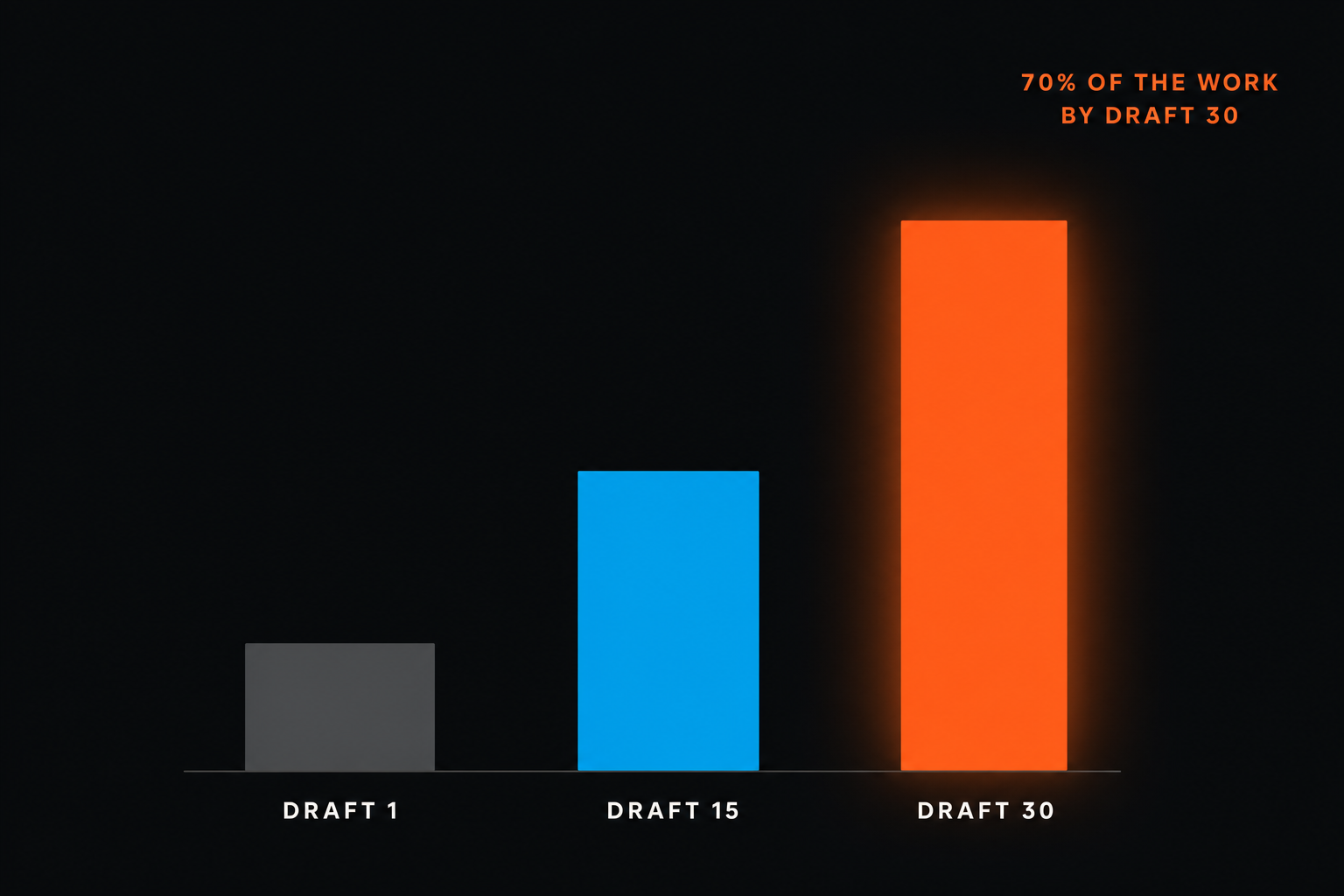
Remember these corrections and update the newsletter drafting skill so future drafts follow them.That's the loop. The first ten drafts are training data. By draft fifteen, it's catching the patterns before you have to flag them. By draft thirty, it's doing 70% of the work.People who quit at draft three never see this happen and assume AI just sucks.
It doesn't. It just needs reps. Same as a new hire.
Your first real workflow
For most creators, consultants, coaches, and small business owners, I'd start with content.
Not because content is the only thing Hermes can do.
Because content is where most people already have the raw material and the bottleneck is obvious.
You have ideas. You have opinions. You have stories. You probably have voice memos, half-finished notes, old posts, call recordings, client questions, screenshots, and random thoughts you never turned into anything.
The problem is turning all of that into finished assets without spending half your week staring at a blank page.
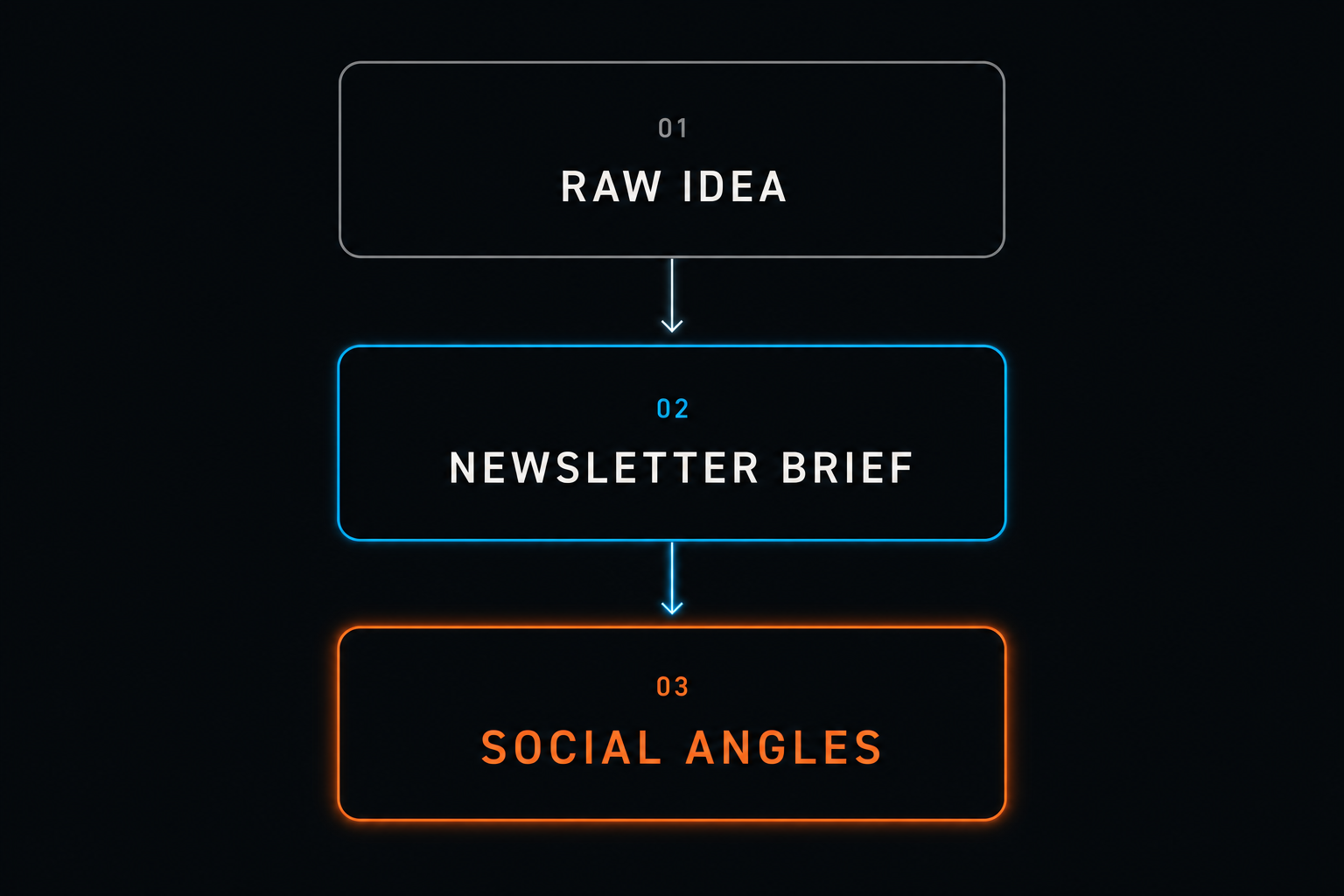
So the first workflow I'd build is this:
Raw idea → newsletter brief → social angles
Step 1: Drop in the raw idea
Don't overthink it.
Paste a voice memo transcript. A few bullet points. A client question. A rant. A half-formed thought you captured while walking the dog.
Something like:
I keep seeing people try to build huge AI agent teams before they have one useful workflow. I think the smarter move is to build one marketing assistant, train it on Brand DNA, and have it help with content first.Good enough.
Step 2: Ask Hermes to find the angle
Find the strongest newsletter angle from this idea.

Give me 5 possible angles.
For each one, include:
- the hook;
- the promise;
- why my audience would care;
- what personal story or proof I should use;
- and what CTA it naturally leads to.

Use my Brand DNA and previous content as context.
Pick the one that feels strongest.
Not the most clever. The one you can actually support with experience.
Step 3: Ask for the brief
Build a newsletter brief for this angle.

Include:
- working title;
- one-sentence thesis;
- opening hook;
- section-by-section outline;
- key stories/proof to include;
- prior content I should link to;
- CTA / offer bridge;
- subject line options;
- preview text options;
- and notes on what would make the draft sound unlike me.
That last line matters.
I want the assistant looking for voice drift before I have to catch it myself.
Step 4: Draft from the brief
Write the first draft from this brief.

Use my voice samples.
Use specific stories and examples.

Make it useful enough that someone can take action immediately.

Double check the draft for obvious AI language or patterns.
It won't be perfect. Mine still aren't.
But now you're editing something with bones instead of trying to summon a finished newsletter out of thin air.
Massive difference.
Step 5: Repurpose into social
Once the newsletter is close, run the repurposing pass:
From this newsletter, create:

1. Five X post angles.
2. One LinkedIn post draft that does not sound like LinkedIn bro poetry.
3. One short-form video hook.
4. Three title options.

Keep the same core idea, but adapt the format for each platform.
One idea becomes a content package.
Not because the AI is magically brilliant. Because you taught it the business and gave it a repeatable job.
The superpower is not the first draft
I want to be really clear about this.
The win isn't that Hermes writes a perfect newsletter on day one.
It won't.
The win is that Hermes doesn't reset to zero every time you use it.
That's what drove me insane with my earlier setup. It was like teaching someone your business every morning and then watching them get amnesia overnight.
Hermes is different because memory and skills are built into the way it works.
You teach it how you want something done. It remembers. You correct the output. It remembers. You walk it through a process. It can turn that process into a skill.
That means your marketing assistant gets sharper with reps.
Week one, it gives you a decent brief.
Week two, it remembers that you hate generic hooks.
Week three, it starts pulling the right stories without you reminding it every time.
Week four, it knows that if it mentions a prior newsletter, it needs the damn backlink.
That is leverage.
Not magic. Not fully autonomous nonsense. Just a system that gets a little less dumb every time you use it.
Where Magnetic Brand System fits
If you already have your Brand DNA documented, great.
Paste it into Hermes and start there.
Most people don't.
Their audience notes are in one Google Doc. Their offer is buried in a sales page. Their voice examples are scattered across Instagram posts, old emails, and half-finished notes. Their best proof is sitting in screenshots they forgot existed.
Then they wonder why AI sounds generic.
It sounds generic because the good stuff isn't in the system.
That's why I built Magnetic Brand System.
It gives you the Brand DNA foundation once, so you can use it inside Hermes, Claude, ChatGPT, Manus, OpenClaw, or whatever comes next.
Audience. Offers. Voice. Proof. Positioning. Content direction. The raw material your AI needs if you want it to sound like you and not like the internet's average marketing intern.
Whether you build a Hermes assistant or just use Claude and ChatGPT like most people do, the principle is the same.
Garbage in. Garbage out. You already know this.
What I would do this week
Don't make this complicated.
Install Hermes or open the one you already have.
Paste in the interview prompt from this issue.
Answer the questions honestly.
Ask for your top 5 marketing workflow opportunities.
Pick one.
Run the raw idea → brief → draft → social workflow once.
Correct everything that feels off. 8. Tell Hermes to remember the corrections and create or update the skill.
That's it.
You don't need six agents.
You don't need a 19-step automation diagram.
You don't need to connect every app in your business.
You need one useful workflow that saves you time this week.
Then you run it again next week.
And the week after that.
That's how the thing compounds.
What's next
Reply and tell me: what's the first business function you'd automate with a Hermes marketing assistant?
Content? Lead follow-up? Customer support? Research? Sales calls? Onboarding?
I read every reply. The answers help me decide what to build and write about next.
Speaking of next... we're going to talk about Revenue Agents.
That's where this starts getting really interesting.
Because once your assistant understands your business, your audience, your offers, and your content engine, the next logical step is obvious.
Not just content that gets attention.
Content that helps create customers.
Until next time,
—Tim Erway

P.S. If you missed the first two issues in this series, start here: 13 Weeks With My AI Team... Here's What I'd Do Differently, then read The One-Day Hermes Workflow I'd Build If I Were Starting Over. This issue makes a lot more sense with those in the rearview mirror.
P.P.S. A lot of you replied to last week's issue asking for the actual starter prompts. The interview prompt and the five workflow prompts in this issue are exactly that. Steal them. Paste them in. Make them yours. If they save you ten hours this week, do me a favor and reply to tell me which one was the unlock.