I Don't Care Which AI Agent Wins Anymore
Yesterday Anthropic shipped a better model. My business didn't blink.
Yesterday Anthropic shipped Opus 4.8.
I've been testing it since. It's a real jump. Sharper, more honest about what it doesn't know, better at agent work. Anthropic just keeps shipping.
And that should make a lot of AI setups look very fragile.
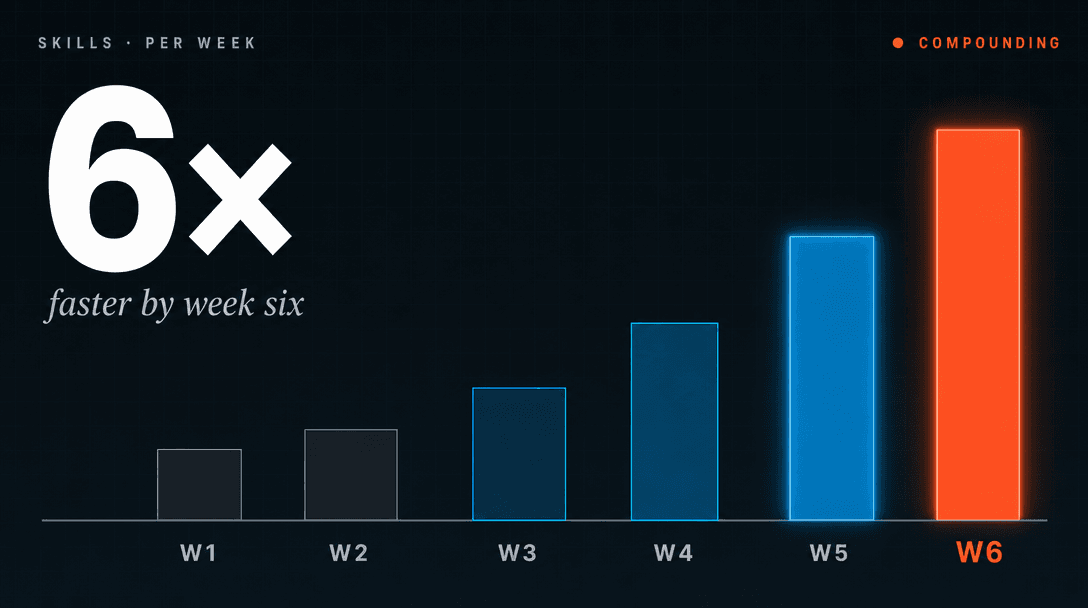
Opus 4.8 landed 41 days after 4.7. Forty-one days. In that same stretch, OpenAI shipped a new Codex and Google pushed Gemini. The whole industry is now running on a six-week clock.
So think about what that means if your whole AI setup is welded to one tool.
The thing you bet the farm on six weeks ago is already the slow option. The annual plan you bought? Half of it will be obsolete before it renews.
A month ago I'd have told you Hermes was the answer. I spent three issues making that case... the field report, the one-day setup, and what to actually feed it.
I was wrong.
Not about Hermes.
About the question.
The tool was never the thing.
Same Brain. Four Different Tools.
Let me show you why I stopped caring which agent wins.
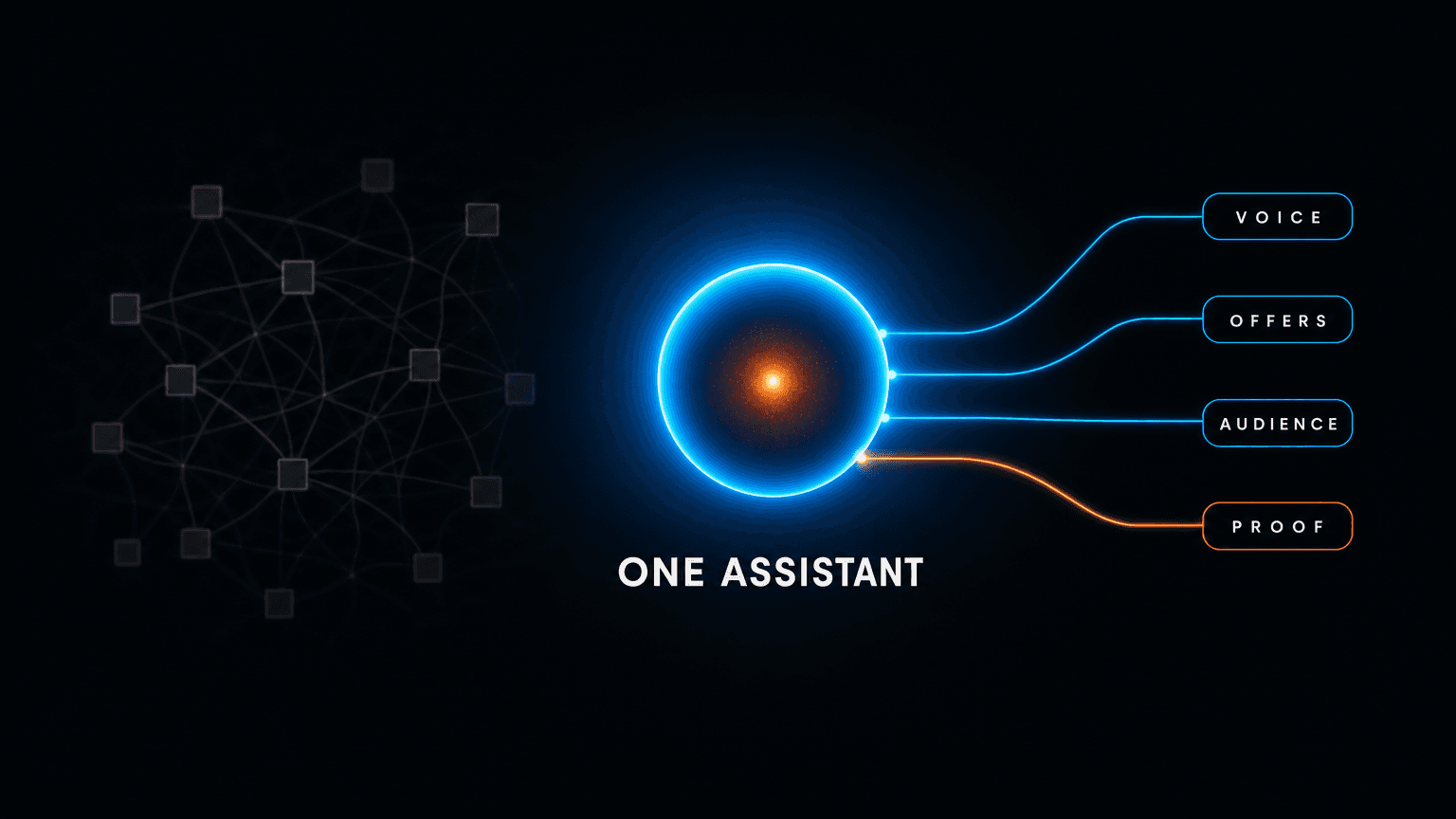
I have one place where my whole business lives.
My audience. My offers. My voice. My stories. My proof. The phrases I'd never say. The lessons from every draft that got killed.
It's a pile of plain markdown files in Obsidian, synced between my workstation and a Mac Mini.
I call it the brain.
Here's what I've actually done with it, not in theory, in practice...
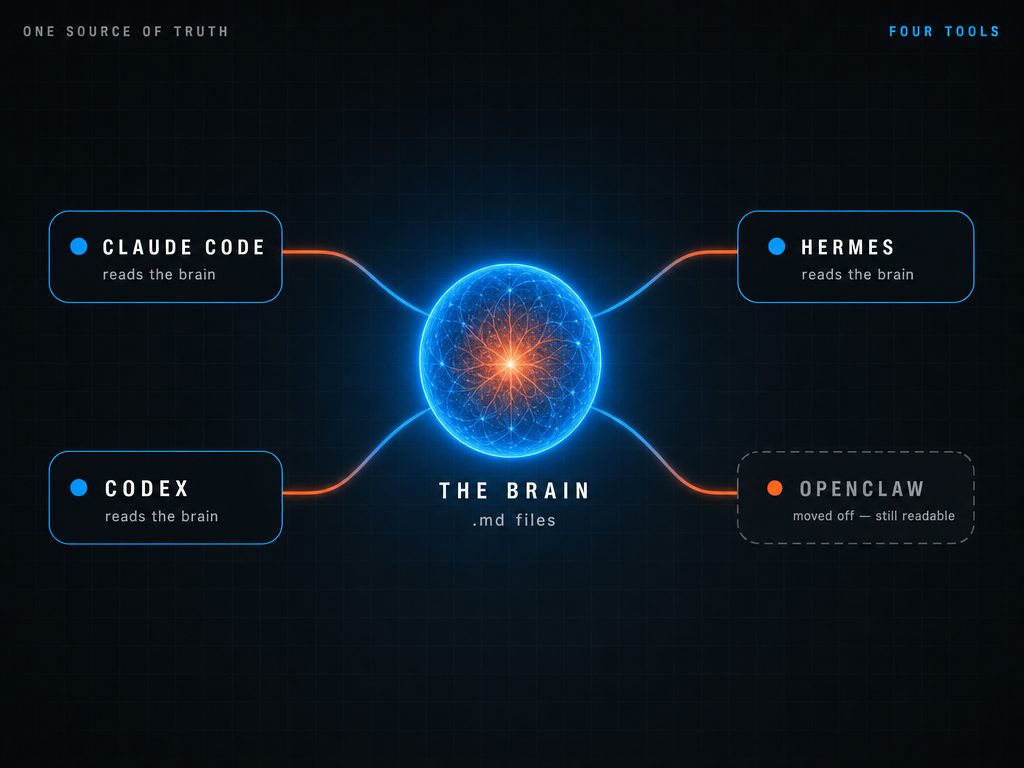
I've pointed Claude Code at that brain.
Great results.
I've pointed Codex at it.
Worked.
I've pointed Hermes at it.
Worked.
I pointed OpenClaw at it for thirteen weeks before the bubble gum and staples finally wore me down.
Four different tools. Two different companies' models. One brain feeding all of them.
The tools fought each other for my attention.
The brain just sat there getting smarter no matter which one was driving.
Annoyingly, it took me thirteen weeks and one migration to see the obvious.
I Moved Off OpenClaw Two Weeks Ago
Quick update for anyone following the saga.
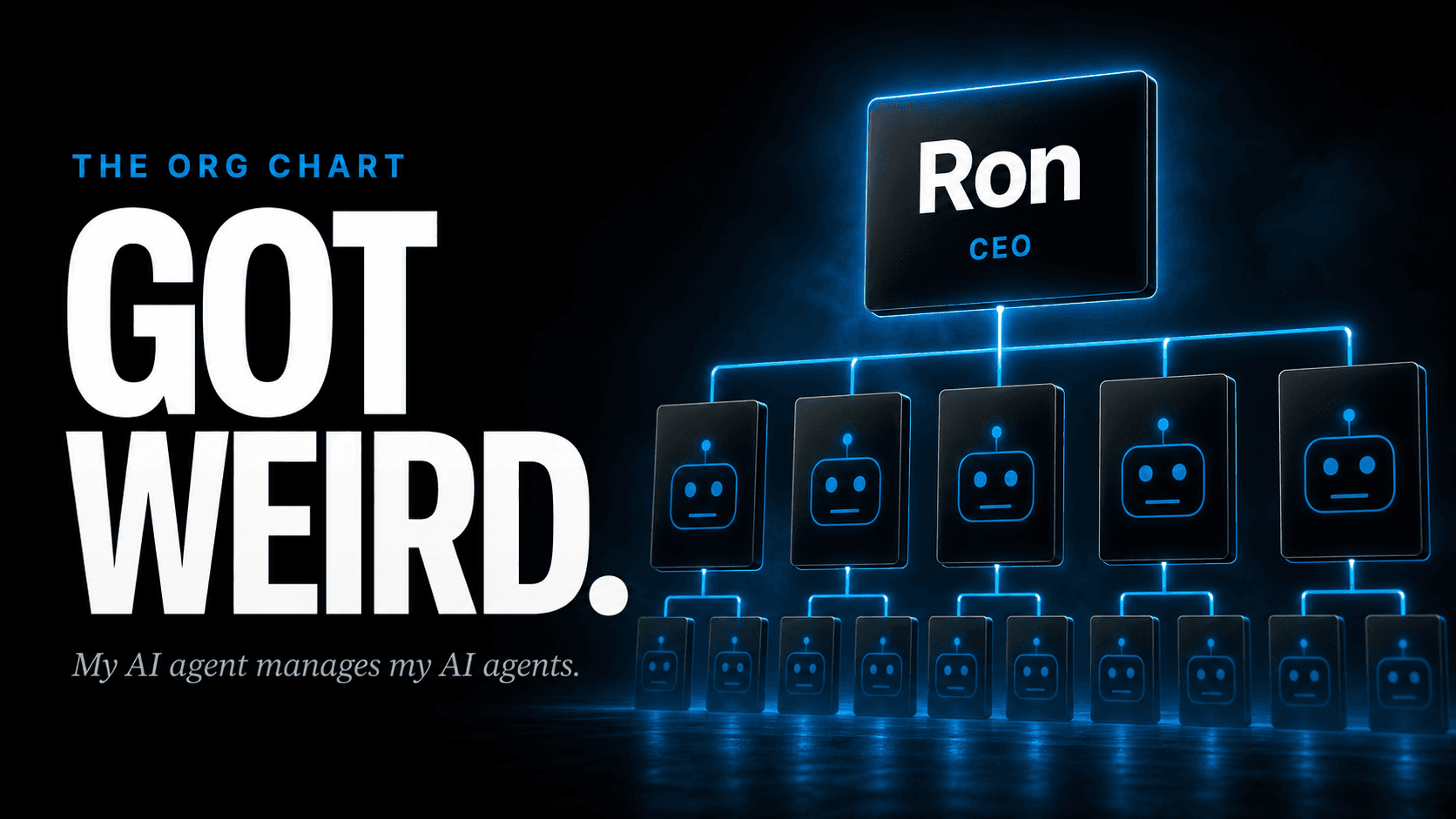
The week before last, I finally ripped the last of my agent setup off OpenClaw and moved it to Hermes. Ron, my Hermes-based supervisor agent, runs the show now.
Here's what I want you to notice about that.
Switching my entire agent system from one harness to another... the thing that should've been a nightmare... was basically a weekend.
Not because I'm some terminal wizard.
Because I wasn't actually moving the valuable part.
The valuable part never lived in OpenClaw.
It lived in the brain.
The files. The workflows. The corrections I'd fed it over thirteen weeks.
I didn't rebuild my business. I pointed a new tool at the same files and turned it on.
A year ago, that same switch would've wiped me out. I'd have lost months. I'd have started over from a blank chatbot, re-teaching everything from scratch.
That's the difference.
And it's the only difference that matters.
Why Switching Tools Terrifies Most People
Most people are scared to switch AI tools.
And they should be, given how they use them.
Here's the typical setup.
You open ChatGPT. You type a prompt. You get a decent-ish answer. You tweak it. You close the tab.
Tomorrow you do it again.
From zero.
The tool remembers nothing. Your voice, your offers, your audience, the correction you made yesterday... gone.
Every session starts at square one.
So when a better tool comes out, you can't move.
Not because moving is hard.
Because there's nothing to move.
All your "context" lived in your own head and a thousand one-off chat windows you'll never read again.
You didn't build an asset.
You rented autocomplete by the hour.
That's why a new model launch feels like pressure instead of a gift. You're not upgrading. You're starting over.
The Brain Is the Business. The Tool Is a Rental Car.
This is the reframe I want to leave you with.
Stop thinking of your AI tool as the thing.
The tool is a rental car. You'll have a different one in six weeks. Maybe you love it. Doesn't matter. You're giving it back.
The brain is the thing.
It's yours.
It comes with you.
And here's what most people miss... the brain doesn't just survive the tool switch. It gets better every single time you use any tool.
I tell Murray an intro is too soft.
That correction gets saved.
Not in Hermes.
In the brain.
A draft uses a phrase I'd never say. I kill it. That lesson goes in the brain. (This is the whole reason the writing sounds like me and not a LinkedIn intern.)
Next week's draft starts ahead of where this week's started. And it'll start there no matter which model is driving... Opus 4.8, whatever ships in July, whatever I haven't heard of yet.
My first newsletter through this system was rough.
Murray's voice was off. The structure was clunky. I spent almost as long editing as I'd have spent writing from scratch.
That was three months ago.
Now most sections need a light touch, not a rewrite.
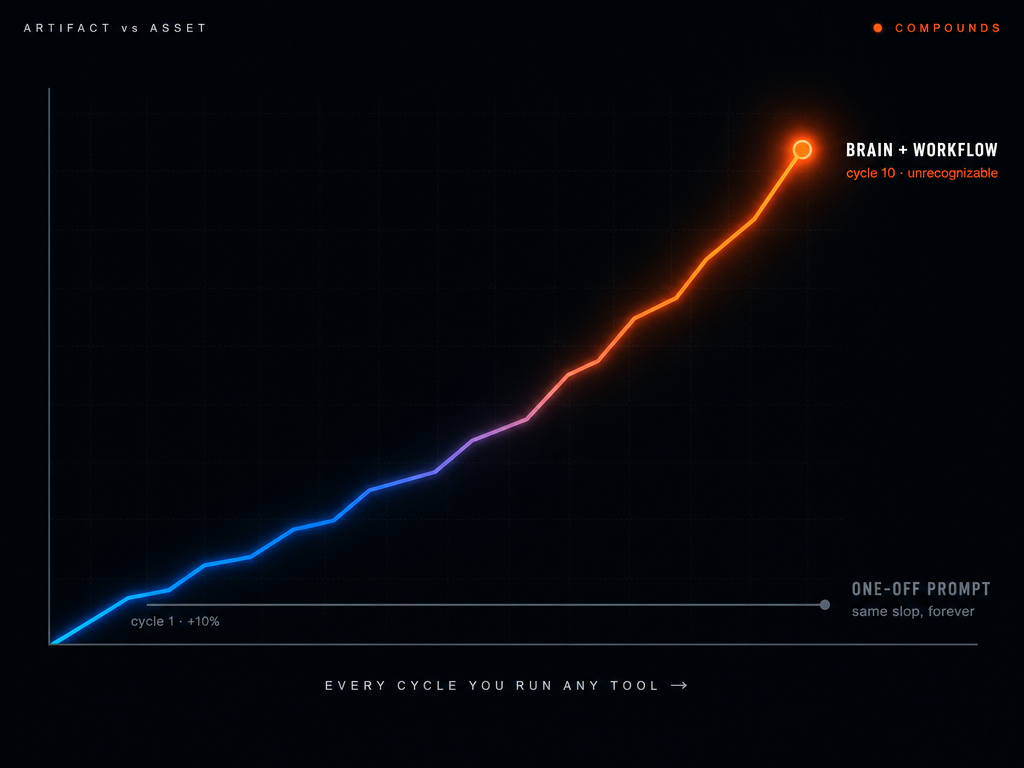
The first cycle was maybe 10% better than just typing a prompt and hitting enter.
The tenth was unrecognizable.
And none of that improvement lived in the tool.
It lived in the brain.
A one-off prompt gives you an artifact.
A brain plus a workflow gives you an asset that compounds.
Completely different animal.
Why Plain Files, Not a Fancy App
People ask why Obsidian.
The answer is boring on purpose.
It's portable markdown.
That's it.
That's the feature.
Claude Code can read it. Codex can read it. Hermes can read it. OpenClaw read it back when I tolerated OpenClaw. The next thing that launches Tuesday will read it too, because it's just text files in folders.
If I'd built my brain inside some slick proprietary AI platform, I'd be trapped in that platform.
The second it fell behind... and on a six-week clock, everything falls behind... I'd be stuck choosing between an obsolete tool and starting over.
Plain files mean I'm never stuck.
The intelligence layer isn't locked inside any tool.
It survives all of them.
That's not a tech preference.
That's survival on a six-week clock.
This Newsletter Proved It Again
The thing you're reading right now went through the brain.
Started as a conversation.
Became a brief that referenced past lessons sitting in the vault.
Murray drafted it pulling from the same voice files and corrections every prior issue trained.
I edited against a taste file, not a blank page.
Then yesterday, mid-process, Opus 4.8 dropped.
I swapped the model.
The brain didn't care. The files didn't change. The workflow didn't change. I just got a sharper engine reading the same source of truth.
That's the test.
If a better model can drop in the middle of your week and your business doesn't flinch... you built the right thing.
If a model launch sends you scrambling... you built on sand.
The First File In Your Brain
If you take one thing from this issue, take this.
The first file in your brain should not be a tool list.
Not a prompt library.
Not a spreadsheet ranking every AI platform.
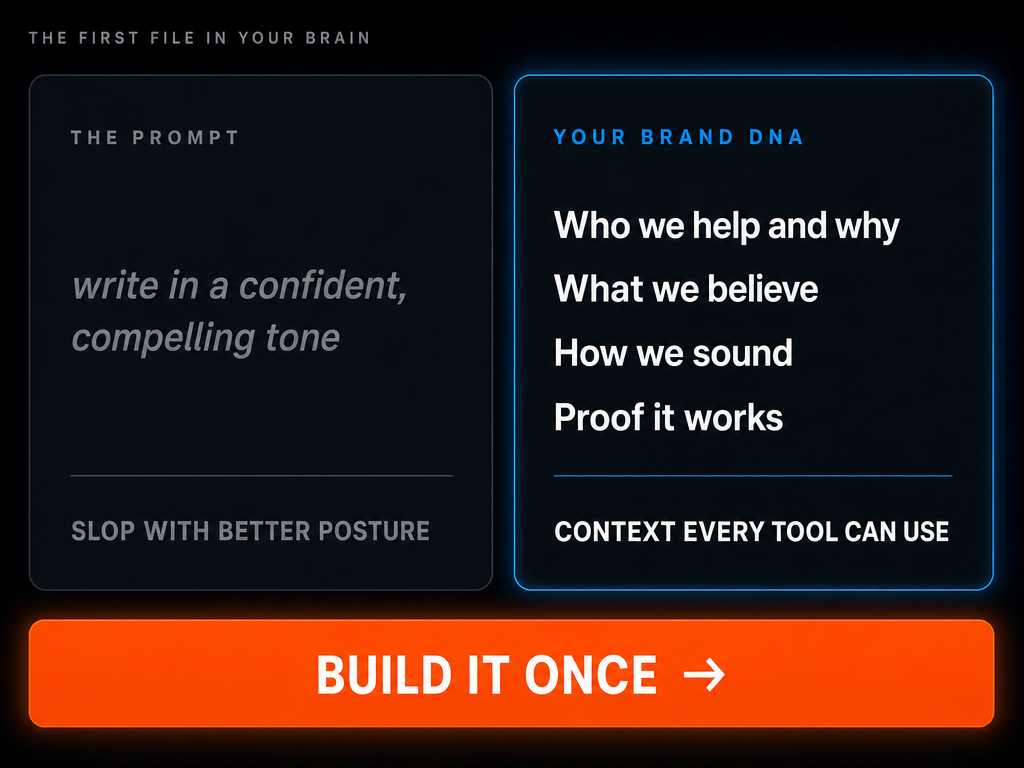
It should be your Brand DNA.
Who you serve. What you sell. What you believe. Your stories. Your proof. Your voice. The stuff that makes the output sound like you instead of the internet's average marketing intern.
Not this:
"Write in a confident, compelling tone for entrepreneurs."
That gives you slop with better posture.
I mean something closer to:
"I sell to experts who are tired of being the best-kept secret in their market. I believe positioning is built from scars, not slogans. I don't use guru language. I don't pretend business is clean. I tell the story from the mess, then extract the lesson."
That is context.
That is usable.
That gives every AI tool you touch something real to work from.
Without that, every model just produces faster generic slop. You're not leveraging AI. You're mass-producing mediocrity and feeling productive while you do it.
With it, every tool you touch... today's, next month's, the one that makes today's look ancient... starts from your actual business instead of starting from zero.
Stop chasing the tool that wins.
There is no tool that wins.
There's just the next one, and the one after that, six weeks apart, forever.
Build the brain.
Point whatever's best this month at it.
When something better ships, point that at it instead.
That's the move.
If you want to start with the context layer... the Brand DNA every tool in your stack needs before it can do anything useful... that's exactly what Magnetic Brand System is for.
Audience, offer, positioning, stories, voice, proof, all in a format your AI can actually read.
Build it once. Use it everywhere.
It travels with you no matter what you run on top of it.
Whatever wins next... Hermes, Claude Code, Codex, the thing nobody's named yet... your brain goes with you.
Until next time,
—Tim Erway

P.S. I migrated my agent team off OpenClaw and onto Hermes two weeks ago. Then yesterday I swapped in a brand-new model mid-week. Two tool changes inside fourteen days. My business didn't lose a step on either one, because I wasn't moving the valuable part. The valuable part doesn't live in the tool. That's the entire point of this issue.
P.P.S. A bunch of you replied to my Facebook post a few weeks back saying you wanted to go deeper... watch me actually build this stack instead of just reading about it. I'm putting that together. If you want first dibs when it opens, just reply to this email with the word IN. No form. No funnel. I'm reading every one.