9 Jobs to Hand Your New AI Agent This Weekend
You installed it. It said hello. Here's what to give it next... with the exact words to start each job.
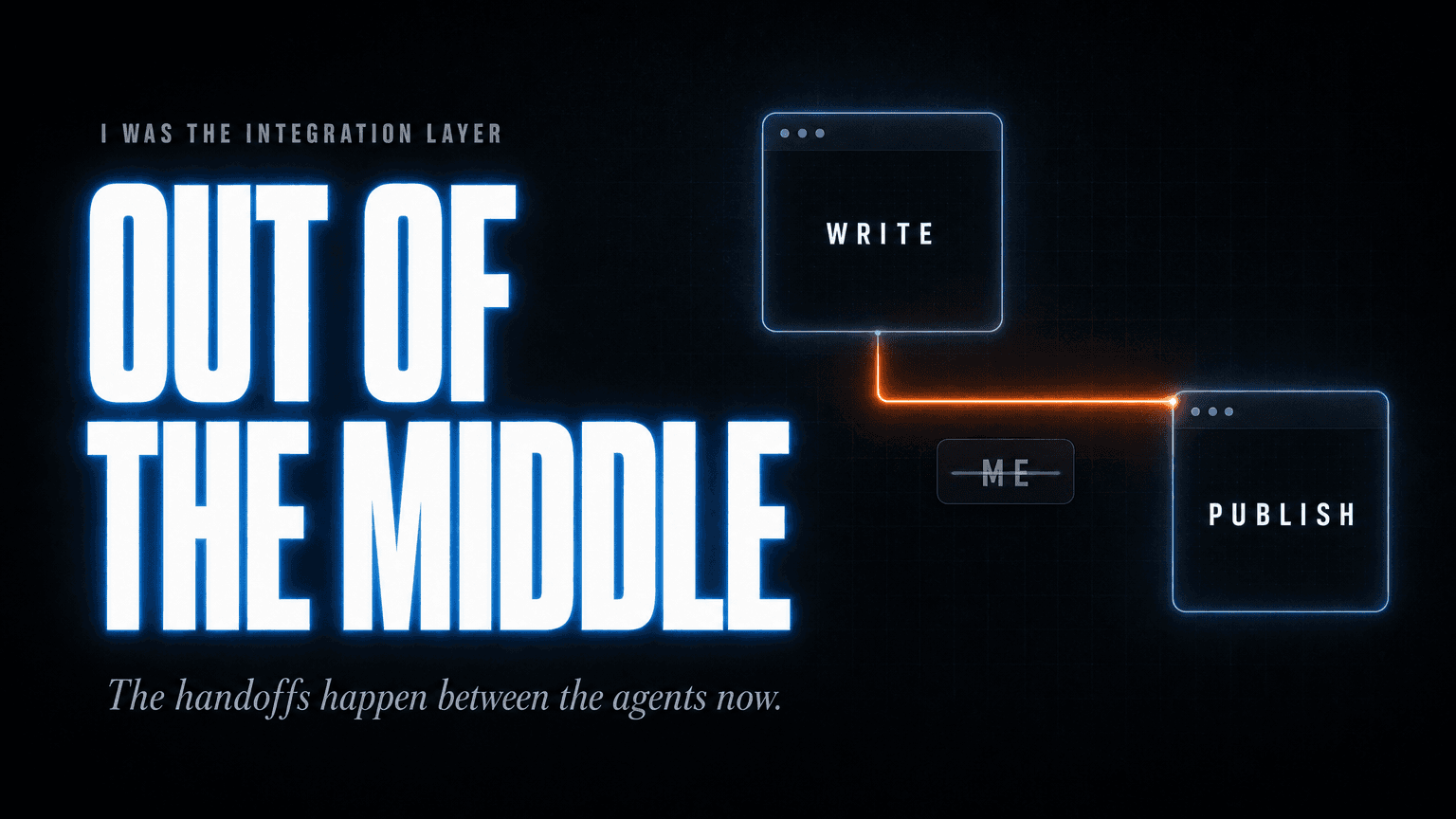
Last week I told you the terminal excuse was dead.
Hermes has a real app now. You install it like normal software, sign in, and start talking to it without opening the scary black window that makes it look like you're hacking the Pentagon.
So a bunch of you installed it.
And I know exactly what at least some of you did next.
You opened it.
Typed "hello."
Hermes said hello back, because it's weirdly polite.
Then you poked around for like five minutes, closed the laptop, and went right back to doing all the shit you supposedly installed an AI agent to stop doing.
No judgment. I've done this with basically every piece of software I've ever downloaded. I'm apparently a professional at installing things and then pretending they don't exist.
Installing the thing feels like progress. Then Monday morning shows up...
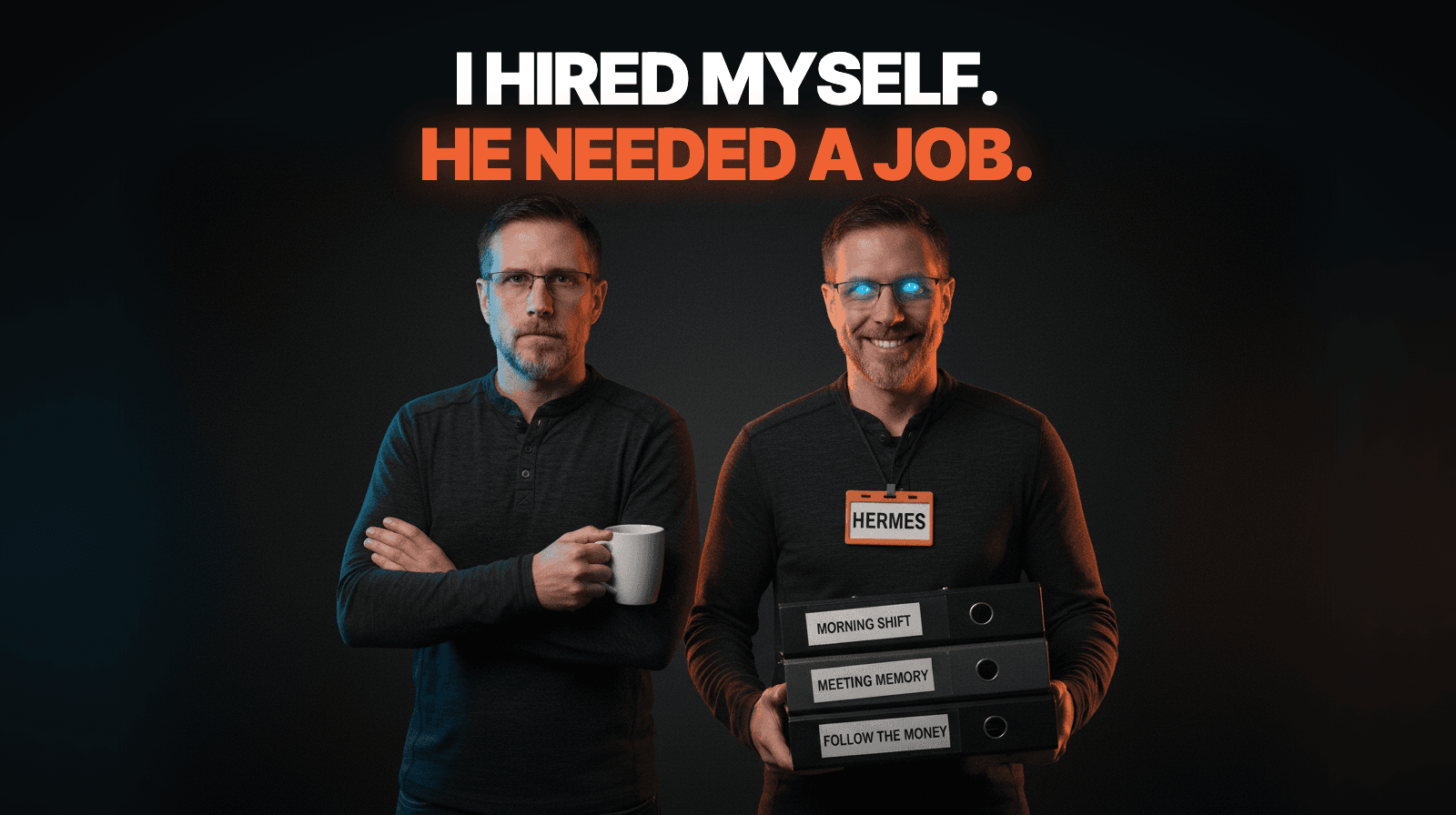
Your inbox is on fire. Somebody moved a meeting without telling you. And the brilliant new employee you just hired is sitting in the corner with nuthin' to do.
That's the part you actually want to solve.
That blank screen is where the management problem finally shows itself.
Skip another tour of the settings and hand the thing a real job.
So that's what this letter is.
Nine jobs. Some stupid simple. Some a little more involved. Every one comes with the actual words I'd use to get started, because "use an AI agent in your business" is advice on the same level as "eat better and exercise."
Technically true. But like... almost completely useless.
But before you pick a job, do these three things first.
Three Things Before You Start
First, install Hermes Desktop if you haven't already. Mac or Windows. Real app. About ten minutes. You can grab it here: Install Hermes Desktop.
Second, connect a model.
This is the brain doing the thinking behind Hermes. If you already pay for ChatGPT, pick the option labeled OpenAI Codex... that's just the ChatGPT sign-in with a fancier name. You sign in with your ChatGPT account, approve it, and move on with your life. No hunting for secret keys. No opening another pay-as-you-go account just to see if this thing is useful.
Third... let it interview you.
Do not skip this because you're in a hurry. This is the part everybody skips, and then they complain that the output sounds generic.
No shit. You gave a stranger access to your computer and told it nothing about your business.
I walked through the interview in Build Your First AI Marketing Assistant. Hermes asks about your business, your offers, your customers, your voice, and the bottlenecks making you crazy. You answer like a normal person. It turns those answers into plain-text files it can use every time you talk.
That's how it stops being a very smart stranger and starts becoming your assistant.
Run the interview first.
Then give it one of these jobs.
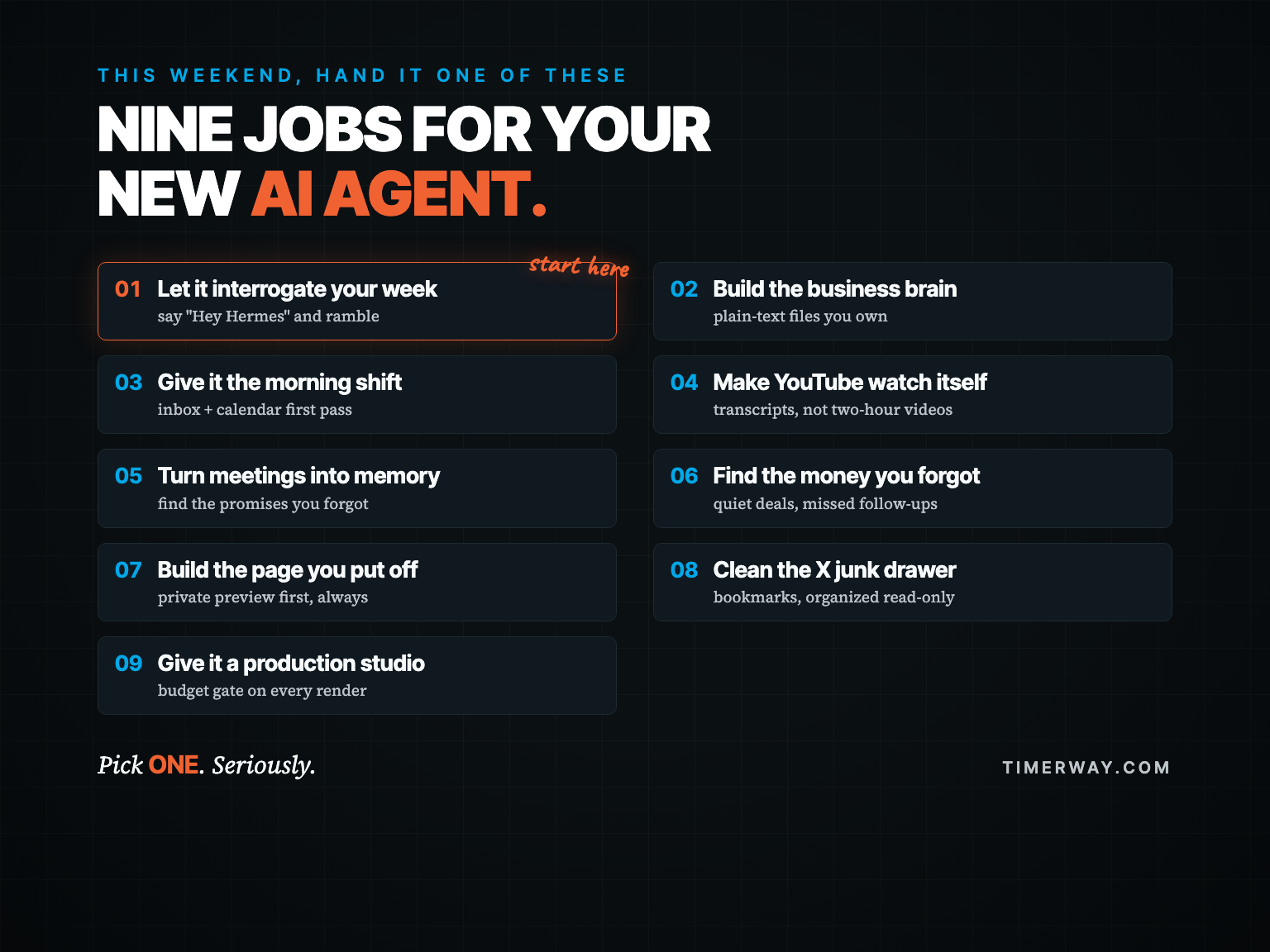
1. Let It Interrogate Your Week
Hermes just added a wake word. Click the little ear icon, say "Hey Hermes," and start talking.
Talking gets the real stuff out of your head. Faster than typing ever will.
Tell it what happened this week while you make coffee. The customer problem you keep avoiding. The report you hate building. The follow-up you forgot. The task you've done six Fridays in a row while mumbling that you really need to automate it.
Let Hermes listen for the work hiding inside your ramble.
Say this: I'm going to talk through my week. Don't interrupt me unless you need clarification. When I'm done, pull out every repeated task, bottleneck, forgotten follow-up, and piece of work that sounds automatable. Then rank them by time saved, money protected, and how easy they would be to hand off to you.
That conversation will probably give you the next five jobs by itself.
(You may feel mildly attacked. That's probably a useful sign.)
2. Build the Business Brain
You did the first interview. Cool.
Now have Hermes turn it into something useful.
Your offers. Your story. Your customers. How you talk. What you believe. The weird little rules inside your business that everybody who works with you eventually learns the hard way.
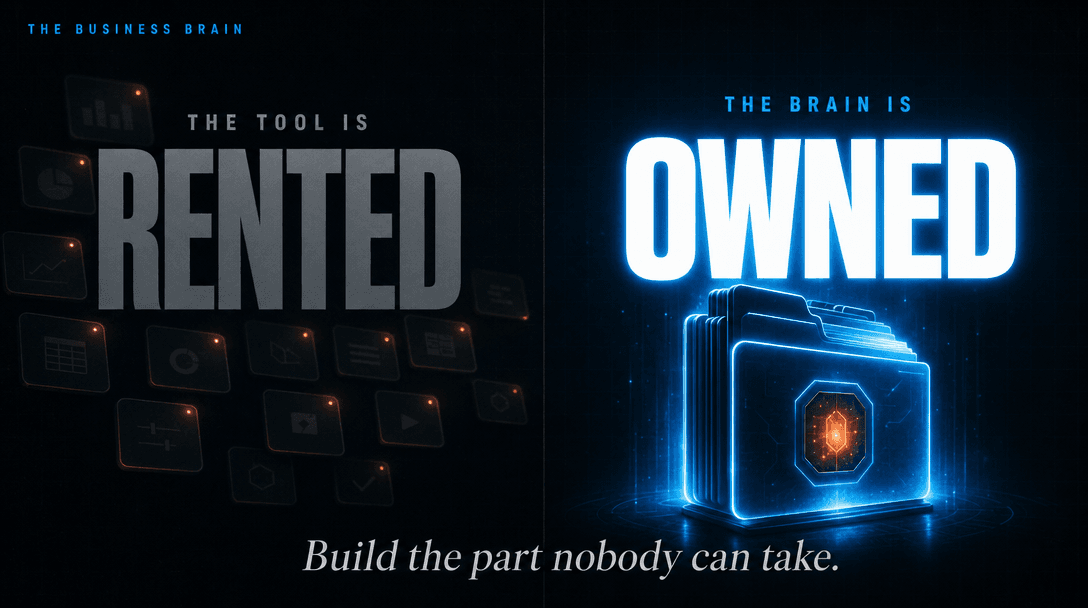
Put it in plain-text files and it becomes portable. Hermes can read it. Claude can read it. Whatever shiny new agent takes over X next Thursday can read it.
The model is rented.
The business brain is yours.
Paste this: Read this article first: https://timerway.com/letter/your-ai-agent-is-only-as-smart-as-the-brain-you-give-it. Then interview me one question at a time and build the core plain-text files for my business. Cover my audience, offers, positioning, voice, stories, proof, workflows, and approval rules. Show me what you wrote, point out what is still missing, and keep the files organized so another AI could understand the business without starting over.
It ain't sexy work.
But it's the reason every other job on this list either sounds like you or sounds like lazy knuckleheads copy/pasting ChatGPT drivel on LinkedIn and X.
3. Give It the Morning Shift
Connect Hermes to Google Workspace and let it do the first pass on your day.
Inbox. Calendar. Drive. The places where your business quietly leaves little landmines for you overnight.
Every morning, it can tell you what genuinely needs your attention, what can wait, which meeting you forgot about, and what somebody promised three email threads ago.
That's useful.
A 47-email summary is not useful. That's just a second inbox wearing a fake mustache.
Paste this: Set up Google Workspace access for Gmail, Calendar, and Drive. Walk me through every sign-in and approval instead of guessing. Then create a weekday morning briefing for 7:00 a.m. Show me only the emails that genuinely need my attention, today's schedule, anything that appears overdue, and any commitment I made that may be slipping. Draft routine replies in my voice, but never send anything without my explicit approval.
Start with read access and drafts.
Your agent does not need permission to fire an email at a customer on day one. Yeah... I may have learned that the hard way.
4. Make YouTube Watch Itself
There is an absurd amount of useful information buried inside two-hour YouTube videos recorded by people who have apparently never met an editor.
I don't want to watch all of it.
I do want the three ideas that matter to my business, the one thing I should test, and the full transcript saved in case I want to dig deeper later.
Hermes can pull transcripts, organize them, and hand you a short report on a schedule.
Paste this: Every Friday, check for new YouTube videos from these creators and on these topics: [your list]. Pull and save the transcripts as searchable notes. Give me a one-page report covering only what is relevant to my business, what is genuinely new, and anything worth testing. Skip recycled AI hype. Link every takeaway to the source video so I can verify it.
You get the useful part without donating your entire Friday afternoon to podcast intros and sponsor reads.
5. Turn Your Meetings Into Memory
If you record calls with Fathom, Fireflies, or Granola, you're probably sitting on a pile of information you never use again.
Sales objections.
Promises made to clients.
Good ideas that showed up eleven minutes into a Tuesday meeting and died before lunch.
The transcript exists. Then everybody forgets it exists.
Connect those transcripts to Hermes and you can ask normal questions instead of digging through recordings like a detective working a very boring murder case.
Paste this: I record meetings with [Fathom / Fireflies / Granola]. Help me connect the transcripts and build a searchable meeting directory. When I ask about a past conversation, answer only from the transcripts, name the meeting and date you used, and quote the relevant line when accuracy matters. Start by finding every promise, deadline, and follow-up from the last 30 days that may still be open.
That last sentence is where the money is.
Finding the notes is nice. Finding the promises you forgot is a business system.
6. Go Find the Money You Forgot to Follow Up With
Once the agent has earned a little trust, connect the CRM.
I use AwesomeCRM.com, but the specific software barely matters. Most CRMs have an official way for outside tools to connect. Hermes can find the instructions and walk you through the ugly parts in plain English.
Do not begin by letting it rewrite your entire database or send 800 messages because it found a button.
Start with the people who already raised their hands and then disappeared into the cracks.
The leads who opened three emails and never booked.
The deals that went quiet.
The follow-up somebody definitely meant to send.
Paste this: I use [AwesomeCRM.com / your CRM]. Find the official integration instructions and walk me through connecting it safely, step by step, in plain English. Begin read-only. Show me recent leads who engaged but never booked, deals that have gone quiet, and follow-ups that appear overdue. Draft the messages in my voice for review. Do not send, edit, or delete anything unless I explicitly approve it.
You don't need the agent doing everything.
You need it finding the expensive shit your team stopped seeing.
7. Build the Page You've Been Putting Off
This is where Hermes stops acting like an assistant and puts on a little construction helmet.
A landing page. An opt-in. A simple funnel. A form connected to your CRM.
The sort of thing that used to create a $5,500 invoice, twelve emails, and a month of hearing "we're almost there."
Hermes can do the research, write the page from your business files, handle the technical setup, and give you a private preview. You'll still need to create or approve accounts when required, because robots don't get to accept legal agreements on your behalf. But the agent can carry the load instead of handing you a 37-step tutorial.
Paste this: I want a simple landing page for [your offer]. Use my business brain files for the copy and ask only for information you genuinely cannot find. Recommend the simplest sensible setup, explain any account I need to create or approve, build the page, connect the form to my CRM, and give me a private preview. Do not publish it or make it public until I explicitly approve the final version.
Private preview first.
Always.
I've been building websites for too long to trust "it should be fine."
8. Make Your X Bookmarks Admit Why You Saved Them
Bookmarks on X are basically a junk drawer for ideas.
Good threads. Useful tools. Half a dozen things I was definitely going to come back to.
I have never come back to them.
Hermes has a skill built around X's official command-line tool. It can read posts, search, organize bookmarks, manage lists, and draft or publish when you deliberately give it that access.
Start read-only. Let it clean up the junk drawer before you hand it a megaphone.
Paste this: Help me set up the xurl skill using the official instructions. Walk me through the authentication without asking me to paste private credentials into chat. Start read-only. Organize my bookmarks by topic, pull out anything directly useful to my business, and give me a weekly report on what is actually working in [your niche]. Draft possible posts in my voice for review, but never post, reply, like, repost, or send a message unless I explicitly tell you to.
There may be a newsletter hiding in the 200 things you saved and forgot.
There may also be 198 things you saved because the headline sounded smart.
Both are useful discoveries.
9. Give It a Production Studio
This last one goes way beyond making a pretty image for your newsletter.
Hermes can connect to the same tools you'd use to build an actual AI media operation.
Fal.ai is what I use. It gives you access to a ridiculous number of image, video, audio, and 3D models without opening a separate account for every damn one of them.
Higgsfield.ai is another option if you want more of a visual, cinema-style workspace. ElevenLabs handles the voices. Want talking-head videos without spending your afternoon under studio lights? Add HeyGen. Want slick animations and motion graphics? Add Hyperframes.
Now you've got an image generator, a video crew, a voice actor, an AI version of you, and an animation department sitting behind the same agent.
Which is awesome.
It's also how you can accidentally light money on fire. Images are usually cheap. Video gets expensive fast, especially after the seventeenth "one tiny change" that somehow requires rendering the whole damn thing again.
Connect the tools one at a time, run the smallest possible test, and put a budget gate in front of every paid generation.
Paste this: Help me build a starter AI media stack. Begin with Fal.ai, which is what I use, or compare it with Higgsfield.ai if that would fit me better. Add ElevenLabs for voice. If I want talking-head videos, help me connect HeyGen. If I want animations and motion graphics, add Hyperframes. Use the official setup instructions, walk me through every sign-in, and store credentials securely without asking me to paste private keys into chat. Before any paid generation, tell me the expected cost and wait for my approval. Once everything is connected, run one small approved test with each tool and write down exactly what each one is for.
At that point Hermes has access to the equipment.
The harder part starts after the accounts are connected: taking one rough idea all the way through the script, storyboard, voice, visuals, talking-head footage, animations, rendering, revisions, and final video.
Especially if the finished thing is supposed to sell something.
Pick One... Seriously
The dumbest possible response to this letter is trying to build all nine by Sunday night.
You'll get four half-connected tools, three login problems, one agent with permissions you don't remember giving it, and absolutely no idea whether any of it is useful.
Do the interview.
Pick the one job that made you wince because you know you're still doing it by hand.
Run that job for a week.
Fix the instructions. Tighten the permissions. Teach the agent what "good" looks like. Then add the next job.
One useful employee beats nine enthusiastic interns wandering around your business asking where the bathroom is.
Every time.
Here's What I'm Building Now
That gap between "Hermes can use the tools" and "Hermes can produce the whole damn video" is exactly what I've spent this week working on.
Every AI video platform seems to want another $99 a month so you can rent its credits, keep its watermark, and let it decide what your brand should look like.
I got tired of that.
So I'm building a video production system you actually own. Hermes or Claude runs it. Your brand is baked into it. And it handles the entire trip from rough idea to finished content... including full video sales letters... instead of leaving you to duct-tape six tools together and call it a workflow.
You pay the raw computing cost instead of another monthly subscription tax.
I have a working version now, but before I disappear down another weeklong rabbit hole polishing it, I want to know whether anybody besides me gives a shit.
If you'd use something like that, reply to this email with the word VIDEO.
That's it.
If enough of you raise your hand, I'll do a full write-up next week.
Until next time,

—Tim Erway

P.S. If you can't decide which job to pick, start with the weekly brain dump in number one. Ten minutes of talking will usually expose the repetitive task that's pissing you off most. Start there.