I Make Videos by Talking to Claude on My Phone
Video OS handles the timelines, clips, captions, voice, and visuals while I tell it what I want.
I need to correct something from last week.
I told you AI video can light your money on fire. Which is true. It absolutely can.
Then I started writing this week's letter about all the subscriptions Video OS replaced and all the little generation charges it helps me avoid.
Also true.
But somewhere in the middle of writing it, I realized I was making myself sound like a cheap ass.
I'm not.
I'll happily pay for software that saves me time. I'll pay more for something that saves me a headache. And if a tool lets me avoid spending half a day scrubbing back and forth through a video timeline looking for the exact frame where I said something stupid, take my money.
The real reason I'm excited about Video OS has very little to do with saving a few bucks.
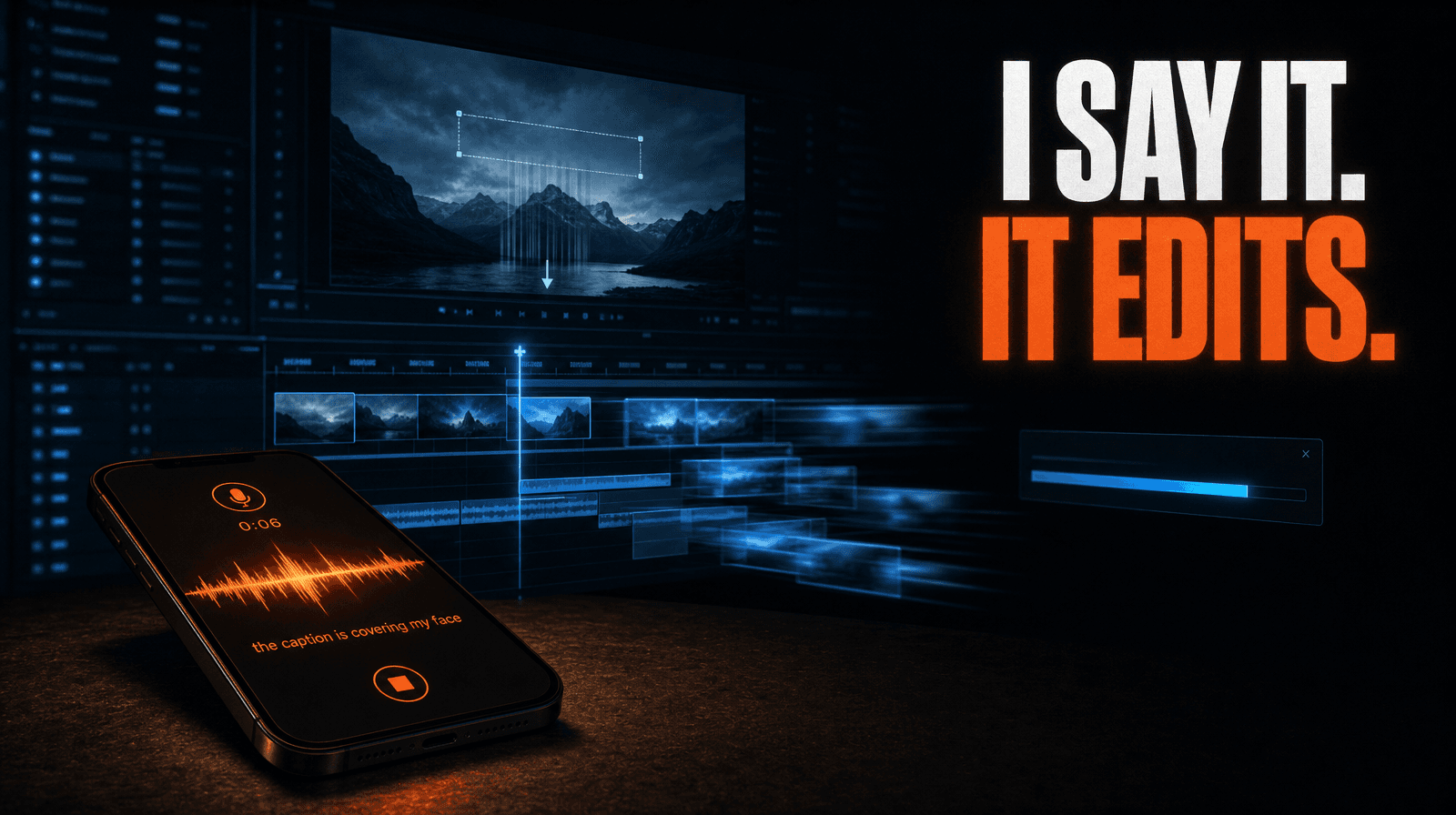
I don't have to edit videos anymore.
I talk to Claude.
Claude does the editing.
That is a much bigger deal to me.
I somehow became the video department
Before this, making an ordinary video meant opening a small shopping mall of software.
OpusClip to find clips. Descript and sometimes Adobe Premiere to edit. CapCut because apparently two editors weren't enough. Canva for graphics. Higgsfield for generated footage. Then a few more little tools hanging around for whatever the others couldn't quite finish.
Every one of those tools did something useful.
That wasn't the problem.
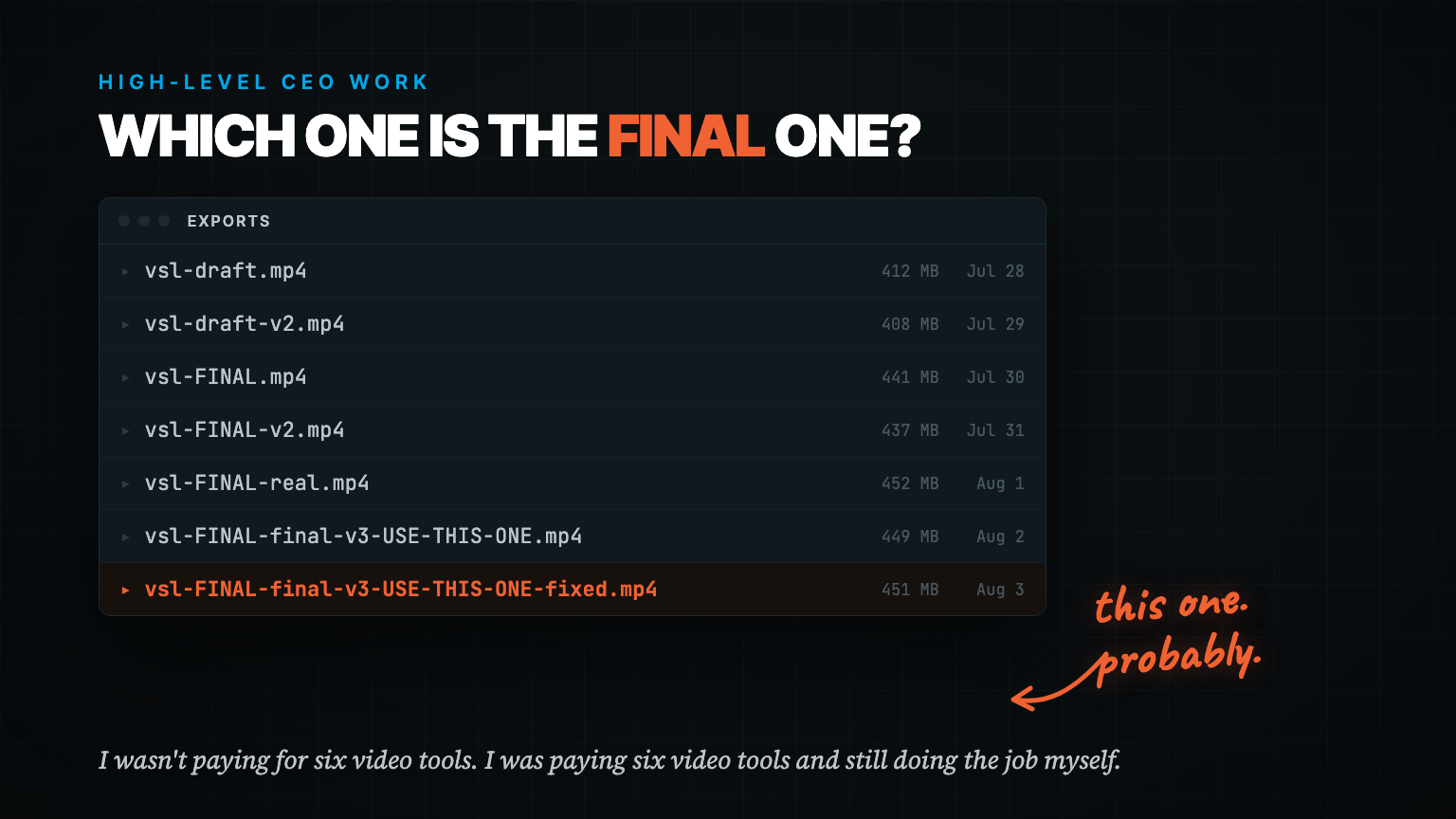
The problem was me sitting in the middle of all of them, dragging files around, changing formats, hunting through timelines, moving captions, exporting, noticing one stupid mistake, going back, exporting again, and trying to remember which version named `FINAL-final-v3-USE-THIS-ONE.mp4` was actually the final one.
You know... high-level CEO work.
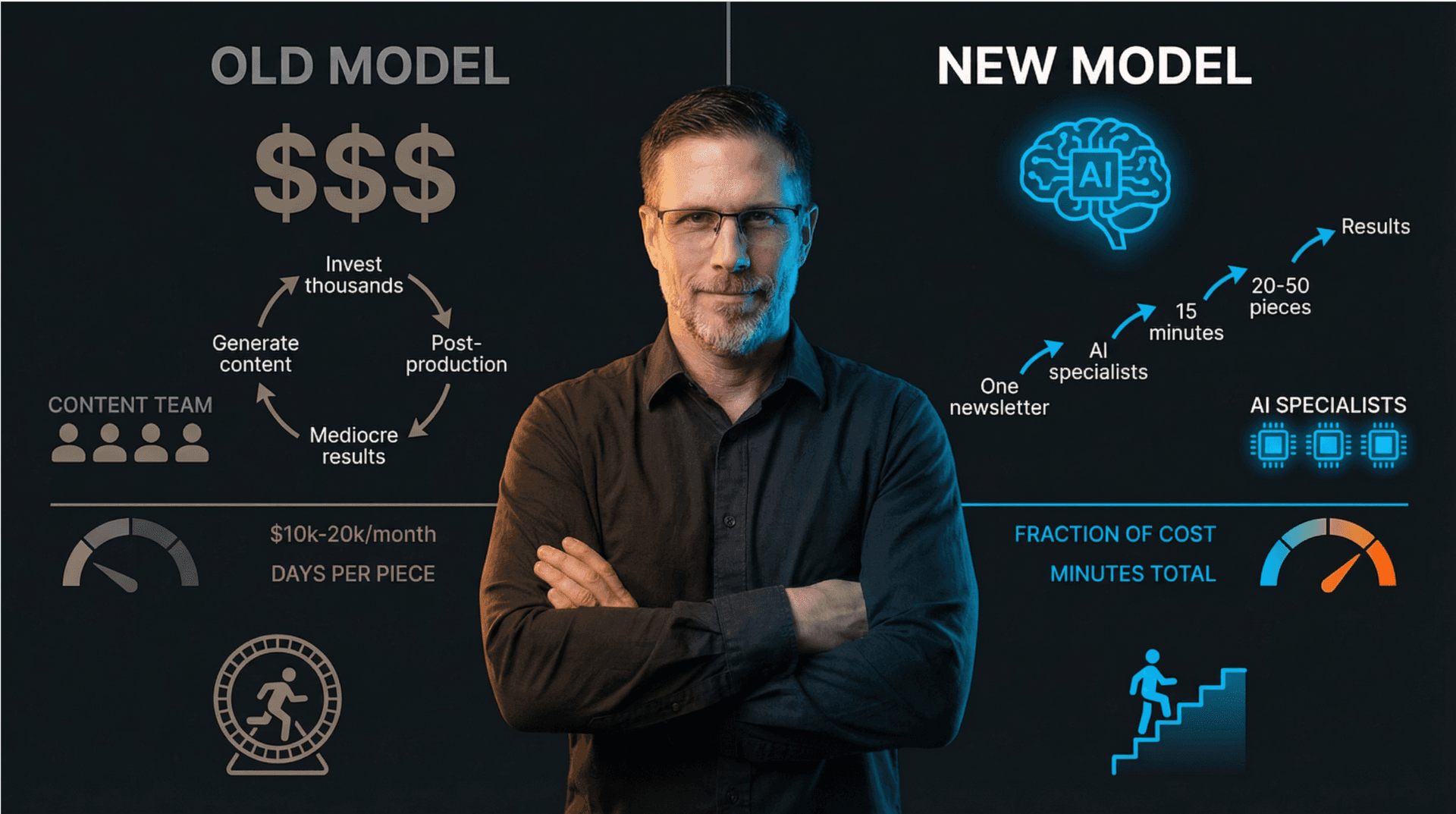
I wasn't really paying for six video tools.
I was paying six video tools and still doing the job myself.
That was the part pissing me off.
Last week I gave Claude the equipment
In 9 Jobs to Hand Your New AI Agent This Weekend, the ninth job was giving your agent a production studio.
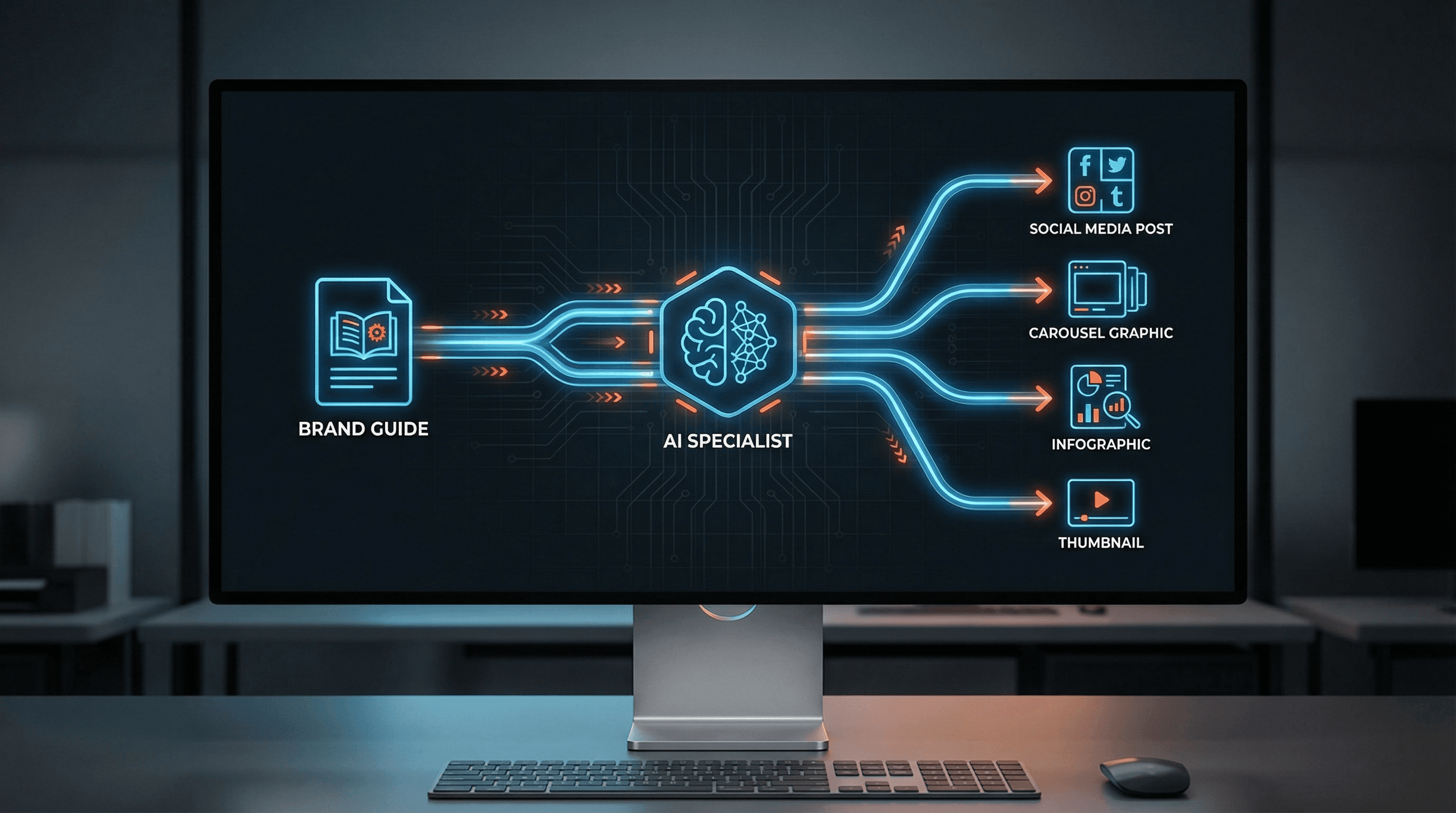
Fal.ai for image, video, audio, and 3D models. ElevenLabs for voices. HeyGen for an AI version of you on camera. Hyperframes for motion graphics. Higgsfield if you want the big cinematic playground.
Connecting all that stuff gives Claude or Hermes access to the equipment.
It still needs a production process.
Otherwise you've basically hired a very smart person, handed them the keys to six different studios, and left them a note that says, "Make something cool."
Good luck with that.
Video OS is the process I built around the equipment.
It knows my voice. It knows what my videos should look like. It knows my colors, fonts, visual style, pacing, captions, claims I won't make, and the different kinds of videos I produce.
And most importantly, I can operate the whole thing by talking.
This is how I make videos now
I start a Claude session.
Then I pull out my phone and tell it what I want like I'm talking to an editor.
The hook needs to move faster.
That section drags.
Put my face back on screen here.
Use a slide for these three numbers.
Cut this part into shorts.
The caption is covering my face.
That generated clip looks like stock footage from a bank commercial. Try again.
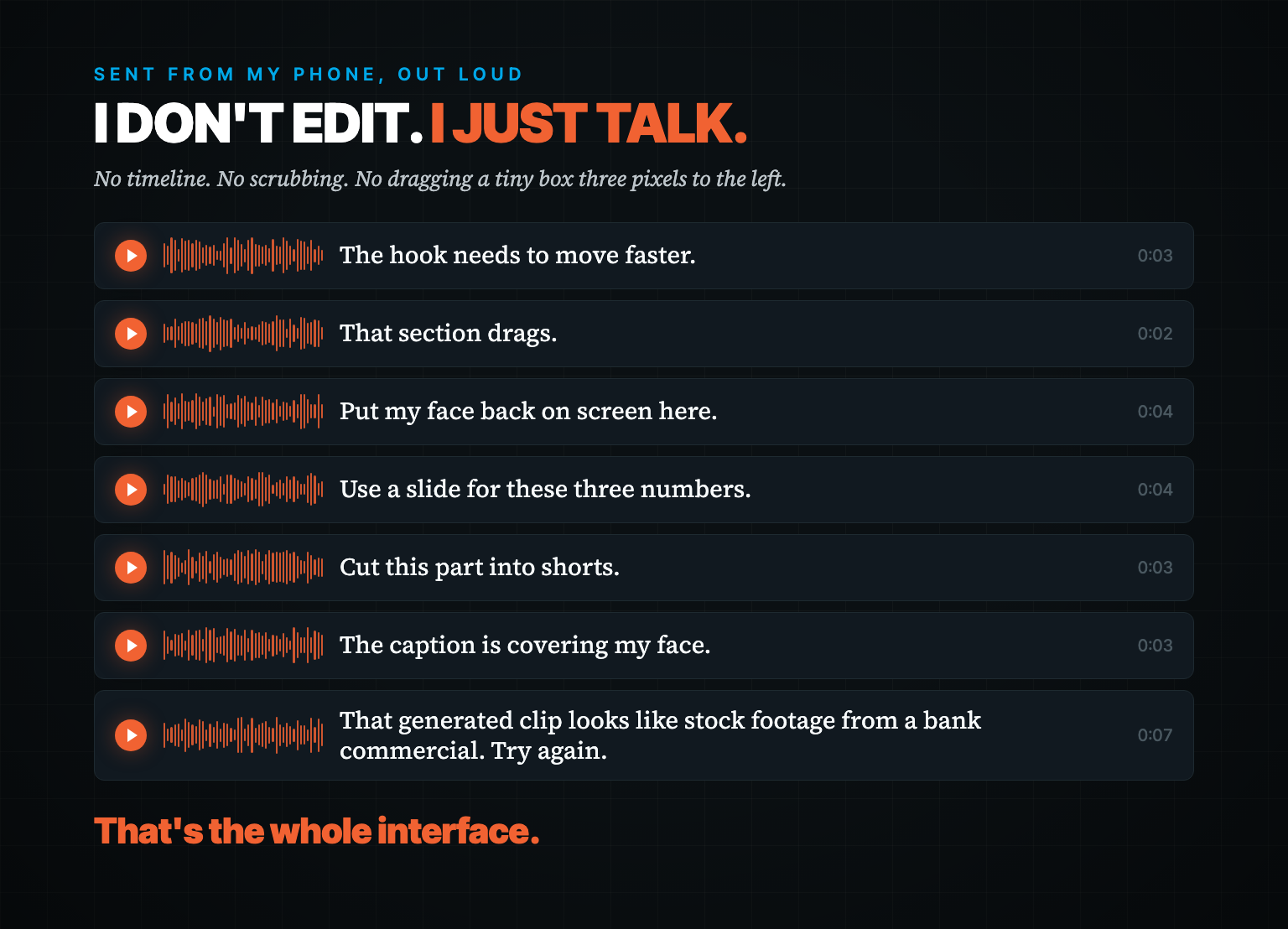
I don't scrub through a timeline and drag a tiny box three pixels to the left.
I explain the problem in normal English. Claude finds the right project files, changes the plan, rebuilds the video, checks the result, and hands me another version.
I can do that from my phone.
That is my favorite part of the whole damn thing.
The system can handle the technical work for a faceless short, a talking-head video, a video sales letter, an AI-twin video, or a batch of shorts pulled from something longer.
My job is taste.
I decide whether the opening is boring. Whether the joke lands. Whether the visual makes sense. Whether the thing sounds like me.
Claude handles the timeline.
Which is exactly how I want that relationship to work.
I already used it to make two VSLs
This isn't one of those projects where the developer has a beautiful list of features and no finished thing anybody can look at.
I've already made two video sales letters with it.
One is live right now at becomemagnetic.ai.
The guy talking at the top of that page is my AI twin.
I didn't sit under studio lights and record that presentation. Video OS built it using the voice and visual brand system it had already created for me. It knew how I sound, how the brand looks, how the words should appear on screen, when to hold on my face, and when the video needed something else visually.
That brand system is one of the parts I think people underestimate.
Most AI video tools can make an impressive clip. Then you make the next clip and it looks like it came from a completely different company, on a different planet, during a different decade.
Video OS builds the rules first.
Your voice. Your colors. Your type. Your visual mood. The way your captions behave. The claims you make and the ones you refuse to make.
Then the videos use those same rules every time.
So I'm not explaining my brand again every time I start a new project. The editor already knows.
The subscriptions became a side effect
Once the daily workflow started working, I noticed something else.
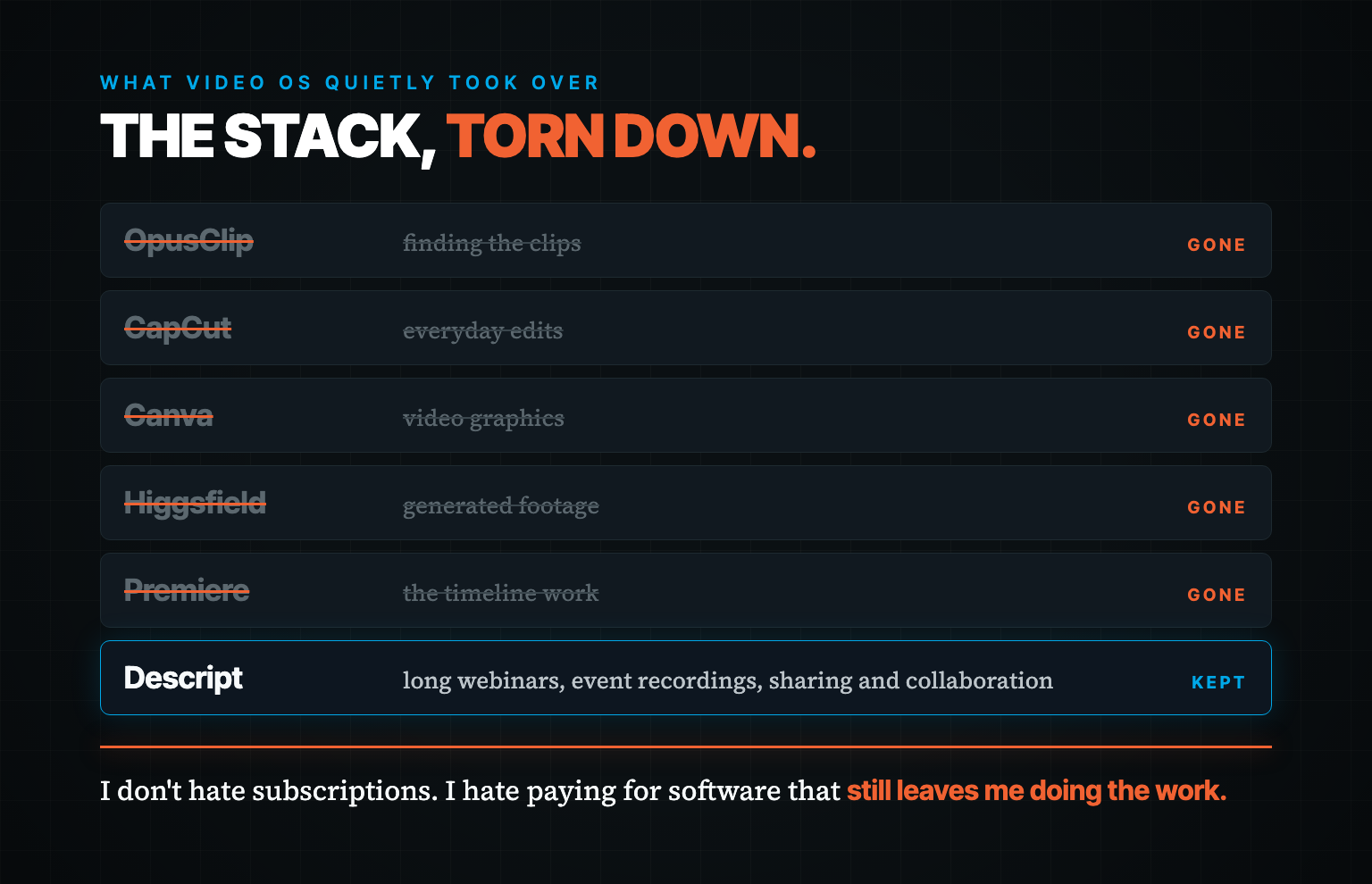
I wasn't reaching for OpusClip anymore.
I wasn't opening CapCut for everyday edits.
I wasn't building video graphics in Canva.
I wasn't bouncing into Higgsfield every time I wanted footage.
Even Descript, which I genuinely like, stopped being necessary for my normal daily video work.
Video OS had quietly taken over the jobs I was paying that whole stack to perform.
That is real savings. I'm not going to pretend it isn't.
But the money is the side effect.
The win is that I no longer have to move the project through six interfaces myself.
I'm keeping Descript, by the way.
When I've got a longer webinar or a recording from an event and I want to make occasional hands-on edits, it is still great. It is also stupid easy to share a video, bring somebody else in, collect feedback, and collaborate.
That earns its place.
I don't hate subscriptions. I hate paying for software that still leaves me doing the exact work I paid it to remove.
I'll pay for leverage all day long.
It also keeps me from doing anything too stupid
Now, the money controls still matter. Especially when generated video is involved.
Video OS prices a job before it starts. It stops when a job crosses the spending limit I set. It remembers footage it already bought, so changing a caption doesn't buy the same five clips again.
I tested that one for real.
The first faceless short recorded $1.28 in my system's ledger. I ran the same job again and it showed five of five clips cached with $0.00 recorded for the rerun.
Same footage. Nothing purchased twice.
Those are my system's own numbers, based on the provider rates I plugged in. I haven't matched every line against the actual Fal.ai and ElevenLabs invoices, so don't read them as a bank statement.
The exact pennies aren't the point anyway.
The point is I can say, "Move that caption. Tighten the opening. Try a different order," without wondering whether each sentence just bought the footage again.
A production system should make revision easier.
Otherwise it trains you to accept the first mediocre version because you're tired of paying and even more tired of editing.
The question I would ask about every tool you use
Forget the subscription audit I was going to give you. Counting what you pay isn't the useful question.
Ask whether each tool removes work from your life or merely gives you another interface where you still do the work.
That's the test.
A good tool might cost $100 a month and still be a bargain because it hands you five hours back.
A cheap tool can be expensive as hell if it saves you twelve dollars and steals your Friday afternoon.
Look at your own video process and name the person who finds the moments, cuts them, fixes the captions, creates the graphics, keeps the branding consistent, notices the wrong clip, opens the project again, finds the spot, makes the change, exports another file, and uploads it one more time.
If all those roads point back to you, then you don't have a video system yet.
You have video software.
That was my situation.
Where Video OS stands right now
Version 1.0 works. I use it for my own production, and there isn't some secret private version that only works for me.
Version 1.1 is still being built. That's the one I'll be handing to other people.
I'm using the system while I build it, which is both the best possible product-development strategy and a great way to find new things to obsess over at midnight.
It still isn't magic.
I still have to know whether a video is good. Claude cannot take responsibility for my taste, and I don't want it to.
What it can do is remove the mechanical bullshit between my decision and the finished file.
I say what needs to change.
It changes it.
I review the result.
Then we keep going until the video is publish ready.
Sometimes I'm doing that from my phone.
That's the part I couldn't stop thinking about after I edited the first version of this letter. I almost sent you two thousand words about saving money when the thing I actually built was a way to get my time back.
And time is the one thing I'll always pay for.
Reply and tell me which kind of video gives you the biggest headache: VSL, SHORT, or TALKING HEAD. I'll show you the complete workflow people ask for most.
—Tim Erway

P.S. Most of the work on those two VSLs was me deciding whether the opening was boring. That part still can't be handed off.
P.P.S. If you want to see what the AI twin looks like before you believe any of this, he's at the top of becomemagnetic.ai. Go judge it yourself. And yes, Video OS is going to be available. I'm finishing 1.1 first, and I'm not going to announce a date I'm not sure I can hit. You'll hear about it here first.