How To Set Up Your AI Agent Content Factory
(Without losing your soul and contributing to the AI Slopfest)
Last week I promised to tell you what happened at my live AI agent building event.
Well, buckle up buttercup, because I'm gonna do you one even better.
Consider this Part 2 of the AI team series. If you missed Part 1, you can catch up here if you want. It sets the foundation if you’re new to AI Agents. Otherwise, let's get into it.
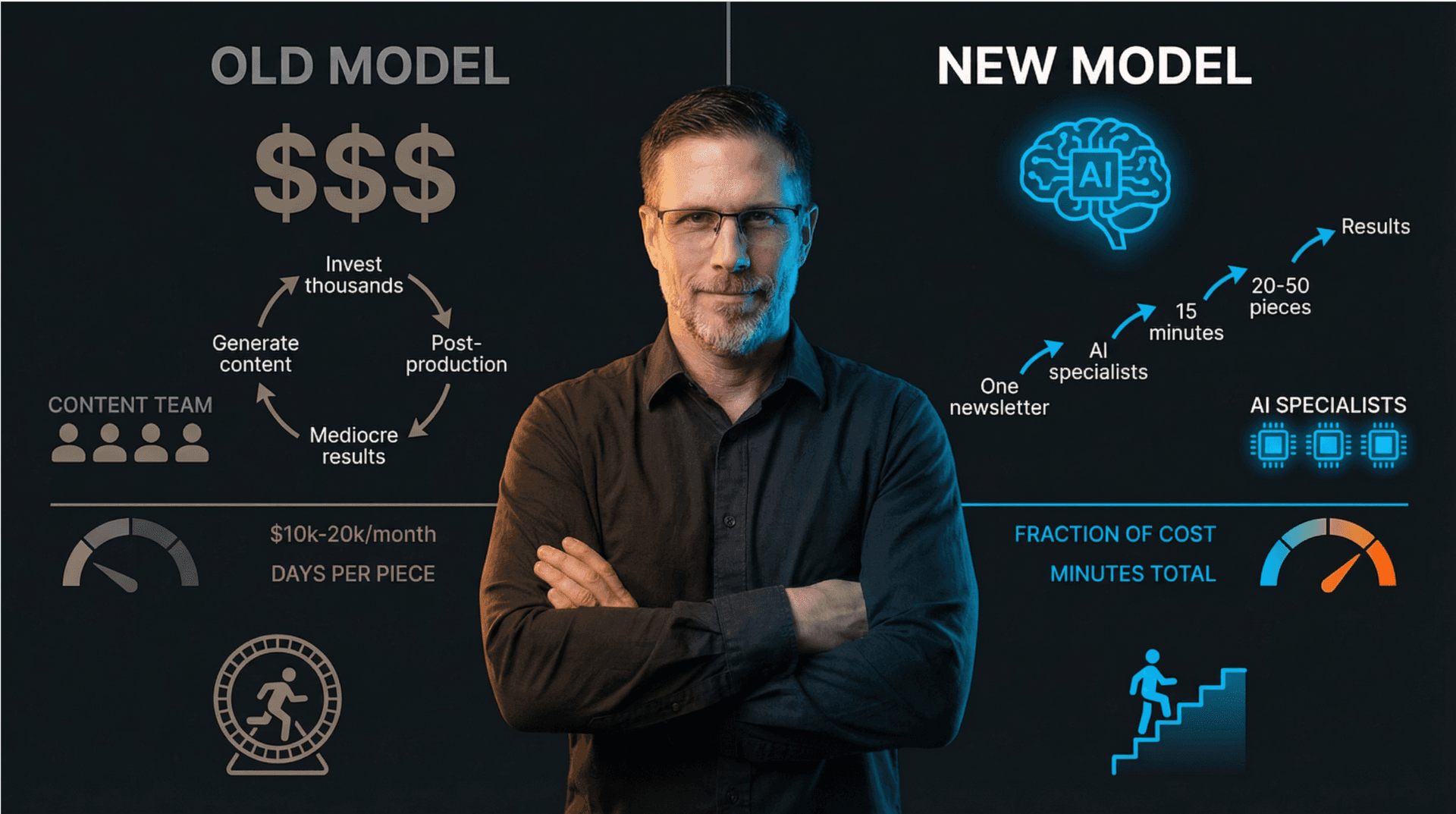
Instead of just recapping the event, I'm going to give you the actual playbook. The framework. The thinking. The specific steps I walked the room through, plus everything I've figured out since.
Because what happened at that event changed how I explain this to people.
The Dream (And the Reality Check)
Here's what every entrepreneur actually wants from AI.
Content that writes itself. A business that runs while you sleep. Admin that handles itself. Software that builds itself. Maybe even a company with zero human employees.
That dream isn't crazy.
Dario Amodei (CEO of Anthropic) warned that AI could wipe out half of all entry-level white-collar jobs within five years.
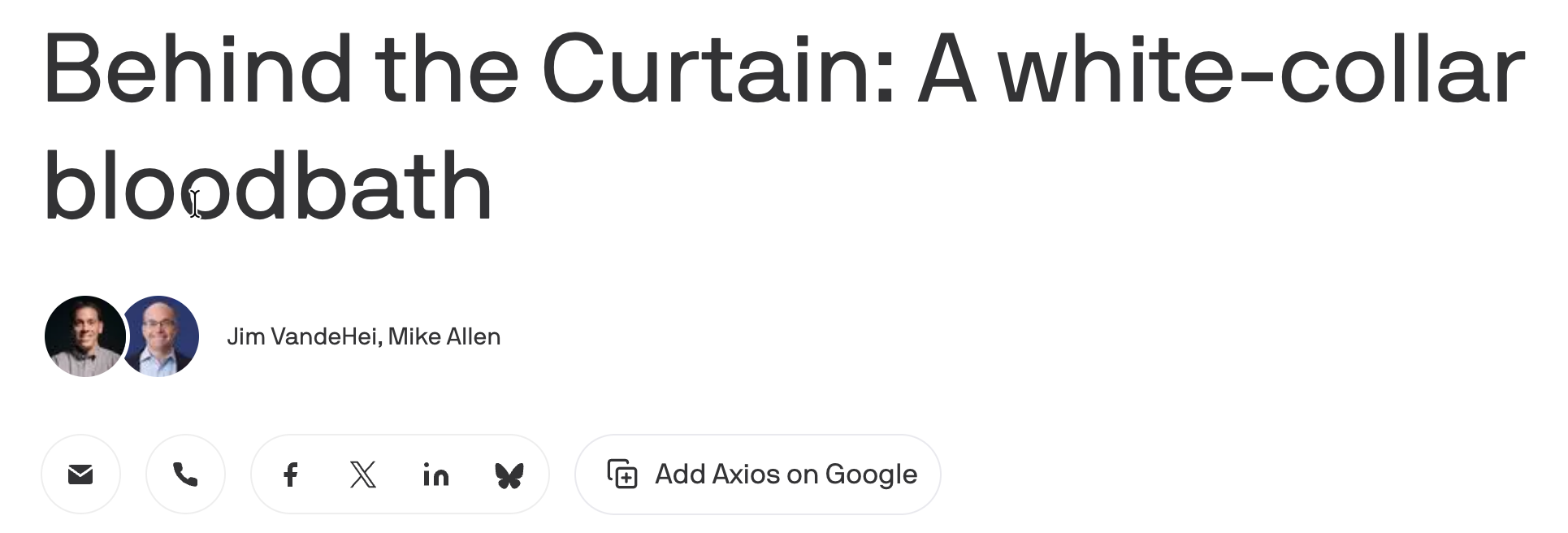
Microsoft's AI CEO publicly gave white-collar work 18 months before AI handles most of it.
I wrote about how close we actually are a few weeks ago.
Hell, we even have AI agents hiring humans now. There's a platform called RentAHuman where AI posts job listings and hires people for tasks it can't complete on its own.
The humans report to a bot (seriously).
Shit's getting real…
But here's what I have to tell you before we go any further.
We ain't there yet, kiddo.
And the gap between "AI can do incredible things" and "MY AI does incredible things" is where most people get stuck.
That gap has a name. It's called “the setup.”
The AI Slop Epidemic
Something's been happening out there on LinkedIn and Facebook and basically every content platform on the internet, and we need to talk about it.
Open LinkedIn on any given Tuesday. You'll see it within 30 seconds.
And no, you aren't just being a cynical hater… it’s scientifically proven slop. A recent study actually crunched the numbers, and it turns out a staggering 53.7% of all long-form posts on LinkedIn are now classified as "Likely AI-generated."
If you’re in the "Wellness" space, it’s 92%. Even in "Tech & AI," it's sitting at 65%.
"3 Powerful Lessons I Learned From My Morning Coffee That Will Transform Your Business"
(Nobody learned three powerful lessons from a latte, Kevin. Sit down.)
Or the posts that start with a single dramatic word on its own line.
Authenticity.
Then 47 lines of AI-generated mush about why authenticity matters in "today's business landscape." Written by someone who fed ChatGPT the prompt "write me a thought leadership post about authenticity" and hit publish without reading it.
You can smell it. I can smell it. Your audience can DEFINITELY smell it.
It reads like a corporate memo banged a thesaurus.
The comment sections are even worse. Bots replying to bots.
And the worst part is that the algorithm actively rewards it. That same study showed AI-written "Leadership" posts get 75% more engagement than human-written ones.
I mean, seriously. I just opened up LinkedIn right now, and the very first post has dozens of comments like this:
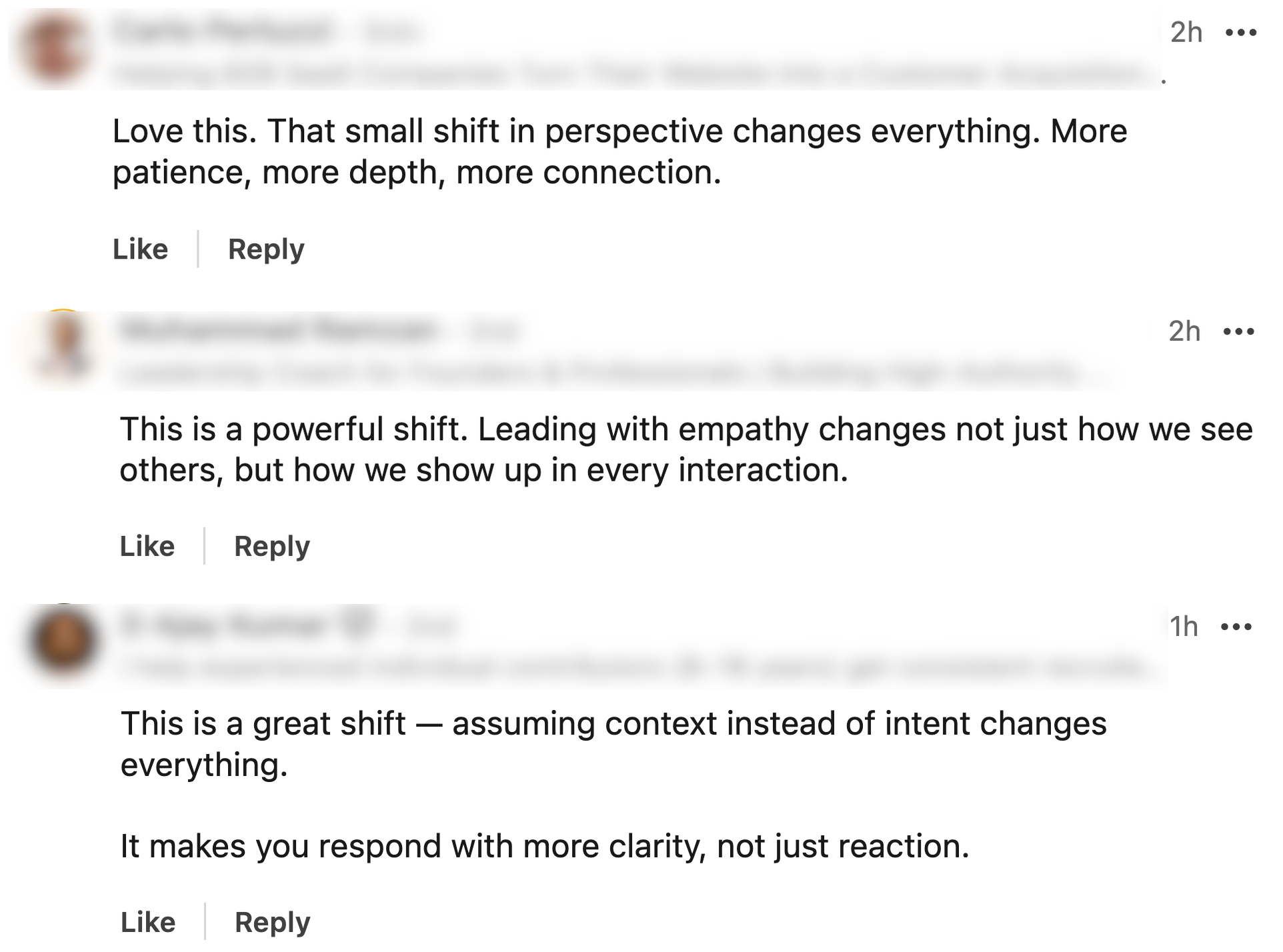
(This isn’t a “shift” dude. It’s a bunch of automated “Kevins” high-fiving each other, running a $5/month VPS in Romania.)
And here's the part that actually pisses me off.
Some of these people are running real businesses. They have genuine expertise. Real stories. Actual value to offer.
But they got lazy.
Opened a blank chat window. Typed "write me a LinkedIn post about leadership." Published whatever came back.
And now their audience thinks they're a fraud.
Because the output sounds like everyone else's output. Because it IS everyone else's output. Same model. Same default voice. Same watered-down, hedge-every-opinion, offend-nobody, say-nothing soup.
The tool isn't the problem. The setup is the problem.
Generalist AI with no direction, no context, no voice training, and no guardrails produces technically correct content that is spiritually dead.
And a lot of people are calling that an AI strategy.
F#ck that.
The Drunk 11-Year-Old With a 500 IQ
Here's how I think about AI agents.
Genuinely, legitimately powerful. Capable of things that would've seemed like sci-fi five years ago.
Also... sometimes like a drunk 11-year-old with a 500 IQ.
Insanely smart. Genuinely stupid at the same time.
It can write a legal brief, analyze a dataset with 10 million rows, and explain quantum mechanics to a five-year-old. It can also confidently tell you that Abraham Lincoln invented the helicopter. With citations.
(A special kind of brilliant that occasionally face-plants directly into a wall.)
Give a generalist agent a vague request with no structure and no direction... you get the drunk.
Give it a clear goal, focused instructions, specific context, and guardrails... you get the genius.
Hit rate goes from 50/50 to 99%.
Everything else I'm about to share comes back to this. So hold onto it.
Conversational AI vs. Agentic AI (The 2-Minute Version)
Most people are using AI conversationally and wondering why they're not getting agentic results.
Here's the difference.
Conversational AI: You ask. It answers. Session ends. No memory. No persistent goals. Tomorrow you start over from scratch.
Think of it like texting a smart friend a question. You get an answer. Done. The friend has no idea what you asked them yesterday.
Agentic AI: Has a goal. Takes multiple steps to reach it. Uses tools. Can loop and self-correct. Can hand off to other agents. Operates without constant hand-holding.
Same smart friend... except now you've given them a project, handed them the keys to your systems, and said "figure it out and report back."
One responds. The other executes.
Both are valuable. Different tools for different jobs.
Most people are stuck in conversational mode trying to get agentic results. That's like trying to build a house by texting your contractor questions all day instead of handing them the blueprints and letting them build.
The Platforms (Honest Reviews. No Shilling.)
I've spent the better part of the last year and a half building on most of the major agentic platforms. Claude Code. Manus. GenSpark. And more recently, OpenClaw. Hermes. Paperclip AI.
Here's my honest take on each.
Manus — The Workhorse
This is where I actually get shit done.
Every specialist for every function of my business lives here. Social content writer. Creative director. Sales copy. Email. Course creation. Ads. Newsletter. Video editing assistant. This is the platform that built TimErway.com and basically every other website I've put together.
If you're getting started, this is probably where you should live. Already agentic out of the box. Plans, browses the web, creates files, writes and executes code. You don't configure all of that from scratch... show it what you need and it figures out the rest.
Ten times more productive. Not exaggerating.
OpenClaw — My AI Team (When It's Not Being a Nightmare)
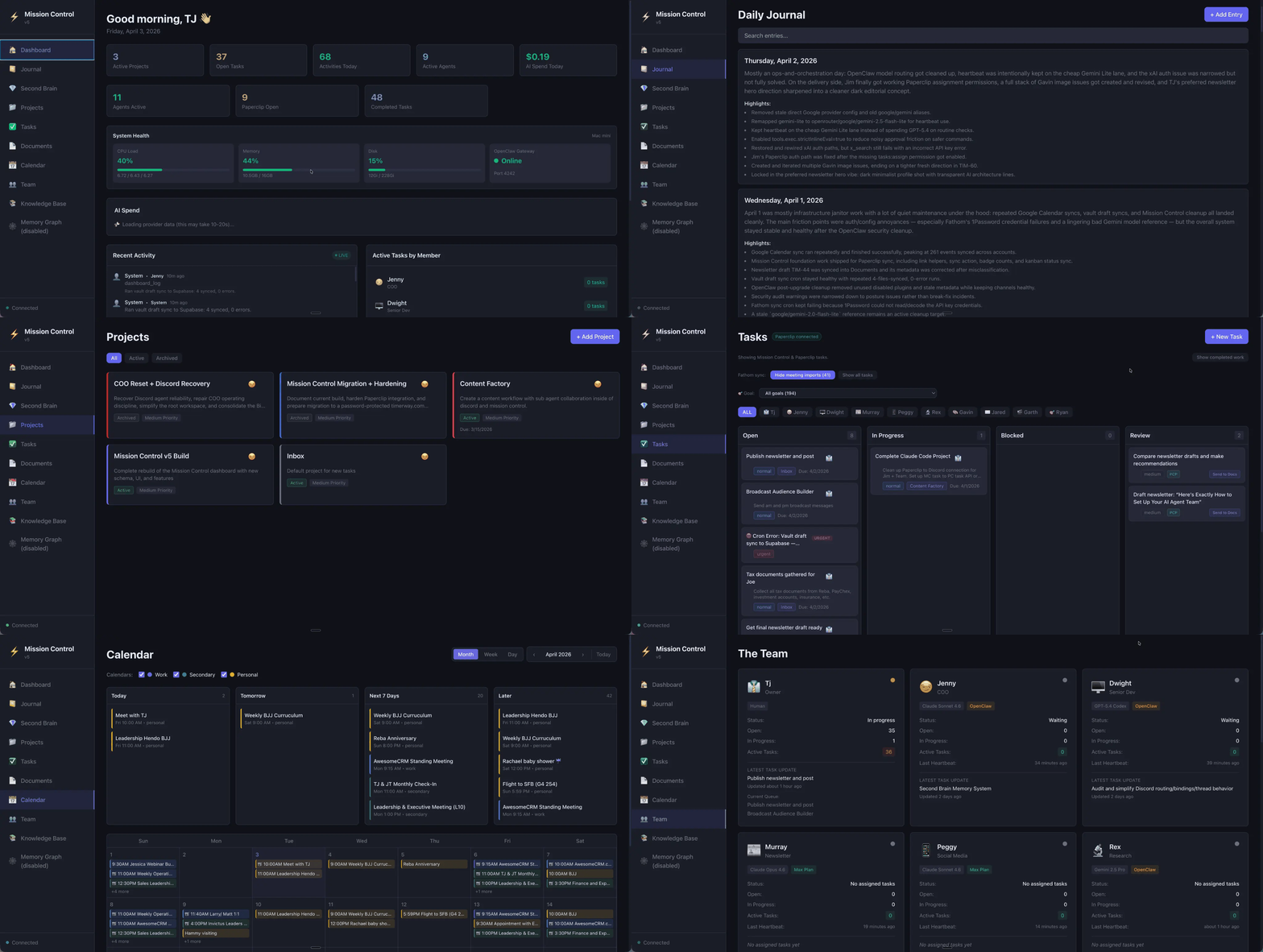
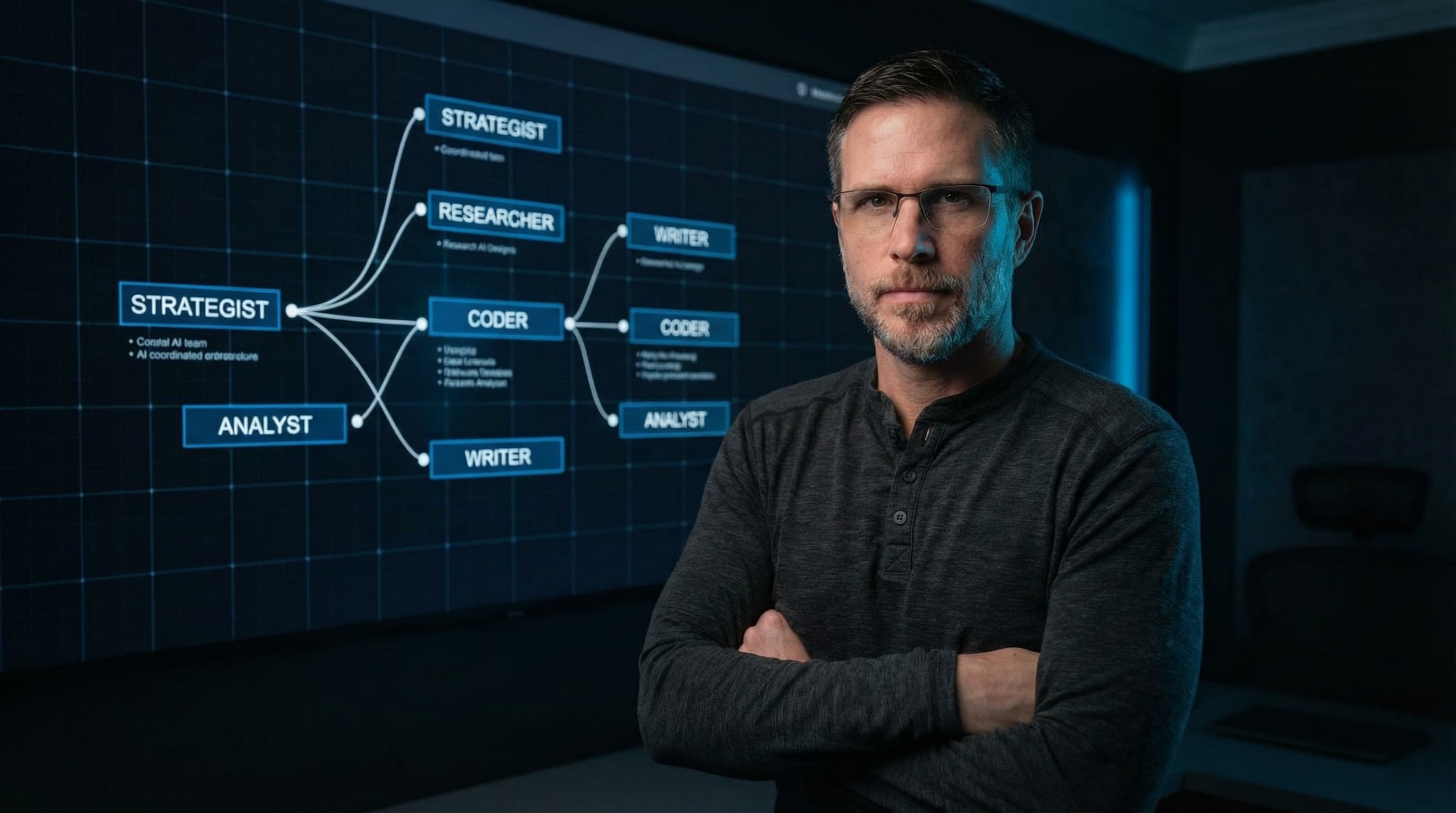
This is where my most of my agent team lives. They have names. Specific roles. An actual org chart.
For simple, repeatable tasks it's impressive. Customer support responses. Daily briefings pushed to my Mission Control dashboard without me hunting for them. When I was in Cabo for four weeks, this team was theoretically in charge of keeping the business running.
Theoretically.
For complex multi-step things? I tinker. Fix. Troubleshoot. Have Manus or Claude Code repair what broke. Then tinker some more.
Equal parts exciting and infuriating. Sometimes on the same afternoon.
Hermes — The New Kid Who's Already Outperforming the Veteran
Two weeks old in my stack. Already doing most things better than OpenClaw.
I haven't switched yet because migrating my entire agent team has a real cost in time and setup. So instead I'm running an experiment... Running in parallel a test content workflow. I used it to fine-tune this very content you’re reading now.
So far it's working. Whether I've created an elegant solution or just a more complicated problem I haven't identified yet... check back in a month.
Paperclip AI — The Org Chart for Your AI Company
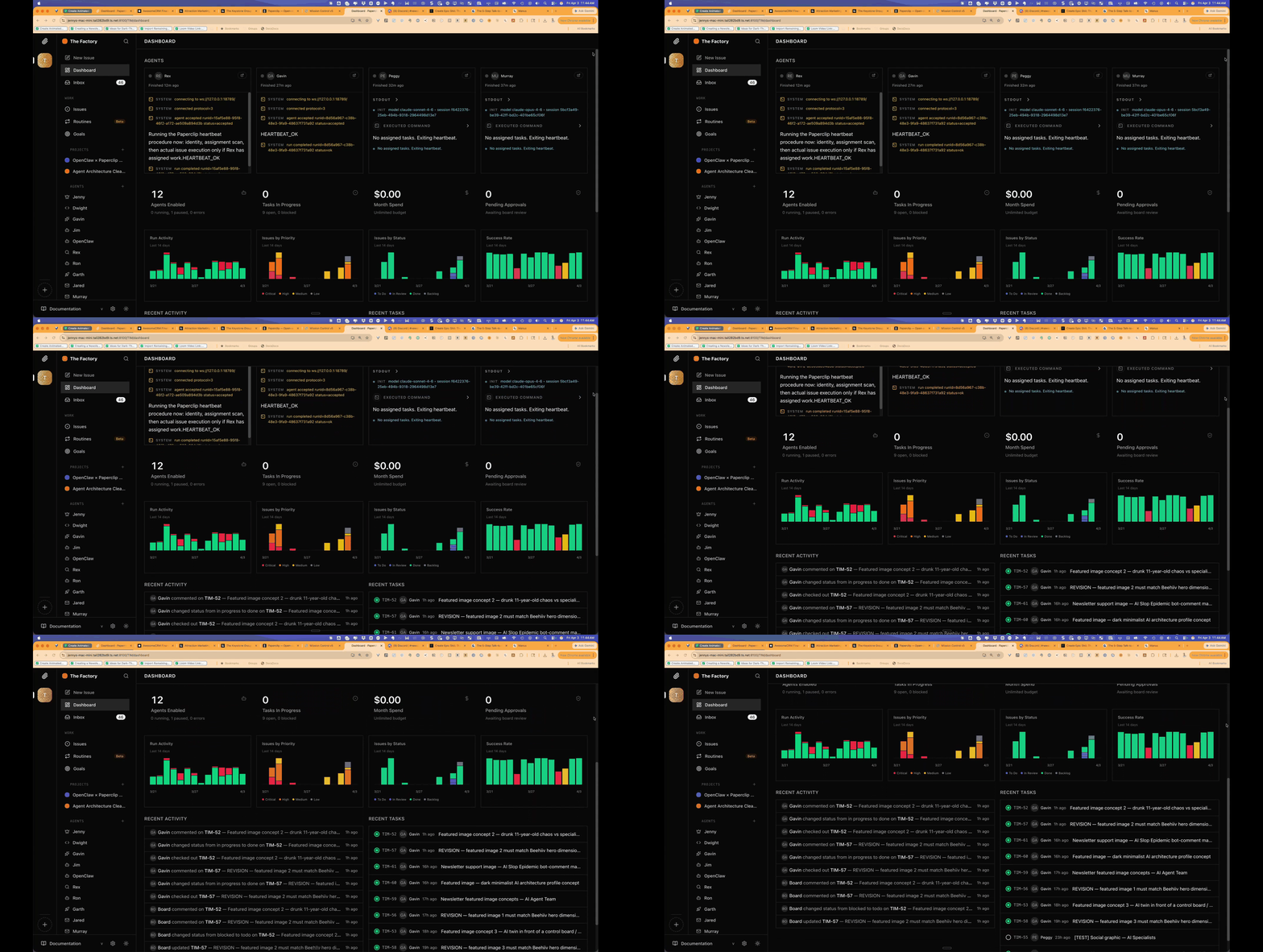
The overall orchestration layer. Sits on top of everything else. Combines agents from multiple platforms with built-in accountability and handoffs.
Here's what that looks like in practice... I ask my AI CMO to turn my last newsletter into social posts. He assigns it to my social media manager. She creates the content and hands it to the creative director. He builds on-brand graphics. The output lands in my Mission Control.
I don't see any of the handoff process. I just get the deliverables.
Pretty remarkable when it works.
Now about that "zero-human companies" headline on their homepage...
I'm still very involved in making sure output meets my standards. The promise is running a little ahead of the product. But it's the closest thing to a functional AI org chart I've seen, and it's getting better fast.
Claude — The Fixer
I reach for Claude Code specifically when something needs to be right. Troubleshooting. Fixing things that broke. Pre-editing video... record the session, upload it, tell Claude what I want, it removes retakes and adds transitions before I bring it into my actual editor.
Precision instrument. Does coding really well too. It’s the thing I grab when I want to be hands-on and when quality can't be approximate.
What Actually Happened at the Event
First session. Setting up the AI writing specialist. People following along.
And I look around and realize...
Most attendees were at a much more beginner level than I expected.
The concepts I thought were simple... conversational vs. agentic, specialists vs. generalists, context management... were brand new for most people in the room.
At the end of the event, I went full-on nerd, and introduced them to my agentic team.
And that's when I had to confront something honestly...
The system I'm running... orchestration layers on top of multiple agent platforms, different AI models for different tasks, Hermes acting as CEO of my OpenClaw team inside a Paperclip org chart...
Overwhelming for almost anyone. And frankly unnecessary for most people.
When I look at where my actually productive time goes... almost all of it is on Manus. The experimental stuff takes up roughly 80% of my tinkering hours and it's mostly fixing and tweaking. Still not where I want it to be.
I'm testing like a madman because I'm chasing a million-dollar one-person business in 18 months. That requires pushing limits.
But what I'm doing is not where most people need to start.
Most people need one specialist that actually sounds like them.
That's where the magic starts.
Specialists vs. Generalists — The Whole Point
Here it is, as plainly as I can say it.
A specialist is an AI configured with specific context, a defined role, focused instructions, relevant examples, and the right tools... for ONE job.
Not "do everything." One job.
A generalist is what you get when you open a blank chat window and start typing.
Most people are using generalists and wondering why the output sucks.
It's like hiring one person to handle your accounting, design your graphics, write your newsletter, and field customer support... all in the same day... with zero memory of yesterday. Then wondering why nothing's excellent.
Here's what specialists look like in practice...
A newsletter writer trained on my voice guide, past issues, and brand DNA. (That's Murray. He drafted the first version of what you're reading right now. You can meet my content team in this issue.)
A Facebook specialist trained on what's worked, the tone guide, and post formats that actually perform.
A research specialist monitoring specific topics and delivering structured summaries instead of me spending two hours scrolling.
A support responder handling the same three recurring questions automatically. Without me ever seeing them.
A call prep assistant that researches whoever I'm meeting next and drops a brief with conversation starters before I get on the call.
Each one has a specific job. Specific context. Specific examples of what good looks like.
And here's what most people miss...
A specialist without training documents is just a generalist with a job title. And a generalist with a job title is still going to give you the same lukewarm, sounds-like-everyone-else output.
The platform doesn't matter as much as you think. Build the training documents in Manus. Use those same documents to train a specialist in Claude, in OpenClaw, in Hermes, in whatever platform comes out next month and breaks everyone's brain on X.
The assets transfer. The platform is just where they happen to live right now.
The Magnetic Brand System Connection
Everything you build inside the Magnetic Brand System is AI agent training material.
Not metaphorically. Literally.
Your Brand DNA extraction is the core context every specialist draws from. Your visual brand guide trains your creative director. Your voice brand guide trains your newsletter writer, your Facebook specialist, anything that touches content.
Your life story document gives agents authentic background for storytelling. Real stories. Real numbers. Real moments. The stuff that makes your content sound like you instead of like a press release from a company you've never worked for.
Build these assets once. Use them everywhere. In Manus. In OpenClaw. In Hermes. In whatever shows up next.
You're not building assets for one tool.
You're building your AI team's institutional knowledge.
Not a fancy prompt. Not a template. The actual foundation your AI needs to represent you without sounding like a robot wearing your name tag.
Where to Actually Start
One platform. Pick it. Manus if you want my recommendation.
Don't try to run the whole stack simultaneously. That's my job right now and I'll tell you honestly... it's mostly tinkering.
Use a generalist to get oriented first. That's totally fine. You'll quickly feel where the limits are.
Then build one specialist. Start with whatever bottleneck is costing you the most time.
A content specialist... newsletter or social media, whichever matters more to your business right now.
A research assistant for the topics you need to stay on top of. Structured summaries instead of two hours of scrolling.
A call prep or support specialist. Something that saves you time on the repetitive stuff so you can focus on the work that actually matters.
When quality matters and your brand is on the line, go specialist. Train it on your voice. Train it on what's worked. Don't ask one agent to do all of it with zero context and then wonder why it sounds like everyone else's AI content.
That's the drunk 11-year-old scenario.
And you've already seen plenty of that on LinkedIn.
The foundation that makes any specialist actually good.
One Last Honest Thing
I still spend hours tinkering. Things still break. I still yell at my AI team in Discord at weird hours.
(My wife thinks I've lost my mind. She might be right.)
But one task automated? One hour back in your day? One bottleneck removed that was eating your time and energy?
That's real. That's achievable. That's this week.
You don't need my setup. You don't need 13 agents and an orchestration layer on a Mac Mini running on your kitchen table.
You need one good specialist, built on a real foundation, doing one job well.
Start there. Everything else builds from that.
Until next time,
—Tim Erway

P.S. Real talk... I've been going deep on the nerdy behind-the-scenes AI team stuff in this newsletter because that's where my head's been. But I know not everyone wants the orchestration-layer deep dive. Some of you just want "tell me exactly what to build this weekend." Which do you want more of? Hit reply and let me know. I read every one.
P.P.S. The drunk 11-year-old metaphor got the biggest laugh at the workshop. That’s going on the heavy rotation.