The One-Day Hermes Workflow I'd Build If I Were Starting Over
One agent. One content workflow. One day to set it up.
Quick personal note before we get into it.
If you've been wondering why I've gone dark on Instagram and Facebook... I got hacked seven weeks ago.
Someone got into my Meta Business Manager and locked me out of everything. Ad accounts. Pages. Business identity. Gone.
I got my personal account back. But Business Manager? Still dead in the water.
Eight support tickets. Every single one closed without resolution. Not resolved... closed. As in, "we've decided this conversation is over, peasant."
I'm paying Meta $150 a month for "enhanced support." The support has been about as enhanced as a gas station hot dog. I disputed the charge. I've filed complaints with the BBB, my state attorney general, and the FTC.
It's been maddening.
But it's also been clarifying.
When a single platform can nuke your business presence and then ghost you for seven weeks... that's not a business asset. That's a liability with a logo on it.
So I'm shifting. Owned content. Systems I control. Platforms that actually have functioning support departments. More on all that in a future issue.
For now... let's talk about a system I do control.
From 13-Agent Frankenstein to One Agent That Learns
Last week I gave you the field report on 13 weeks with my AI team.
The OpenClaw Frankenstein. The memory problems. The gateway crashes. The 45-hour setup that got a C+ on its stress test.
And I told you: if I were starting over today, I'd start with Hermes.
A lot of you replied asking for the how.
So here it is.
But first, important update.
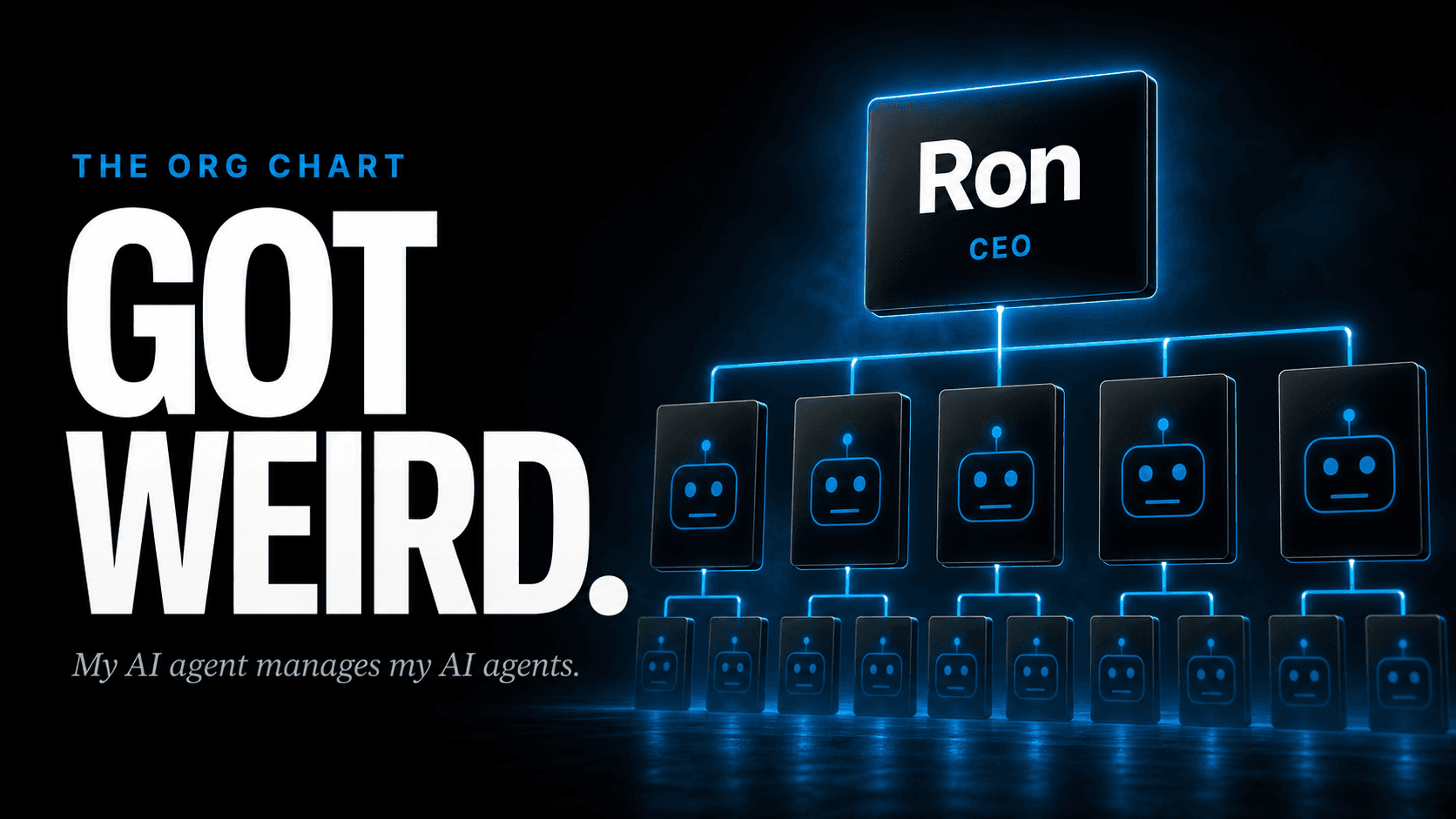
I've mostly stopped using OpenClaw directly. Hermes manages most things now. Ron, my Hermes-based CEO agent, runs the few remaining OpenClaw agents. And over time, I'm migrating the rest of the team to Hermes entirely.
OpenClaw got me here. It taught me what an agent system can do when it works... and exactly how much pain you eat when it doesn't. I don't regret building it.
But Hermes is where I'm going.
And if you're just starting? You don't need to take the scenic route through hell like I did.
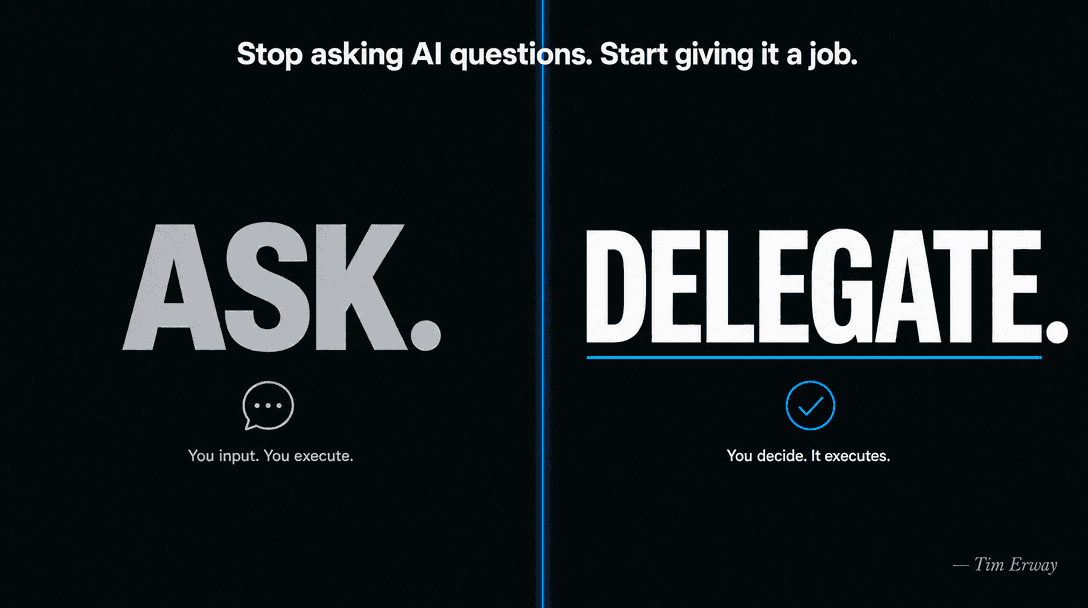
You don't need an AI company on day one. You need one Hermes agent trained on one repeatable content workflow.
That's the whole thesis. Let me show you what it looks like.
What Hermes Actually Is (30-Second Version)
Hermes is an agentic harness built by Nous Research. Open source. Works with any LLM... Claude, ChatGPT, Gemini, Grok, local models, whatever you want to plug in.
Two things make it different from everything else I've used:
It remembers. Not "kinda remembers if you configure it right." Actually remembers. Every conversation builds on the last one. No more 50 First Dates with your AI.
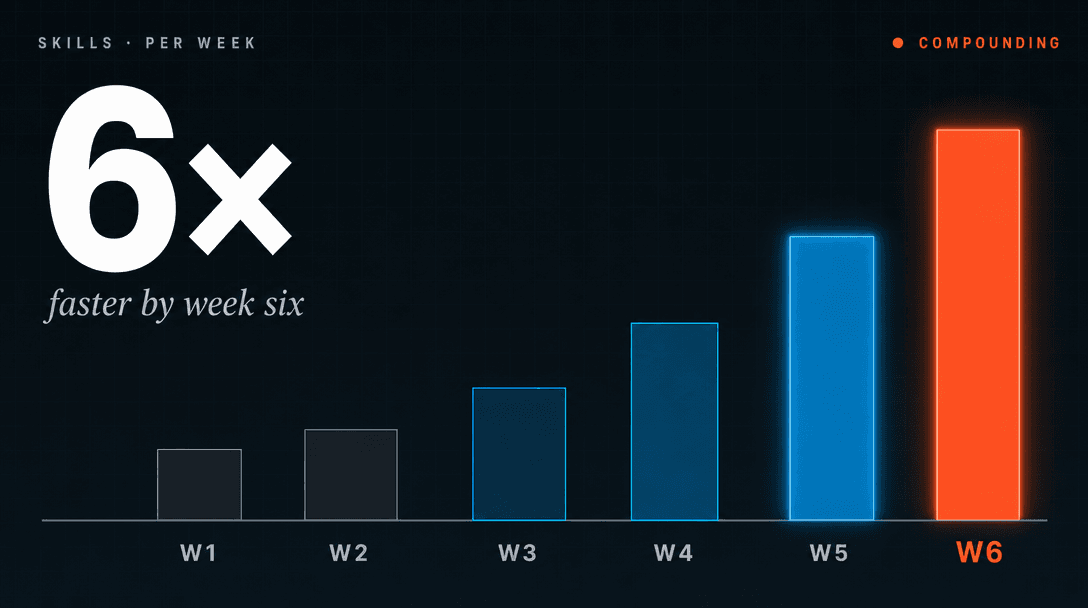
It builds skills. Every time you walk it through a process, it learns that process and creates a reusable skill. Next time is faster. The time after that is faster still. It compounds.
An agent that gets better the more you use it, instead of one that resets to zero every morning.
One Agent, Five Hats
Here's what your day-one Hermes content agent looks like. One agent wearing multiple hats... not five agents fumbling around without context.
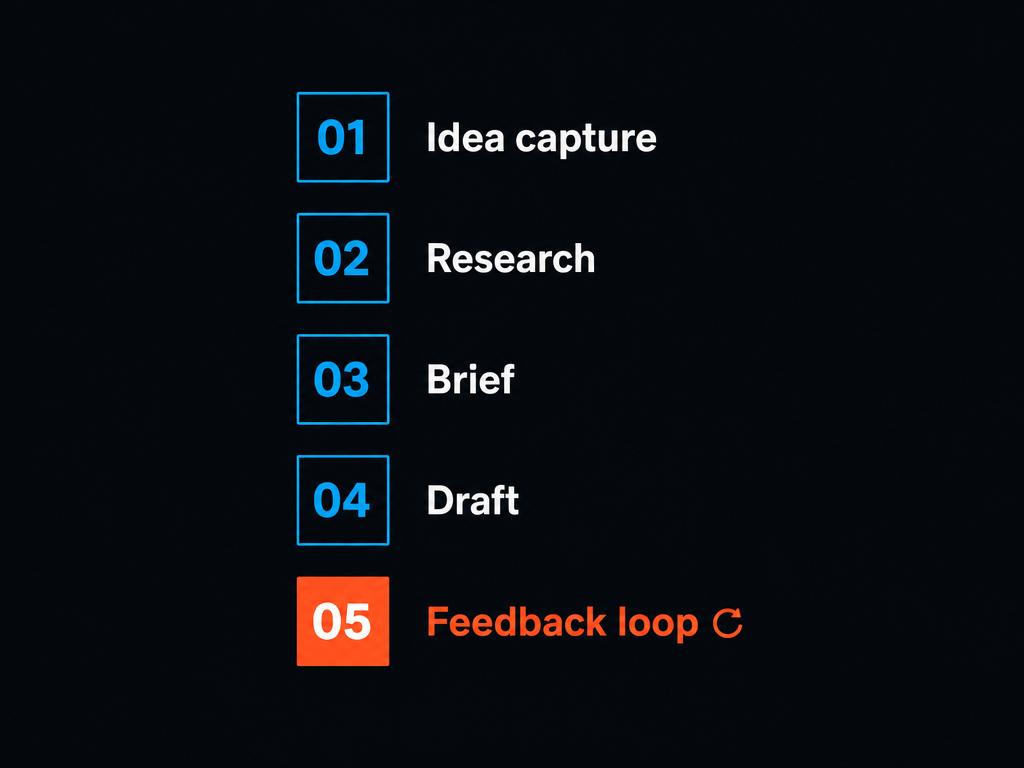
Hat 1: Idea Capture / Voice Memo Processor
You talk into your phone or dictate a brain dump. Your agent takes the raw audio transcript and turns it into structured notes. Key ideas, potential angles, quotable lines, loose threads worth exploring.
No more losing ideas because you didn't have time to write them down properly.
Hat 2: Research and Angle Discovery
Your agent monitors sources you care about. Newsletters, X accounts, YouTube channels, industry blogs. It surfaces what's trending, what's performing, and what's relevant to your audience.
Eventually, this can become a weekly research brief delivered automatically. On day one, just have it run the process once so you can teach it what "useful" actually means.
Hat 3: Content Brief Creation
You pick an idea. Your agent builds a structured brief around it... angle, outline, key points, supporting research, audience context.
The brief is the blueprint. It saves you from staring at a blank page every week.
Hat 4: Outline or Draft Creation
Once you approve the brief, your agent drafts. Not publish-ready on day one... but a working first draft that captures the structure, the argument, the flow.
You edit instead of create from scratch. Massive difference.
Hat 5: Feedback Loop / Skill Building
Every time you give feedback... "tighter intro," "wrong tone here," "I'd never say it that way"... Hermes learns. It builds a skill around your preferences. Your voice. Your style.
The drafts get closer to you over time.
All five hats. One agent. Every hat gets sharper with use.
The One-Day Setup
Here's the realistic timeline. If you're technical, you'll move faster. If terminals make you nervous, give yourself the full window.
Either way... one day.
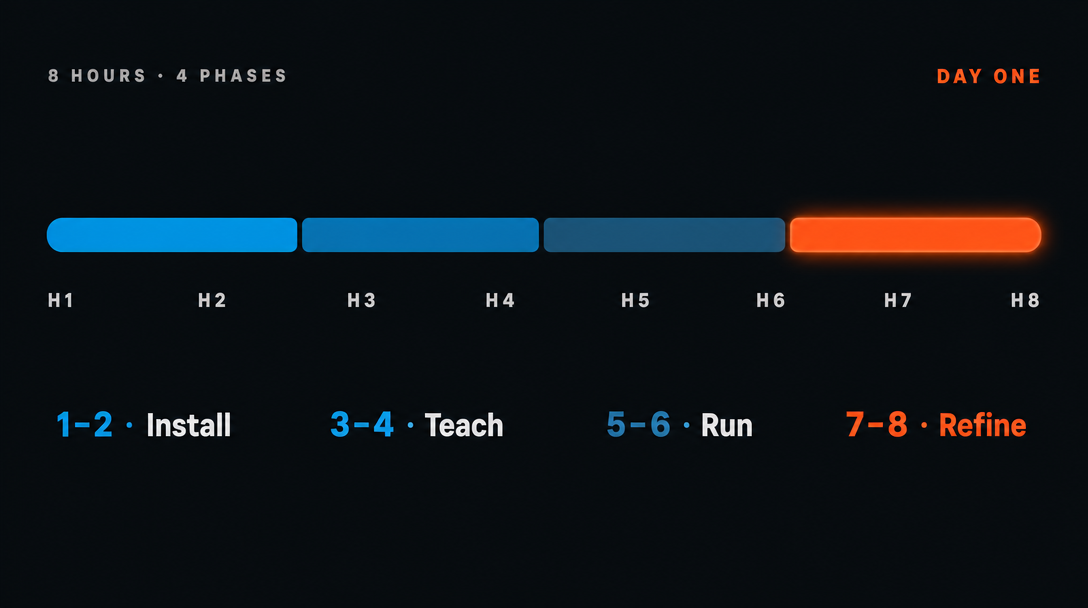
Hours 1-2: Choose Where It Lives and Install
Three options:
Your main computer. Totally fine if you're comfortable with it. This is what I did three weeks ago... installed Hermes on my daily driver Mac workstation. Start with limited permissions and expand access as you build trust. Just know that scheduled tasks don't run when your computer is asleep.
Quick settings if you go this route:
Mac: System Settings → Energy → prevent sleep while plugged in. Keep network access on. A desktop or Mac Mini is more reliable than a laptop for always-on use.
PC: Power & Battery → set "When plugged in, put my device to sleep after" to Never. Disable hibernate. You want the machine awake and online.
A dedicated machine. My recommendation if you have one. A Mac Mini is ideal... plug it in, set it up, forget about it. Runs 24/7 without touching your daily workflow. Good luck finding one in stock. AI developers have them sold out for months.
A VPS. If you can't keep a machine running 24/7, grab a DigitalOcean Droplet for about $8/month. I mentioned this last week, too. Works well for always-on agents when you don't have dedicated hardware.
Install Hermes. The Nous Research team has a quickstart guide that walks you through every step. If the terminal intimidates you, ask Claude or Manus to walk you through it. They're great at hand-holding through command-line setup.
Hours 3-4: Teach It Who You Are
This is the part most people skip.
Don't.
Before you give your agent a single task, spend an hour having a conversation with it. Tell it:
What you do and who your audience is
What content you create and how often
What your voice sounds like (share examples... past newsletters, blog posts, social posts)
What platforms matter to you
What your biggest time sinks are in the content creation process
This conversation becomes the foundation for every skill Hermes builds. Skip it, and you'll spend weeks correcting an agent that doesn't know you. Invest the time upfront, and everything downstream gets better.
Then walk it through the five hats with real examples:
Give it a voice memo and have it extract ideas
Point it at 3-5 sources you follow and have it pull a research brief
Take one idea and have it build a content brief
Approve the brief and have it draft something
You are not trying to create five perfect skills in two hours. You're giving Hermes the first reps. The point is to show it the workflow, correct it, and let the skills start forming.
Hours 5-6: Run Your First Real Workflow
Now do it for real. Not a test. An actual piece of content you need to create this week.
Drop your raw idea in. A voice memo, a few bullet points, a half-formed thought. Let the agent research. Let it build the brief. Review the brief, give feedback, approve it. Let it draft.
This is where you'll feel the difference.
You're not starting from zero. You're reviewing and editing instead of creating from nothing.
Hours 7-8: Review, Refine, Iterate
Read the draft. Give honest feedback. "This intro is too soft." "I'd never phrase it this way." "The section on X needs a personal story." "Tighten this up."
Every note you give becomes training data. Hermes adjusts. The skills sharpen.
Run a second pass if you have time. You'll see the improvement immediately.
By the end of the day:
You have one Hermes agent with the start of a real content workflow
It knows your voice, your audience, and your process better than it did that morning
You've produced (or nearly produced) a real piece of content
And next week will be faster
The Progression: Where It Goes From Here
Day one is one agent.
But this scales naturally when you're ready.
Level 1: One Hermes content agent. The day-one setup above. One agent handling research, briefs, drafts, and feedback. This alone saves you hours every week.
Level 2: Two or three specialized Hermes agents. When the workload justifies splitting. A dedicated researcher. A strategist/editor. A writer or repurposer. Each with deep skills in their lane. You'll know when you need this because your single agent starts juggling too many hats.
Level 3: A managed agent department. This is where something like Paperclip comes in. When you have multiple agents handing work to each other, you need a task board. Status tracking. Reporting. A system that manages the agents so you don't have to check in on each one individually.
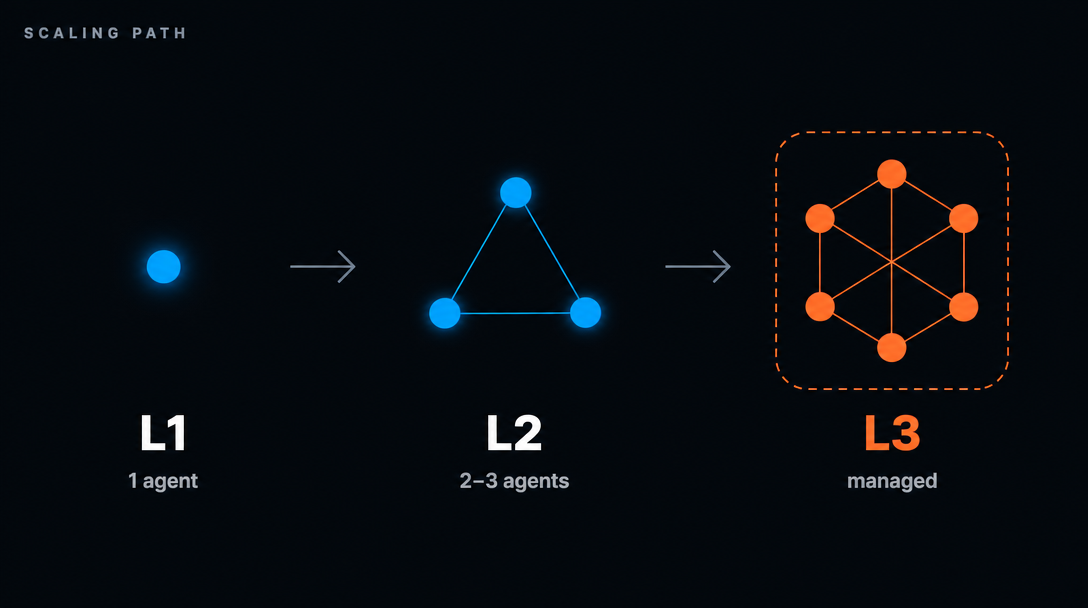
But you don't need Level 3 on day one. Or day thirty. You need it when you have enough agents doing enough work that managing them manually becomes the bottleneck.
I jumped straight to Level 3. It cost me 45 hours and three months of headaches.
Don't do that.
What Not to Do
I made every one of these mistakes so you don't have to.
Don't install five tools. You need one. Hermes. Everything else is optional until you've proven the first workflow works.
Don't create multiple agents. One agent with five skills beats three agents that barely know you. Split when the workload demands it, not before.
Don't automate publishing. Not yet. The human review step isn't a bottleneck... it's a feature. Trust comes from repetition, not from flipping a switch.
Don't grant full access on day one. Start with limited permissions. Let the agent earn trust. Expand access as you see consistent, reliable output. You can always open more doors. Closing them after something goes wrong is harder.
Don't confuse more tools with more leverage. Leverage comes from one workflow that compounds, not from a stack of software you barely use.
The fastest way to ruin an agent setup is to scale the chaos.
Stop Starting From Zero
Here's what this actually gives you.
You stop starting from zero every time you sit down to create.
No more blank pages. No more spending 45 minutes researching before you can even think about drafting. No more reinventing your process every single week.
Instead, you drop an idea in. Your agent researches. It builds the brief. You review. You edit the draft instead of writing it. And every week the agent gets better at all of it because Hermes actually learns.
This newsletter you're reading? Murray drafted it. Jim did the brief. Rex fed the research. I talked into a microphone, reviewed the output, and shaped it into what you're reading now.
The whole thing used to take 3-4 hours. Now it takes 60-90 minutes. Some issues even less. I broke down exactly how I create a 2,500-word newsletter in 20 minutes if you want the receipts.
That's not automation.
That's leverage.
And it's the whole point.
What's Next
If you want it, I'll share:
My starter prompts for a first Hermes content agent
The agent instructions I use to set voice, tone, and workflow
A first-workflow template you can copy and run on day one
Reply and tell me. If enough of you want it, I'll put it together for next week.
And about that Meta situation... I've got a lot more to say about what happens when you build on a platform that can't even answer a support ticket.
That's coming soon.
Until next time,

—Tim Erway

P.S. Last week I said if I were starting over, I'd start with Hermes. This week I showed you how. One agent. One content workflow. One day. No Frankenstein. No 45-hour marathon. No six-agent launch party. Just one agent that learns your process and gets better every week.
That's enough. Start there.
P.P.S. If Meta wants to talk to me about my Business Manager, they know where to find me. The eight closed tickets, the BBB complaint, and the state AG should give them my contact info from at least three different directions. I'll wait.