The Agent Is the Least Important Part
Follow one offer from a sentence in a chat to a checkout you can test.
Every YouTuber out there is debating which bot is best right now. Grok Bot, Hermes, Claude Duet, ChatGPT Dots... pick one, and somebody's got a video telling you it's the one.
I've used a few of them myself. They're good. But if you want one to help launch your offer, I think the agent is the least important part.
Suppose you give it the job of writing your sales letter. Where does it go to find out who buys from you? Who taught it how to put an offer together? And if you love the letter, how does the agent building the order page know which version you loved?
The good stuff is in the files underneath.
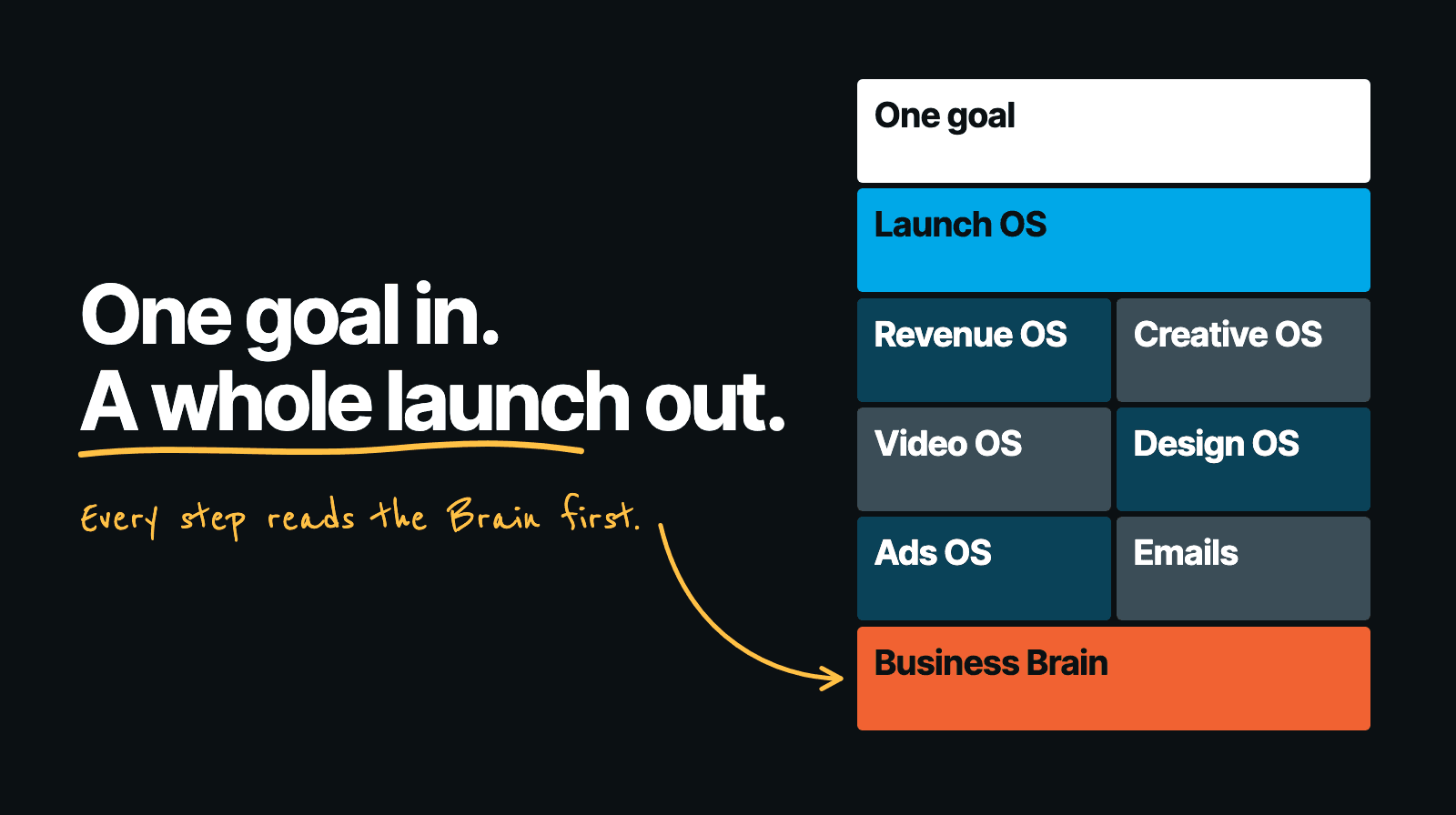
Your Business Brain tells the agent about your business. Each operating system gives it instructions for one job, and Launch OS passes the work you approved to whoever needs it next.
I'll walk you through a launch so you can see what goes in those files and where you still get a say.
One goal in. A whole launch out.
Every step reads the Brain first.
Give the agent somewhere to look
Think about what you'd give a new employee on their first day. You could sit with them while they write an email and explain your business every time they get a sentence wrong. Yeah... sounds like a lovely way for two people to spend an afternoon on one email.
Or you could give them examples of emails you like, tell them who they're writing to and show them what that person can actually buy. Now you can spend your time on the part where you read the email and decide whether you'd send it.
Your Business Brain is six files about your business.
Every other system reads it first.
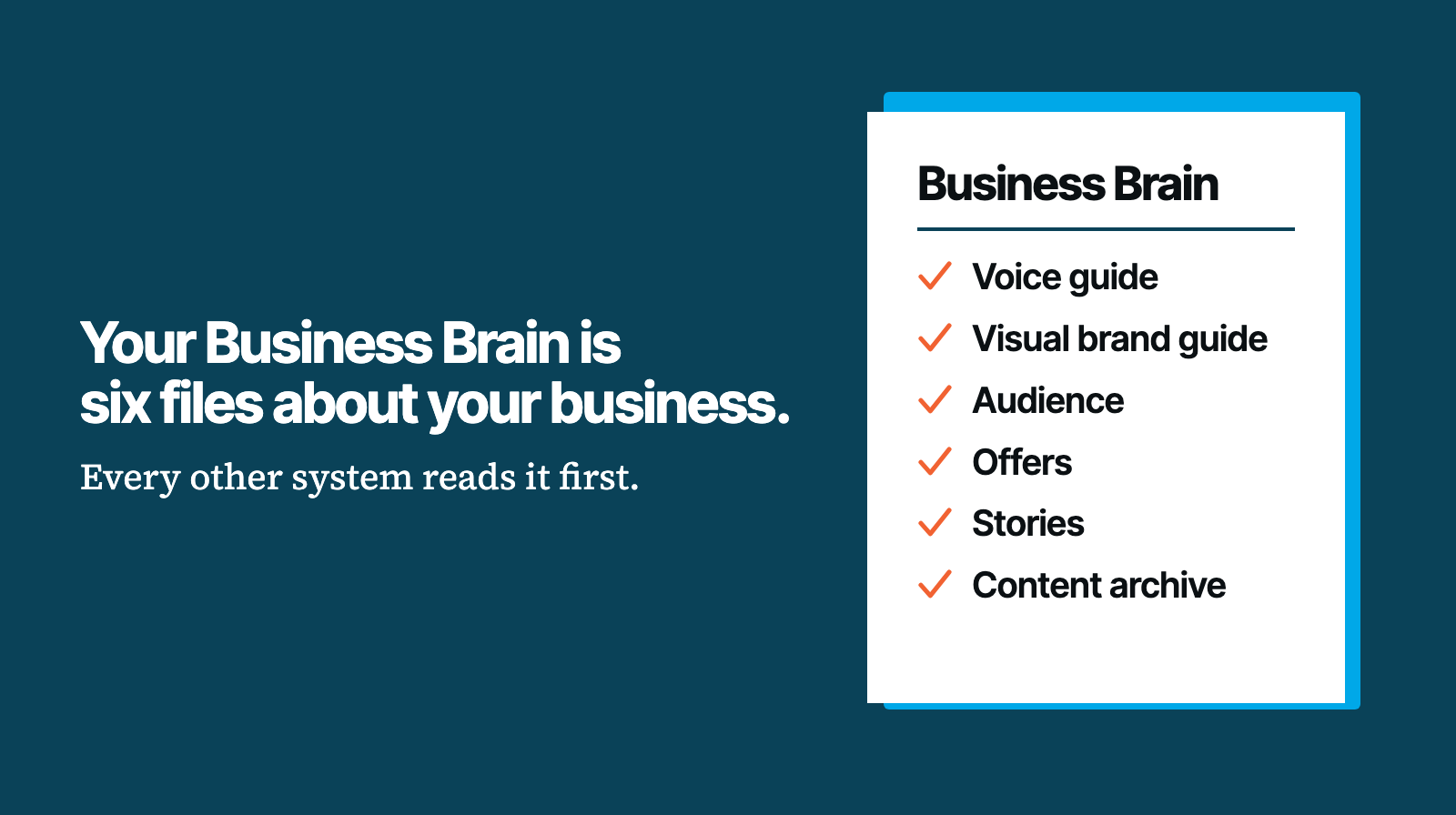
You own the files. There's a voice guide for how you talk, a visual brand guide for how your stuff looks, an audience file for who you serve and an offers file for what you sell.
Your stories and your content archive give the agent real material to pull from when it needs an example of something you've done or written.
The systems have a different job. A framework helps the agent make a decision, like which part of an offer belongs in the headline. A runbook tells it what to do next, like testing the checkout before it hands you a page to review.
The agent is the one that opens those files and does the work.
Let's give it somebody to work for. Maya Okafor and her business, Tradebooks, are made up. Tradebooks is the example business that comes with Revenue OS, so if you open any of the frameworks, it's the same business you'll see there.
Maya ran a building crew before she trained as a bookkeeper. She coaches plumbers, electricians and builders with 2 to 15 staff.
The thing she helps an owner figure out is whether there's enough cash to pay everybody next week. Friday would be a good time to know that.
Here's a little test. Both times, ask the AI to do the same thing. Write the opening line of an email about my Friday Numbers offer.
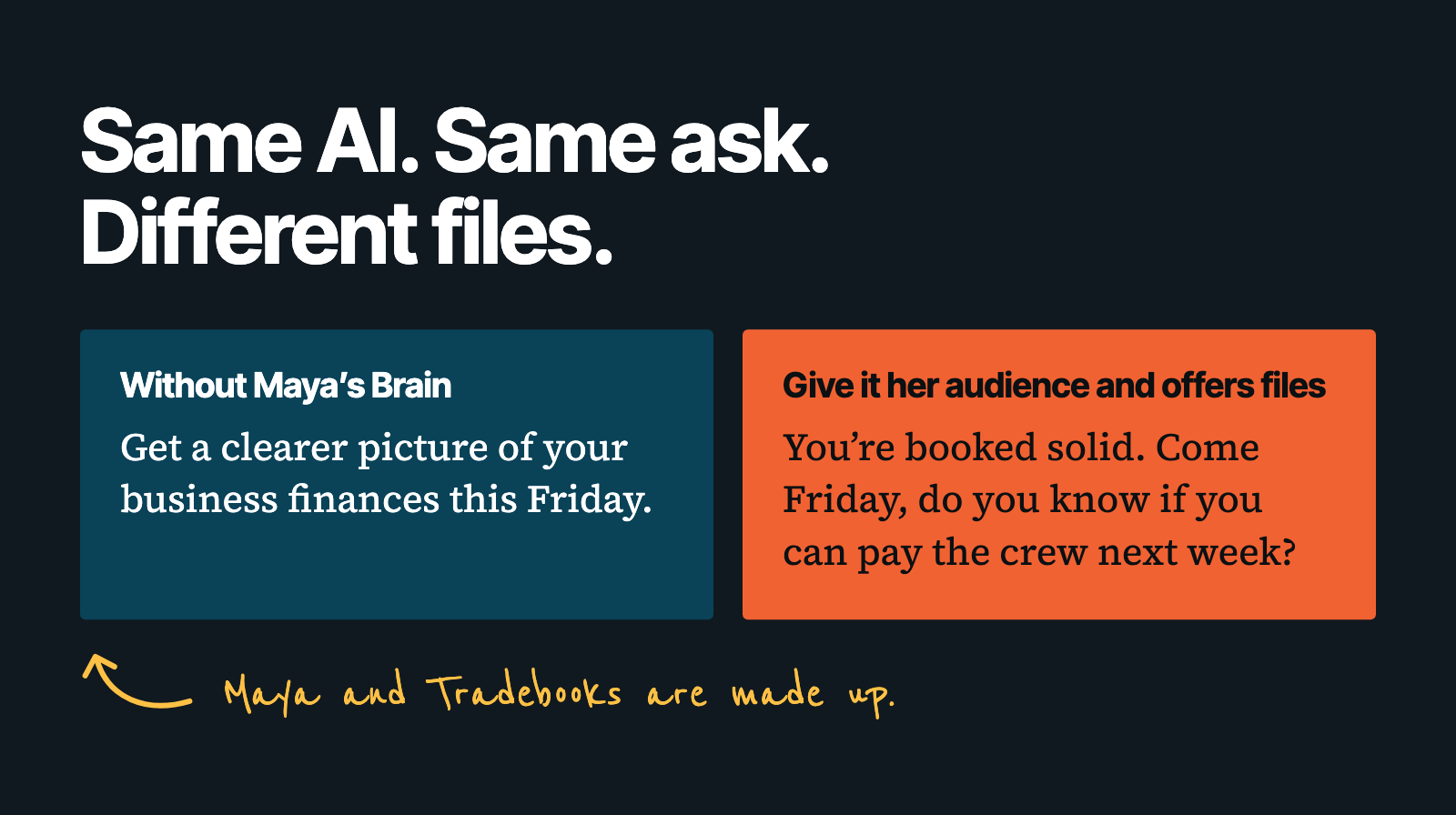
Without Maya's Brain, you'll probably get something like Get a clearer picture of your business finances this Friday.
Give it her audience and offers files and try the very same request. You might get You're booked solid. Come Friday, do you know if you can pay the crew next week?
I'd read on if I were the guy borrowing money to make payroll. The first one? Could just as easily be an email from my bank... and I'm not opening that thing.
Same AI. Same ask. Different files.
Take one offer all the way through
Maya opens a session and types one goal. You can do this with Claude, ChatGPT's Codex, or your chief of staff agent. The agent has to be able to see your files to run the systems.
Launch my Friday Numbers offer, from the offer to a live funnel.
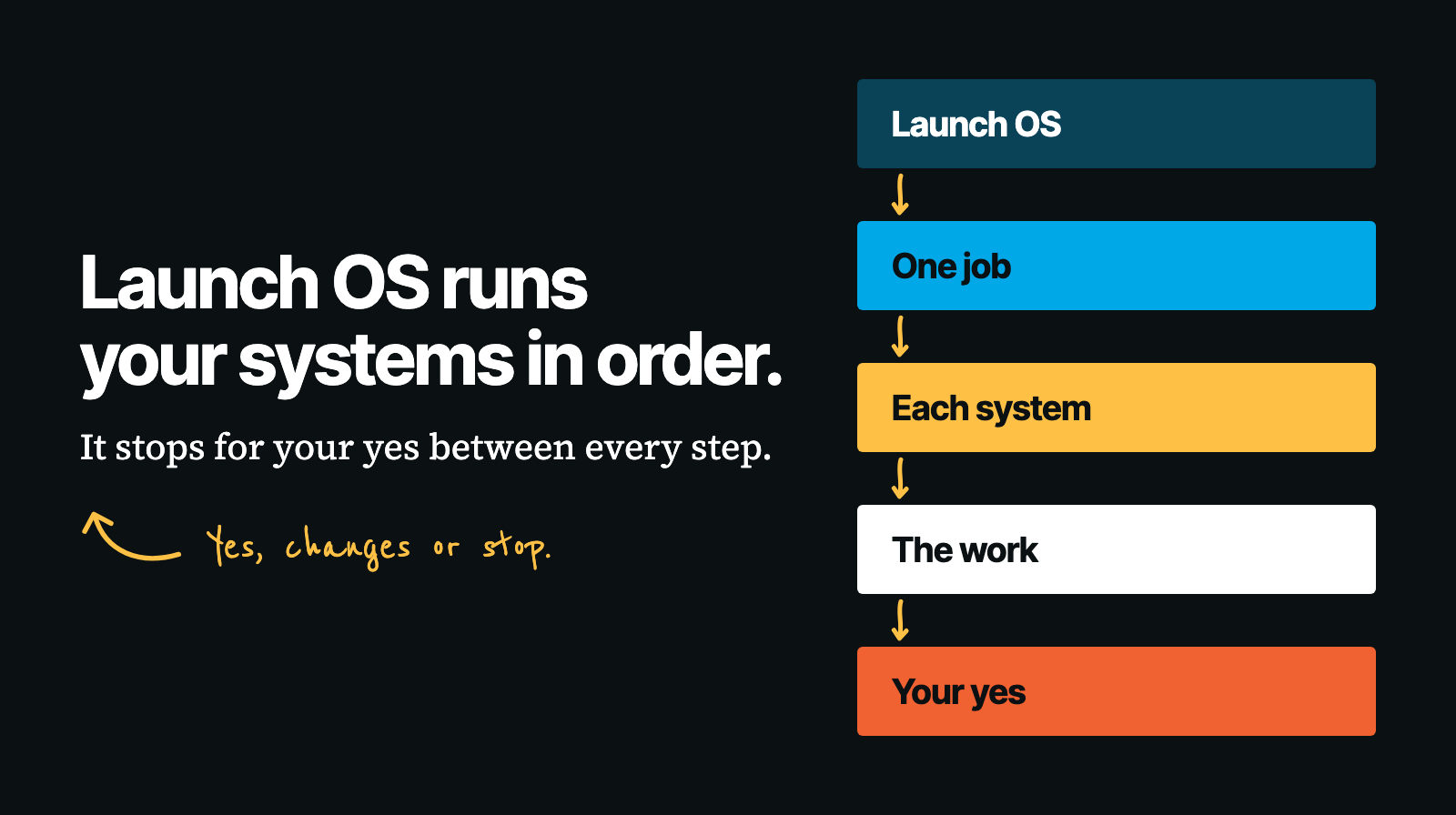
Launch OS doesn't write a word itself. It figures out which system does each piece and in what order. Out comes a plan she can follow in one tracker. She'll see the offer up first, the copy that depends on it, and the work that can start once she's happy with the words.
She can look down that tracker all the way to the checkout. Right now the decision in front of her is whether to start on the offer. She can say yes, ask for changes or stop.
Launch OS runs your systems in order.
It stops for your yes between every step.
First up is Revenue OS. It builds the offer, plans the launch and writes the copy, all in your voice.
A marketing department in a folder.
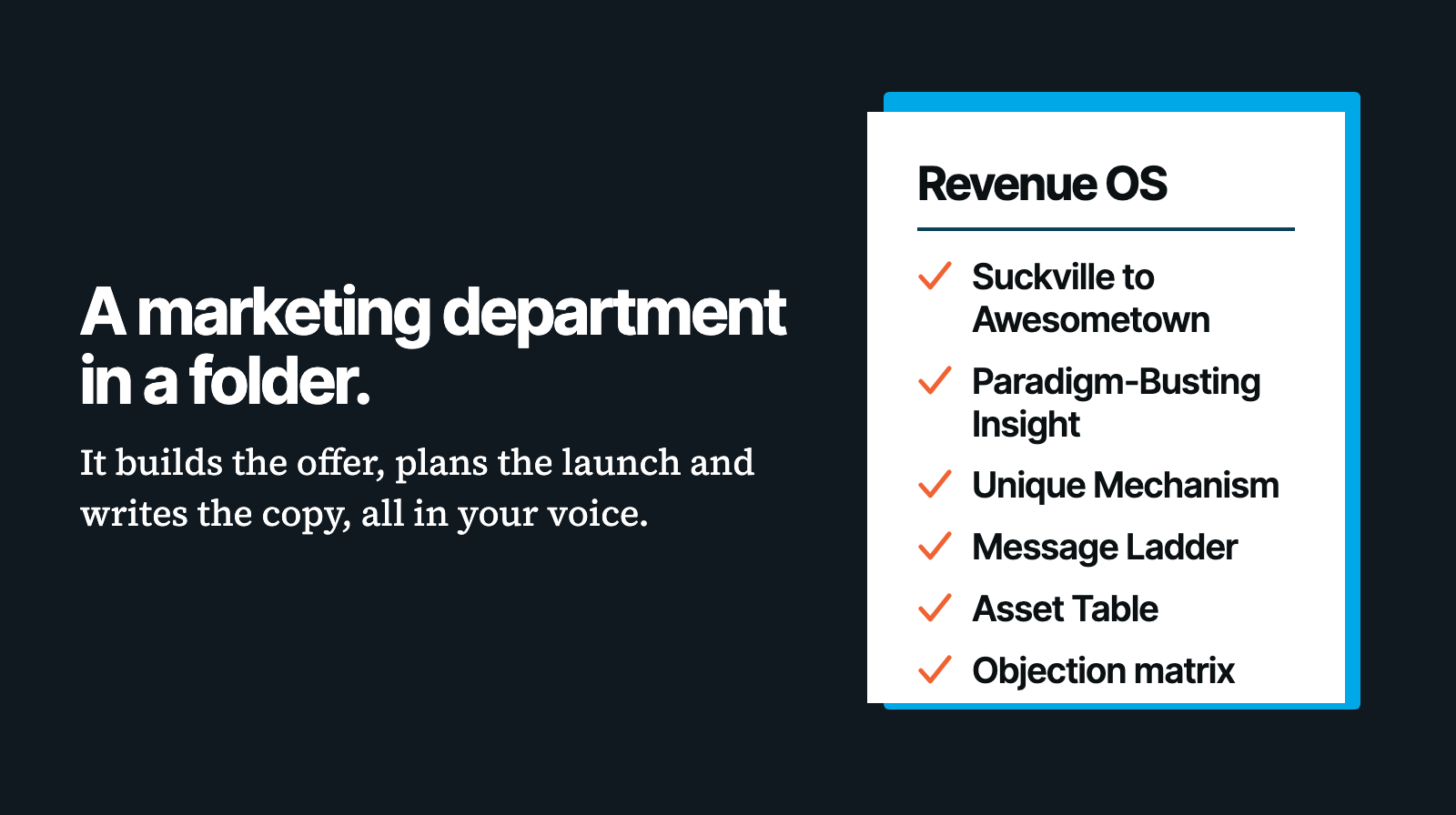
It opens Maya's audience file, offers file and voice guide. The first question the offer framework asks is where the buyer is today and where they'd like to be. The name in the folder is Suckville to Awesometown. Pretty hard to forget which way you're trying to go, lol.
For Maya's buyer, Suckville is a full calendar, invoices that haven't gone out and Sunday spent doing the books. Awesometown is knowing on Friday whether the crew gets paid next week, with the weekend back. You can see why an offer about becoming a better bookkeeper would miss the guy completely. Dude wants his Sunday.
The Paradigm-Busting Insight gives Maya a way to explain how he got here. Profit is an opinion and cash is a fact.
You can be booked solid and still go broke.
The Unique Mechanism is her Friday Numbers routine. Twenty minutes, five numbers, one decision, every Friday.
Put that together and Maya has an offer she can read back to herself. She teaches owners of small trades businesses to use Friday Numbers to check their cash before the weekend.
She gets to fix that description now. If it's right, her yes gives Revenue OS an approved offer to plan around.
The launch plan has a Message Ladder, which lays out what the buyer needs to believe and in what order. I'd start Maya's with the gap between work booked and cash available. Once a builder sees why a full calendar doesn't answer the payroll question, he's got a reason to care about the five numbers on Friday.
The Asset Table turns that thinking into assignments. The ad can lead with the full calendar. An email can take up the payroll question.
The sales letter has room to explain the routine, and the video sales letter, or VSL, needs a script Maya could actually say out loud. She can review that plan before the agent writes the pieces.
Take the objection matrix. Before writing, the agent works through the buyer's likely objections. A builder who's already doing the books on Sunday hardly needs another bookkeeping chore.
Maya can answer that one directly. The routine asks for 20 minutes on Friday.
That gives the sales letter something worth saying halfway down the page. For the video, the VSL word budget helps the agent decide how much of that explanation Maya can fit into the time she's speaking. She gets a script with a teleprompter cut and a shot list, along with the letter, page copy, ads and email drafts to read before any of them go further.
See what your yes sets in motion
Say Maya approves an ad that reads Booked solid. Can you pay the crew next week? Creative OS takes the approved words, reads her visual brand guide and picks up the colors and fonts from her Brain's brand settings. Now there's a specific ad image to make for Tradebooks.
Maya sees a dry run and the cost first. Once she gives the go-ahead on that number, the image model draws the scene and code puts the type on it.
Copywriters can be kind of particular about a question mark... I know I am. I'm all for keeping the one she approved.
Your words, set exactly as written.
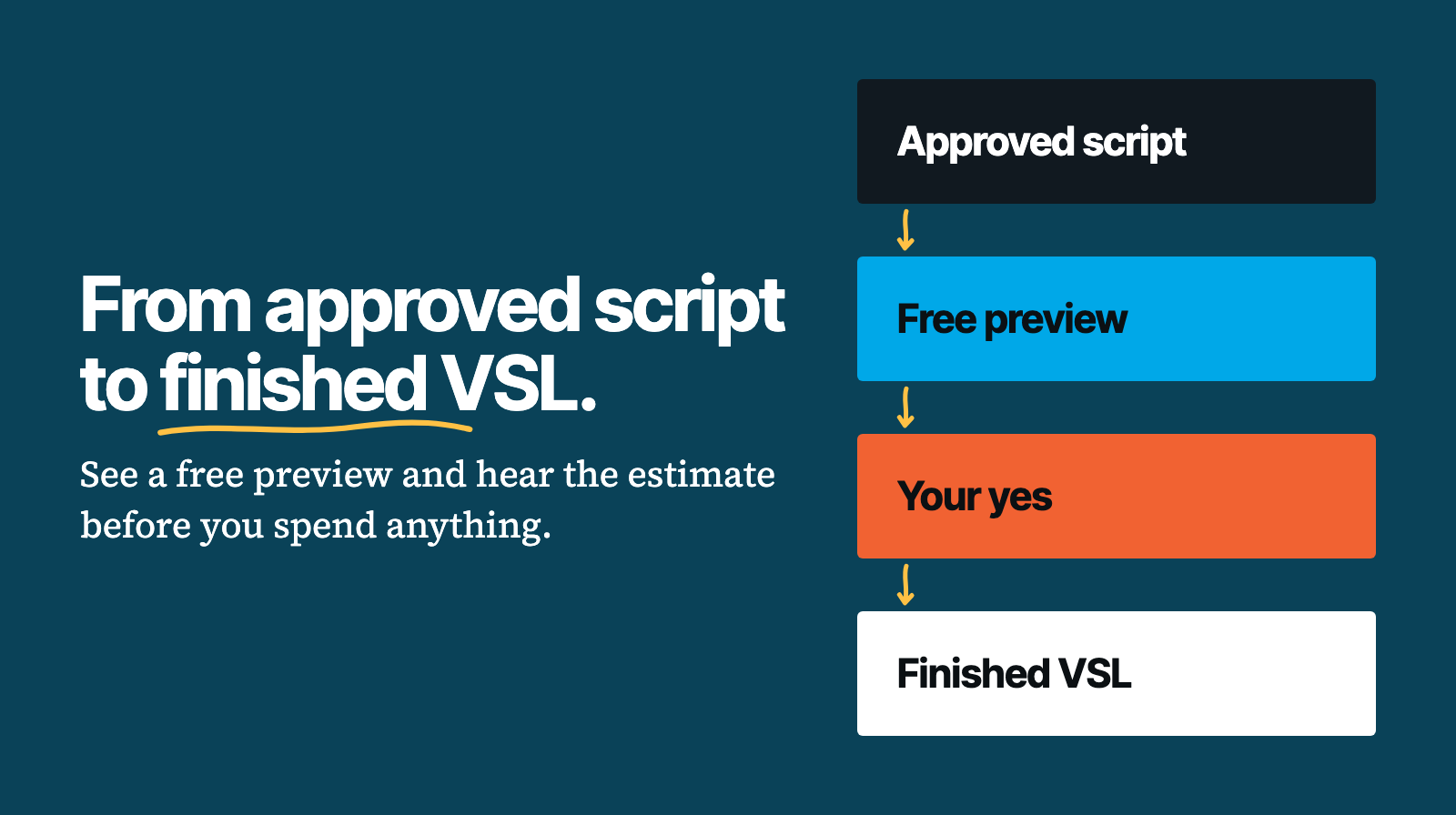
Now take the script Maya approved back in Revenue OS. Video OS starts with that script and her voice guide. She gets to choose how to present it. For this one I'd pick words on screen over her voice. I'd put the payroll question up while she asks it, then let her talk the owner through what Friday Numbers is for.
The shots are planned against the time the narration actually takes. Maya can see a free preview and hear the estimate before she decides whether to spend anything. After her yes, she gets an edited, captioned Friday Numbers video to review for the sales page.
From approved script to finished VSL.
Design OS reads the same visual brand guide and color and font settings that Creative OS used on the ad. It takes the approved page copy and builds Maya a sales page for Friday Numbers, an order page and a thank-you page. Now she can follow the path she asked for back in that first sentence.
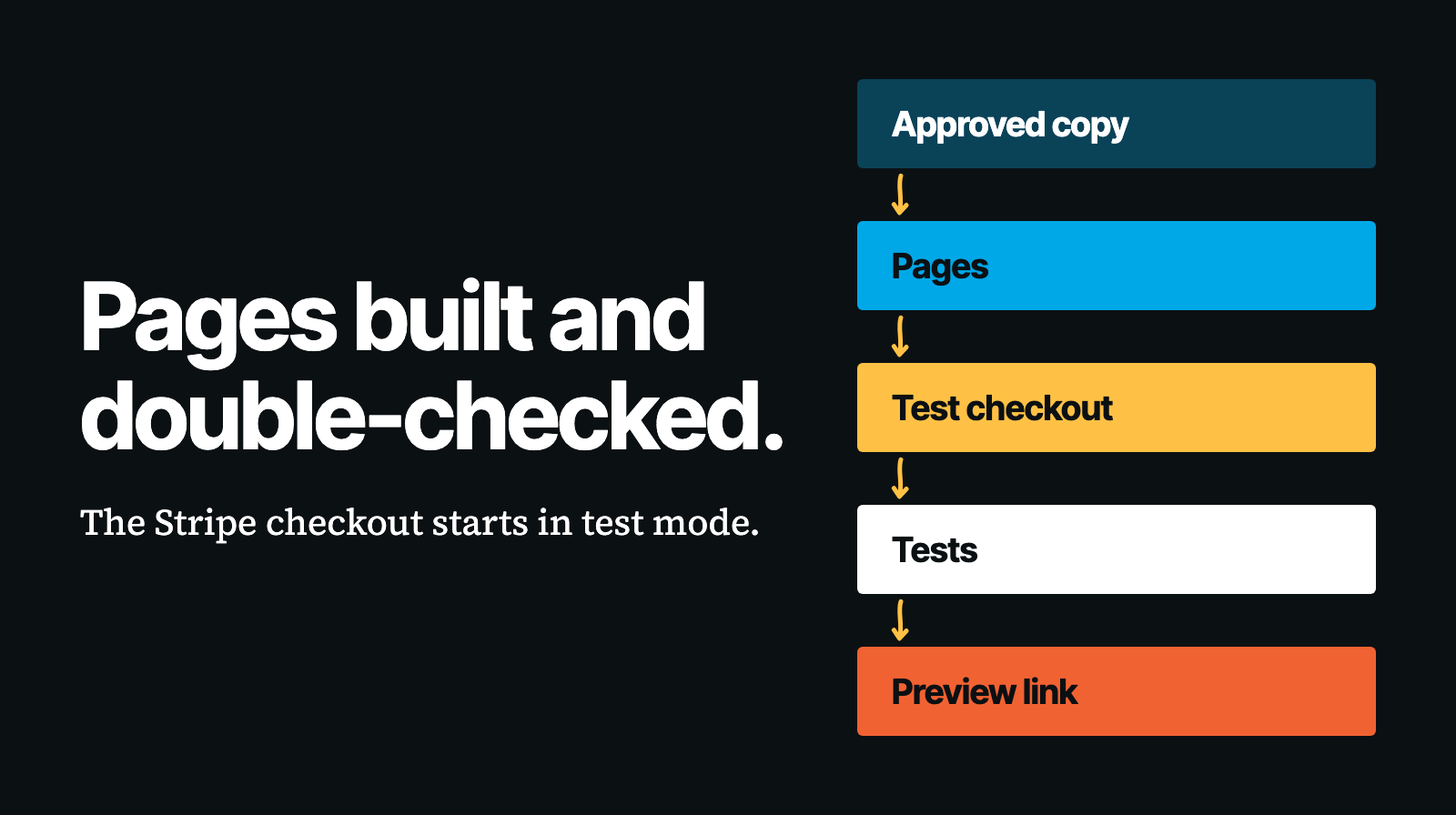
The Stripe checkout starts in test mode. Design OS tests the forms, runs a test purchase and checks the thank-you page. Maya gets a preview link so she can click through it herself.
I'd start where the builder starts and read the offer before clicking the order button. Is it still clear what I'm signing up for when I get there?
Maya has a separate say on taking live payments and putting the funnel on the real domain. She can approve the look of the pages and still take her time with those decisions.
Pages built and double-checked.
When it's time to launch ads, Launch OS routes them to Ads OS. It has her approved Tradebooks image and the ad about payroll ready to go. She gets a written plan to approve, and the campaign gets built switched off and checked before anything turns on.
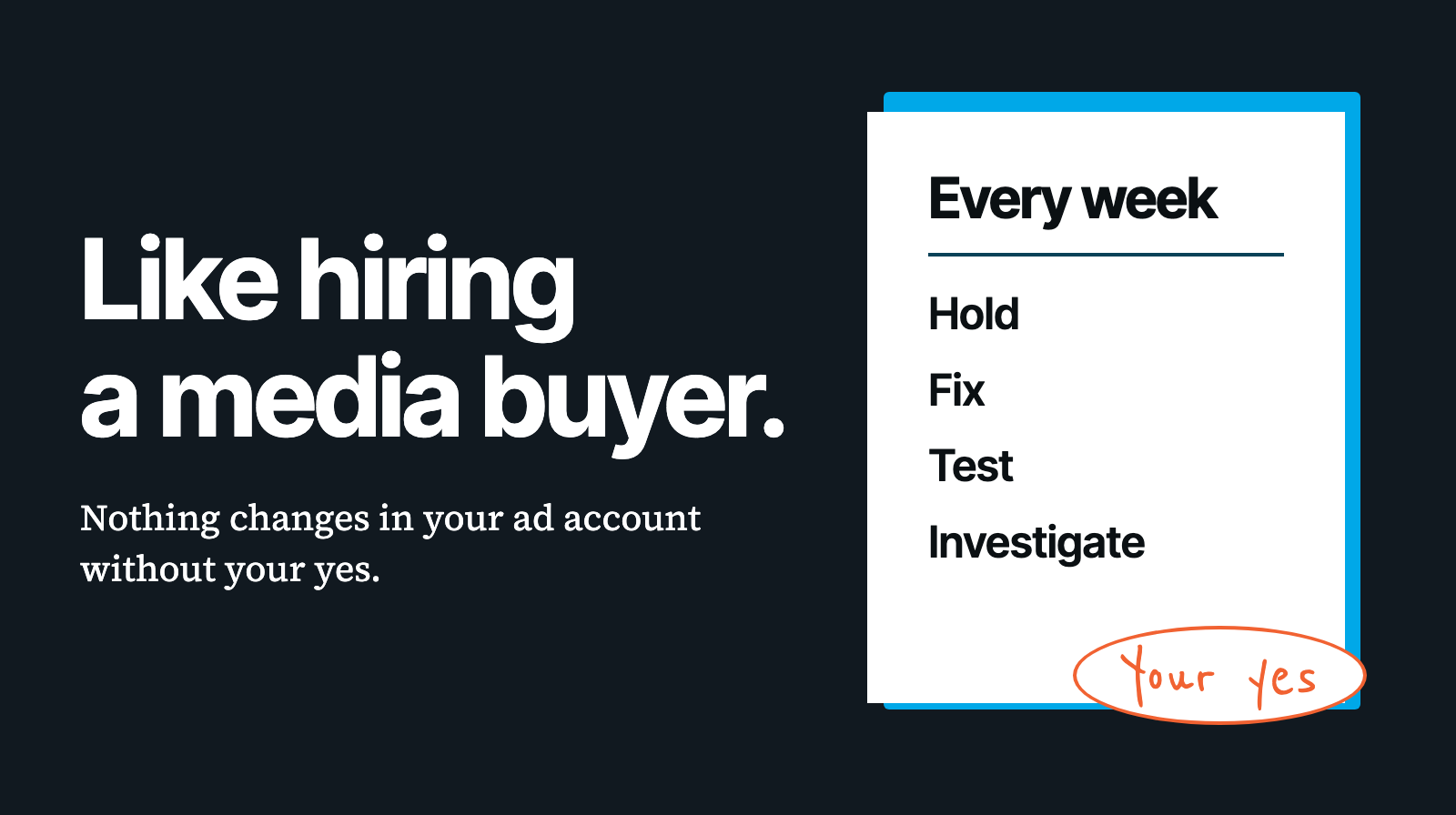
After that, it checks the ads every week and makes one call per campaign: hold, fix, test or investigate.
Like hiring a media buyer.
Nothing changes in your ad account without your yes.
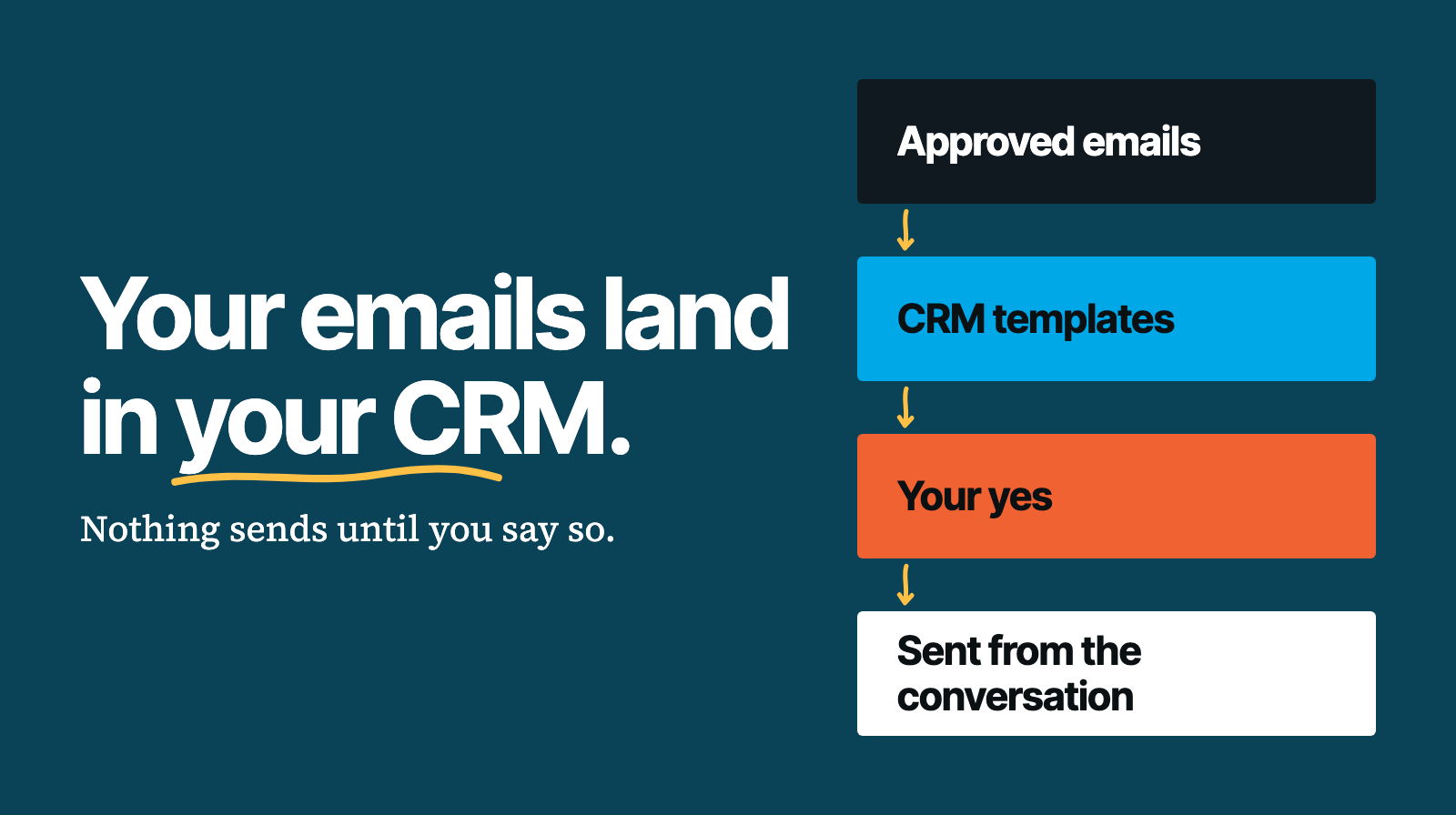
That leaves the emails. Remember the draft that opens with a booked-solid owner wondering about payroll? It came from Maya's audience file, offers file and voice guide, and she approved the copy back in Revenue OS. Her CRM is connected to her AI, so that email and the rest of the sequence go right into an email template in her CRM.
Maya can open the actual email, read the subject line and decide when she's ready for a builder to get it. She can even send it right from the conversation... it just takes her yes.
Your emails land in your CRM, ready to send.
Nothing sends until you say so.
Start with the part you'll use again
Go back to that opening line about payroll. Maya needed to know one pretty specific thing about her customer to write it. That same bit of knowledge helped her decide what went on the ad, what she said in the video and what a builder needed to see when he clicked through to the page.
Without the Brain, every new agent starts from zero.
You're there explaining, again, that Maya works with people who run crews and that a full calendar tells you precious little about Friday's bank balance. By the time you've explained it to the person writing the ad, you might as well have written the damn ad.
That's where I want to spend my time, building the systems underneath the agent. That's what lets it turn out solid work. When I add a system, it reads what I've already taught the others about my business and gets on with the new job.
If you're starting from scratch, I'd start at the bottom. The Business Brain is free. One prompt interviews you, you answer out loud like you're talking to a friend, and your AI writes all six files in under an hour.
You'll get the free Business Brain training in my members area.
Until next time,
—Tim Erway

P.S. If your best examples are already sitting in Obsidian or a folder of old newsletters, leave them there. Your AI can link the Brain to the notes you already have. No need to spend your Sunday moving files around, either.