I Never Mowed My Lawn Again
The first hire that bought back 20 hours a week, and what that means for your first agent.

We've got friends and family in town, and yesterday we spent the day touring Biltmore House and the grounds. I managed to do the whole Biltmore visit without taking a picture.
By the time we got to the North Carolina Arboretum for Winter Lights, I remembered I had a phone. So this is where I was Friday when you'd usually have a letter from me.

Anyway, about that lawn at Biltmore. Vanderbilt didn't mow his own lawn.
The estate is about 8,000 acres today, and about 75 acres of that is landscaped gardens. Frederick Law Olmsted designed the gardens.
Who keeps up with all of it? A 2021 write-up counted 43 people on the horticulture crew, five arborists and six people on the turf crew.
Six people just for the grass. Which got me thinking about the guy I used to have mowing my lawn.
Me.
We lived on over an acre of land, and about three-quarters of that was grass. I was the stay-at-home parent with four young kids, trying to build a business from my kitchen table. Somehow, with all that going on, I figured mowing the lawn was my job, too.
How I got four hours a day to work
I'd watch the kids, do what I could to keep the house clean, get out there and mow. When the kids were quiet, I could work on the business.
How often are four young kids quiet at the same time? I was working nights, squeezing in work whenever I could, and I was exhausted.
Summers were super frustrating. The kids were home, the grass kept growing, and whatever I wanted to get done at the kitchen table was going to have to wait.
It's kind of obvious to me now. If I wanted that business to go anywhere, somebody else could mow the lawn. At the time I had a much better grasp on what it would cost me to pay somebody than I did on what it was costing me to do it myself.
So I decided I was never going to mow that lawn again. I hired a neighbor who liked being outdoors and actually enjoyed mowing. He was glad to do it.
That worked out pretty well for both of us, and it got me looking at the rest of my day.
The harder thing to admit was how distracted I was with my kids. I loved being their dad.
But I'd be with them thinking about the business, and then I'd try to concentrate on the business with four crazy kids running around. I had a hard time being present for either one.
I decided I needed a part of the day when somebody else was taking care of the kids and I could sit down and work. I couldn't afford much. I found a sitter who could come to the house for four hours a day.
That gave me 20 hours a week. Just as important, I knew when I was going to get them. There's a pretty big difference between sitting down to write knowing you have the morning and trying to start something because, hey, everybody seems quiet right now.
I started getting more done, and the business started having some success. Later I hired a salesperson to help with sales in my first business, and I hit multiple six figures that year. I also hired a tech guy to build a piece of software that ultimately launched my second seven-figure business.
Back at the kitchen table, I couldn't have told you I needed a tech guy. I could've told you exactly what I wanted to do with four hours if somebody would just watch the kids.
What would you do with the time?
When I'm building a team, my first hire has historically always been somebody to handle admin, often an executive assistant. Admin stuff drives me crazy.
Unfortunately, I'm perfectly capable of doing it. Give me a morning to write and there's always one little thing I can take care of myself before I get started.
Maybe you can relate. Most of us grew up hearing some version of the same plan.
Go to school. Get good grades so you can get into a good college.
Get your degree, work really hard at a company, and eventually you get to retire.
Along the way you learn to be self-sufficient. If you can figure out how to do something yourself, good for you.
I still think that's good advice. Knowing how to change the oil in your car is a perfectly good skill to have.
Does that mean every time the car needs an oil change, you ought to be the one under it? I knew how to mow, too.
Entrepreneurs tend to be wired a little differently, but you can decide to go into business for yourself and still carry all those habits with you. I did.
Being self-employed came pretty naturally to me. Thinking like a business owner took some practice.
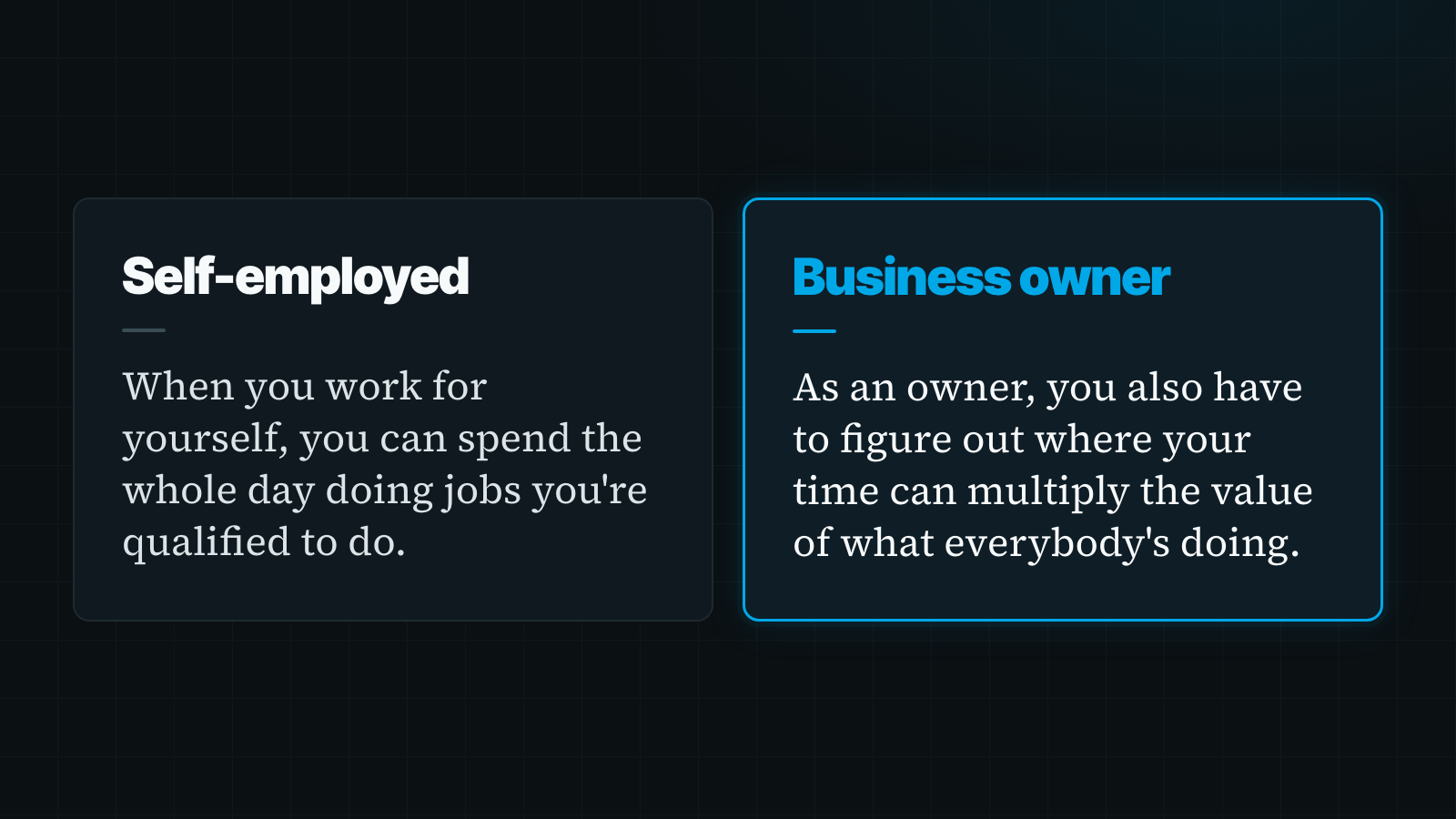
When you work for yourself, you can spend the whole day doing jobs you're qualified to do. As an owner, you also have to figure out where your time can multiply the value of what everybody's doing.
Working harder at whatever lands in front of you doesn't answer that question.
For me, the best return is usually in marketing, particularly direct response copywriting and creating content that connects with my ideal customers.
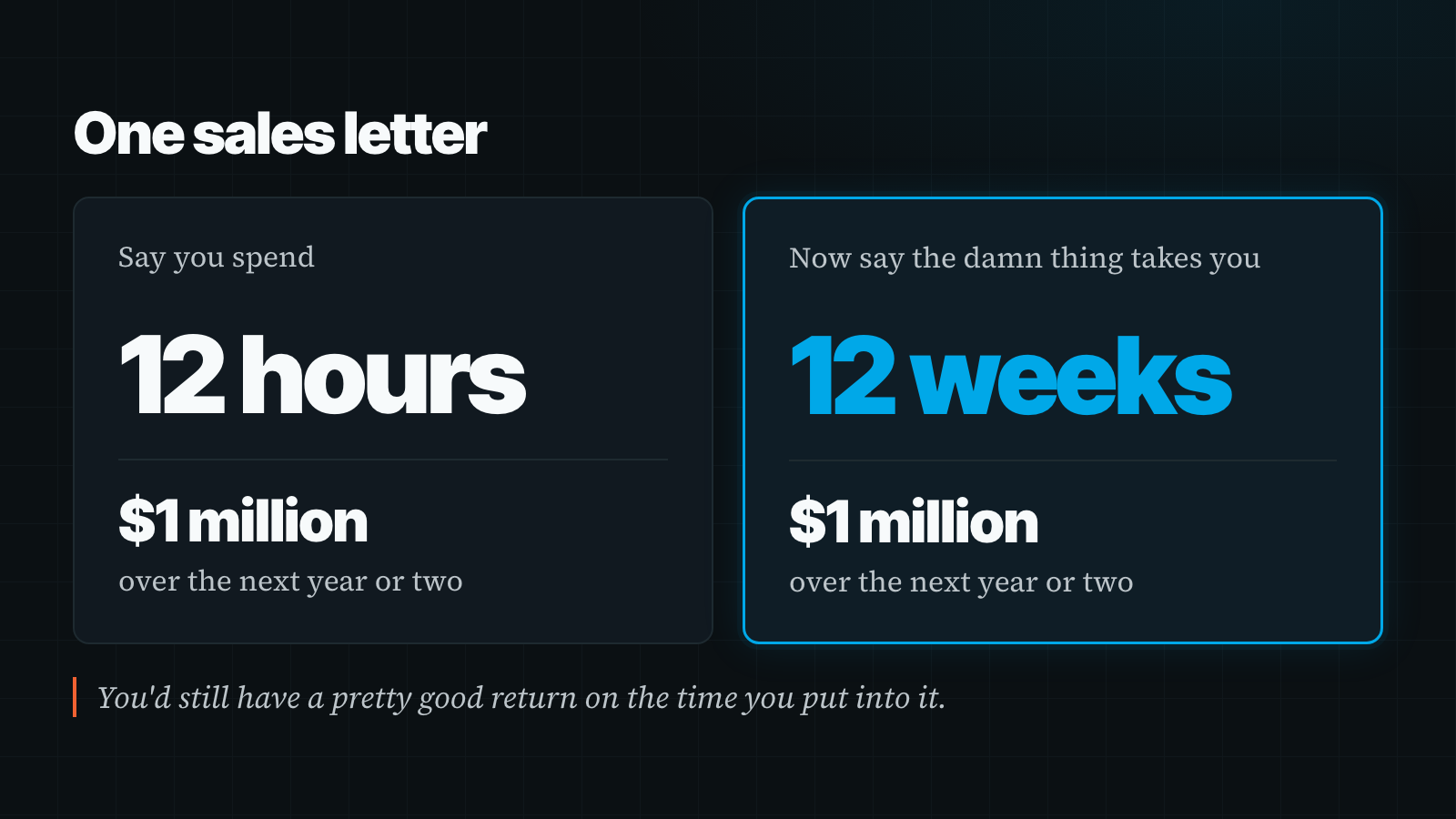
Take a sales letter. One well-written sales letter can mean millions of dollars to a business.
Say you spend 12 hours writing one and it makes you $1 million over the next year or two. Now say the damn thing takes you 12 weeks. You'd still have a pretty good return on the time you put into it.
If you don't quantify the value of your time, others will gladly do it for you.
That's what I mean by quantifying the value of your time. I don't know ahead of time what a letter will make.
But I can look at an offer, think about who might buy it and make a reasonable case for spending my morning writing the copy. Then I can look at what it'll cost me to have somebody handle the admin.
Suddenly those little jobs I can do myself look a lot more expensive, especially the ones I seem to find every time I'm about to sit down and write.
Try walking back through a workday you remember pretty well. If you called the whole morning “marketing,” how much of it went into something a customer would actually read?
What were you doing right before you got to that part?
Were you looking for a document? Waiting on an answer? Reviewing something somebody else could've approved?
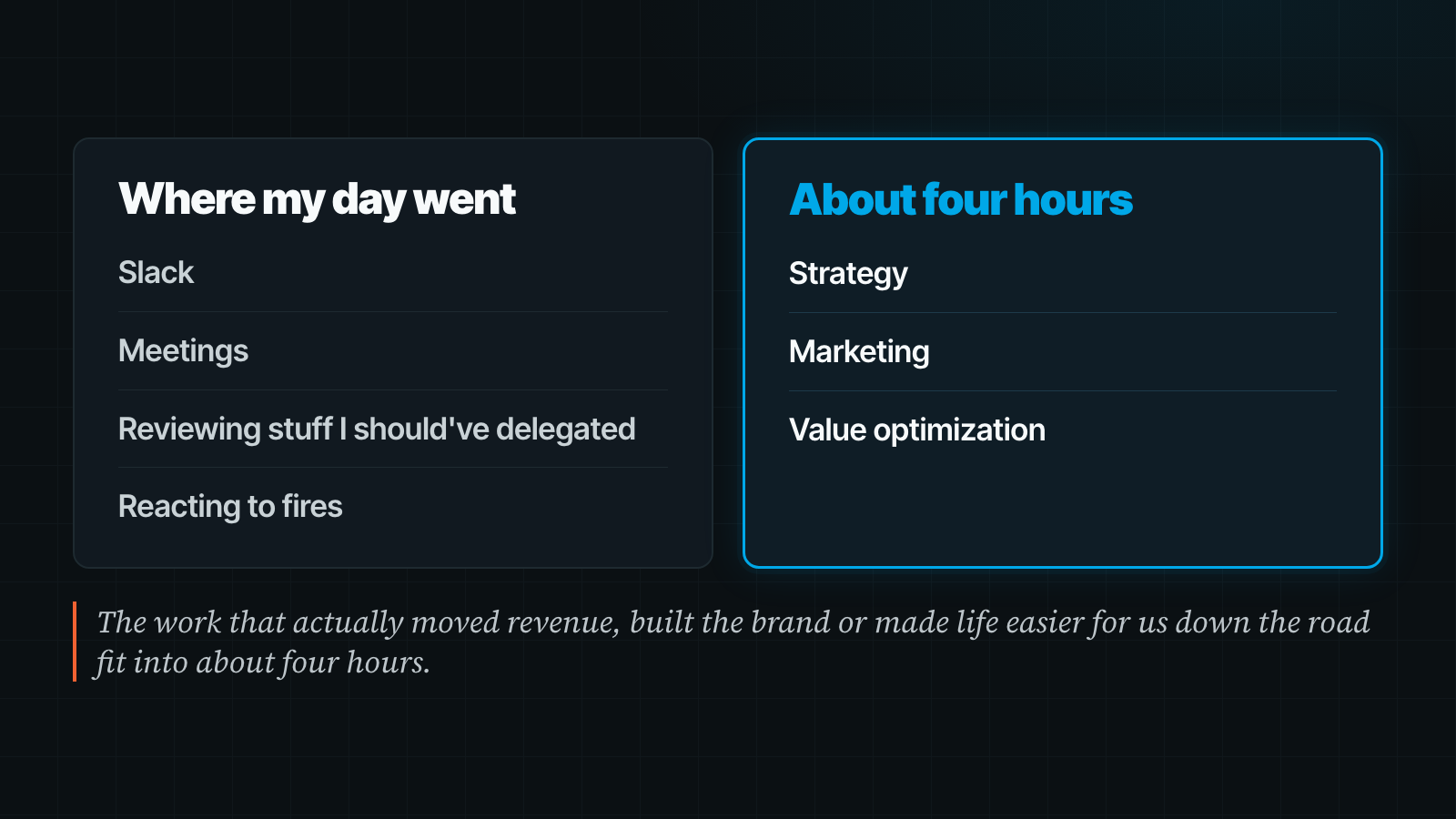
When I tracked my own hours, a whole lot of my day went to Slack and meetings. I was reviewing stuff I should've delegated and reacting to fires that looked pretty harmless once I got into them. The work that actually moved revenue, built the brand or made life easier for us down the road fit into about four hours.
I spent those hours on strategy, marketing and what I call value optimization. In plain English, how do we sell our premium offers more often? How do we take good enough care of the customers we already have that they stay longer and send their friends?
In my Yield Leverage Matrix, that's the Freedom Zone. Take the highest-value 20% of the work you do. Now look inside that group.
Which 20% of those activities gets the biggest return on your time? That's the 20% of the 20% I'm trying to get back to when I hand something off.
I walked through my actual day in The 4-Hour Workday.
Once you can name the work you want those hours for, it gets a lot easier to pick a job to give somebody else. Sometimes that somebody can be an AI agent.
Give your agent a job it can start without you
I got dragged into coordinating a live product launch, literally the job I'm the worst at. My first reaction was, “I ain't the one you want herding cats.”
I explained the situation to my dude Ron, my Grok Bot CEO. His take? “You don't have any business managing tasks.” Fair enough.
My agents got the launch onto one page by funnel step, with an hourly sync and a daily update. I could see where things stood without hunting anybody down.
Field Report: The Most Productive Two Weeks I've Had (and What It Really Cost)
My daily digest shows me what's been done since the last update, which milestones are coming up, who owns them and who's late. If somebody's behind, my agent brings me a Slack nudge and asks if I want it sent.
I can read the message, see why we're sending it and make the call. I still review anything an agent wants to send or publish on my behalf.
Learned that one the hard way.
The part I especially like is that the digest is there at the start of my day. If I had to remember to ask who was late, then go look up what they owed me so I could tell the agent what to write, guess who'd still be managing tasks?
Your version could look completely different. These next few are suggestions. I don't run them myself.
Maybe opening your inbox makes you want to pull your hair out. You could have an agent sort out what needs a reply, what needs a decision from you and what you can ignore.
For the ones that need replies, have it draft them. When you open the inbox you can go straight to the messages that need a little thought, with something there to edit.
Or take meeting prep. What do you generally go looking for right before a meeting? Have the meeting on your calendar kick off the job, and ask the agent to put the information you need in a note the night before.
If follow-up is the part you dread, the follow-up date could be what gets the agent going. Have it pull up the last conversation and draft a nudge that waits for your yes.
You'll probably recognize your own version of this as soon as you start describing your day. Which is why I like having the agent ask the questions.
Let your agent interview you
Give yourself about an hour for this. There are four steps, and you can do them in Claude, ChatGPT or whatever agent you already work with.
1. Give it the assessments you've found useful. Kolbe, StrengthsFinder, whatever you've taken that helped you understand how you work. Mine all say basically the same thing.
I'm off the charts on ideation and strategy. When it comes to execution and details, I'm in the basement. So yeah, Ron knows who he's dealing with.
If you've never taken one, you can go straight to the interview.
2. Walk it through an actual workday. Pick a recent one so you can remember what happened. Give yourself room to talk about what you enjoyed, too.
If all the agent hears about is the stuff that drives you crazy, it can clear time on your calendar and still have no clue what you wanted that time for.
Workday interview prompt
Help me decide what work to hand off first. Start by asking me for any assessments I've taken that I found useful, and what rings true for me in the results. If I don't have any, go straight to the interview.

Interview me one question at a time. Wait for my answer before moving on. Walk me through a recent workday so we can see where my hours actually went. Ask what I enjoyed, what I hated, where I got stuck, and what I'd change about the day if I could.

For the jobs that keep coming up, ask how often I do them, roughly how long they take, what I think those hours are worth, and what I would do with the time if I got it back. Help me estimate where you can. Don't invent facts or numbers. Ask me when something is unclear.

At the end, show me where my time goes and recommend one job I could hand off. Explain why you picked it and ask me if you got it right. Keep this in our conversation. Don't send, post, or email anything to anyone.
3. Figure out how to hand off that one job. Talk it through in the order it happens.
How does somebody know it's time to start? Where's the information they need?
Where do you want the finished work to land? Which part still needs your say-so?
Maybe all you need is that note waiting for you before tomorrow's meeting. Maybe as you're talking it through, it becomes pretty clear you'd like to hire a person for this one.
Great. You just described what that person needs to do. Have the agent help you write up the role.
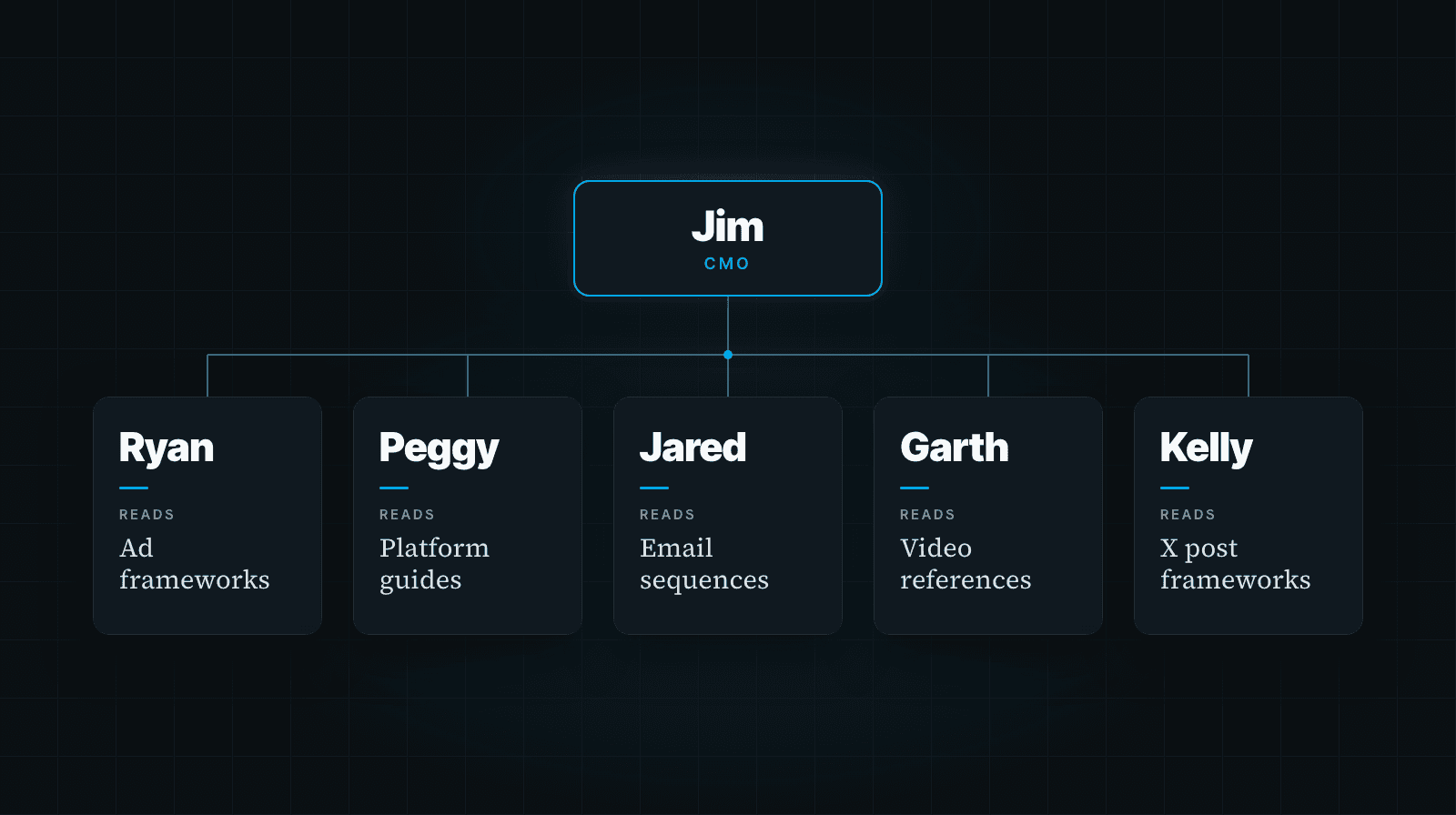
4. Put what you learned in your USER.md file. I think it's the most underrated file in my whole setup.
While the conversation's fresh, have the agent pull out the things that would help it work with you again tomorrow. What do you do well? Where do you get stuck?
When you ask for help with a decision, what would you like to have in front of you?
Mine is seven bullets. That's it. It lives in Obsidian.
Grok Bot, Hermes and Claude all reference the same file. Every agent on every platform knows how I work before I say a word.
USER.md starter
- My strengths are [work I do well and what I'm good at doing within it].
- I need help with [weak spots and details I tend to miss].
- Keep me out of [recurring work that drains me or pulls me away].
- Help me stay focused on [work where my time makes the biggest difference].
- When I need to make a decision, bring me [the context, options, or recommendation I want to see].
- You can handle [work you may do on your own]. Get my approval before [actions I want to review first].
Read it back and see if an assistant could actually do something with it. “Help me stay organized” leaves quite a bit to the imagination. If what you needed this morning was the owner's name and the due date so you could decide whether to send a nudge, put that in the file.
If you're using regular ChatGPT or Claude, you can use the same notes without creating a file. In ChatGPT, paste the notes you'd want handy in any chat into Custom Instructions. In Claude, look for Instructions for Claude in your settings.
If the bit about the owner's name and the due date only matters for one client, put that line in the instructions on a ChatGPT Project or in your Claude project instructions. It'll apply only to chats in that project.
If you're using Claude Code, those notes can go in CLAUDE.md.
Your USER.md tells the agent how to work with you. It also needs the facts about your business.
Who's the customer? What do you offer them?
If the agent's drafting something a customer will read, what can it say on your behalf, and what do you sound like when you say it? That's what the Business Brain gives it.
A chief of staff is only as good as the files it reads.
I never mowed that lawn again. My neighbor was happy to do it, and I had somewhere else I wanted to be.
If you can finish that interview and name one job you'd gladly give away and one thing you'd love to do with the hours, you've got enough to get started.
Until next time,

—Tim Erway

P.S. Tell the agent about the little job you almost skipped over because it felt too small to mention. Mowing the lawn looked pretty small from my kitchen table, too.
If you'd like to see how I worked out which hours were worth getting back, I put the numbers in The 4-Hour Workday.