How to Build a Content Flywheel That Turns Your Ideas Into Readers and Buyers
One useful letter, several worthwhile posts, and a system that gets easier to run. Here's how the pieces fit.
The question I want my content system to answer is pretty simple.
What happens after I hit publish?
If the answer is “start over and figure out what to post tomorrow,” I've still got a job that needs feeding every day.
It might be a faster job with AI. I might have prettier graphics. But I'm still responsible for coming up with the next idea, explaining it again, turning it into something for each platform, and hoping some of it leads somewhere.
That's a lot of work to have so little carry over.
What I want is for the thinking I do once to keep helping the business. A useful letter becomes several useful posts. Those posts bring new people into the conversation. The questions they ask help shape the next letter. And the people who need more help can see how my work connects to what they want.
That's the content flywheel we're going to build today, at least on paper.
I'll walk you through the pieces, how I choose the writing framework, and how one idea can become a week's worth of content without sounding like the same damn post on repeat.
And if you've been following the workshop I've mentioned in the last two letters, it's happening. I'll give you the details at the end. First, I want you to understand what we're actually setting up.
The letter is where you do the thinking once.
I like starting with a long-form piece because it makes me work out what I actually mean.
A short post can get away with a strong opinion and a good opening. A useful letter needs more. I have to explain the opinion, support it, show an example, and give you something you can use.
That work produces more than an email.
It gives me a clear argument, examples, possible objections, useful distinctions, and a few different ways to explain the same idea. That's a much better starting point for social content than asking an agent for thirty random posts about my industry.
I've already shown you how I create a newsletter through a conversation with a specialist. Talk through the idea, choose the hook, approve the outline, draft it, and smack it around until it sounds like me.
I still do that.
But the conversation needs a destination. Otherwise you're having a very productive chat that ends in a folder full of content nobody needs.
Start with a question the people you want to help are already asking. Pick one that connects to work you actually do or something you sell.
For an example we'll use throughout this letter, imagine a consultant who helps established businesses improve their sales process.
Their clients keep asking why so many proposals go nowhere after an apparently good call.
That's a worthwhile question. It has a commercial consequence, the consultant has a perspective on it, and the answer can show potential clients how they think.
The letter could explain three things to establish before sending a proposal: the result the buyer wants, what is making the decision difficult, and how they'll choose a solution.
That's a hypothetical teaching example, not a client result. But it's specific enough to build an entire content cycle around.
Choose the framework for the decision the reader needs to make.
This is where the writing frameworks matter.
They help me organize the explanation so the reader can follow it. They also keep me from writing the same kind of letter every week, which apparently I need reminding about occasionally.
I went through my long-form frameworks in an earlier issue. Rather than repeat the whole library, let me show you how I'd choose one for our consultant.
Teach the process when the reader needs a better way to do the work.
My Ogilvy Advertorial Method is an education-led structure. Establish the problem, teach the approach, demonstrate it, and connect it to an appropriate next step.
For the proposal example, we'd explain what a sales conversation needs to establish before a proposal makes sense. Then we'd show the questions and what to listen for in the answers.
The reader gets something they can use on their next call. They also get a clearer understanding of what the consultant helps businesses fix.
You don't need to keep the useful part hidden until somebody pays. The teaching is how they judge whether you know what you're talking about.
Explain the whole approach when the reader needs to understand why it's different.
My Clarity Cascade helps organize a step-by-step explanation of a system, along with evidence, objections, and who it fits.
The goal is to teach someone about how your approach works so they can evaluate it before you ask for the sale.
Our consultant might use this when explaining the broader sales process. Why better follow-up alone doesn't fix an unclear buying decision. What needs to happen before the proposal. How the proposal connects to the decision. When follow-up helps and when it just adds another email to ignore.
Each part makes the approach easier to understand. Any real client evidence would go beside the specific point it supports, not in a giant pile of testimonials disconnected from the lesson.
Show the patterns when the reader doesn't recognize the problem yet.
The Pattern Recognition Protocol teaches someone to notice what they've been missing.
The consultant could write about warning signs that a prospect isn't ready for a proposal: no clear outcome, no agreement about who decides, or no reason to change what's happening now.
For each pattern, explain what it looks like, why it matters, and what to do when you see it.
Someone reading should be able to look at a real conversation differently afterward. That's a useful demonstration of expertise.
Use a real story when the lesson depends on what happened.
The Expert Journey structure works when you have a genuine experience that explains how your thinking changed.
For our consultant, that would mean an actual deal or a recurring problem they encountered, what they initially misunderstood, what they changed, and what happened afterward.
If they don't have that story, we don't invent one. We pick another structure.
A framework doesn't authorize your agent to give you a dramatic past. It helps organize the experience you actually have.
Same area of expertise. Different reader needs. Different structures.
That choice changes what the letter teaches and gives you different material to use elsewhere. You can cover the same business problem over time without publishing a lightly disguised version of last week's issue.
Build the posts from the ideas, not from chopped-up paragraphs.
Once the letter is useful on its own, there's plenty to work with.
Our consultant's proposal letter could produce several distinct posts:
A diagnostic post: three things to check when proposals keep going quiet. The reader can review their pipeline against it.
A practical example: a vague answer to “what are you trying to achieve?” alongside a more useful answer, with an explanation of what the seller still needs to clarify.
An opinion: why sending the proposal faster doesn't help when the buying decision is still unclear.
A short checklist: what to confirm before promising to send anything.
Each delivers a complete small lesson. None requires the reader to have seen the others.
Then adapt the treatment to where it's going. A conversational Facebook post, a LinkedIn explanation for people managing a sales team, and a visual checklist can share the same thinking without sharing the same opening or layout.
The graphics should make the point easier to understand. The post shouldn't need a picture of a glowing robot just because AI helped write it.
You don't have to publish every possible variation. Pick the ones worth reading and the platforms where your buyers spend time.
I've written about turning one newsletter into more content before. The part worth carrying forward is that each piece needs its own reason to exist. A paragraph removed from a longer explanation often loses the context that made it useful.
The leverage comes from reusing the thinking while doing a proper job of explaining it in each format.
A post can point to the full letter when there's a clear reason to go deeper. “Read the full walkthrough with the questions and examples” gives someone a better reason to click than “new newsletter out now.”
Give new readers a next step, and listen to what comes back.
Now the pieces start working together.
Someone sees the consultant's diagnostic post. It describes a problem they're dealing with. They read the full letter, find the explanation useful, and choose to subscribe.
The next letter helps them with a related problem. Over time, they see how the consultant thinks and whether the approach fits their business.
When there's a relevant offer, the invitation makes sense.
Some people will buy quickly. Some will read for months. Others will use the free advice and never become customers. That's normal.
But the replies matter too.
If several readers say, “Our prospects know what they want, but getting agreement from the other decision-makers kills everything,” that's a candidate for the next letter.
Now the conversation is helping you find the next subject. You can add a real answer to the questions people are actually asking instead of padding out a calendar because a spreadsheet says it's Thought Leadership Thursday.
One question → a useful letter → several platform-specific posts → new readers → questions and relevant offers → the next useful letter.
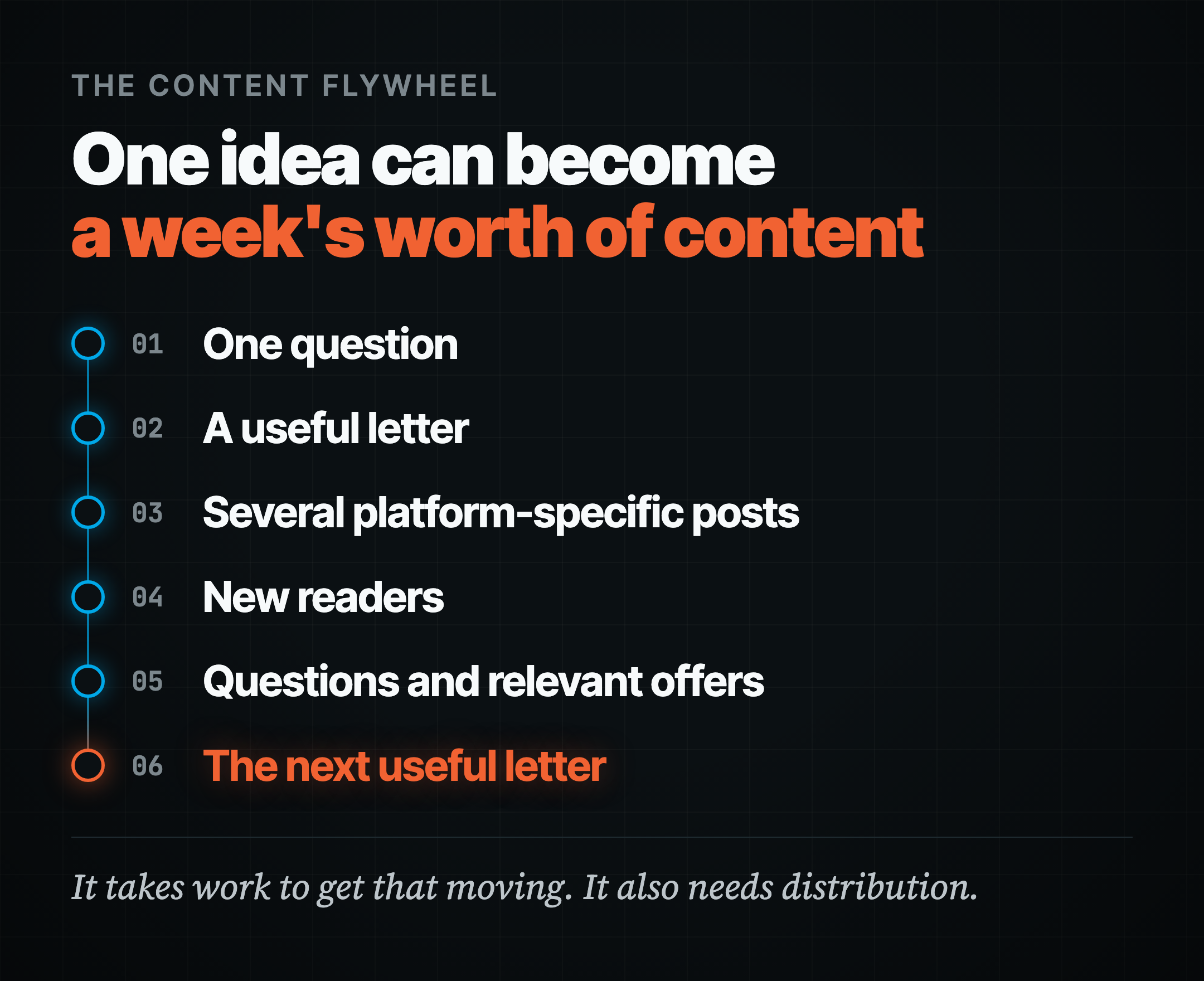
It takes work to get that moving. It also needs distribution. Your newsletter won't magically find new people because you wrote it beautifully, and not every post will travel.
The benefit is that the work starts carrying forward. You have published explanations you can link to again, examples you can improve, and a better understanding of what your audience responds to.
Look for evidence of attention and evidence of buying separately.
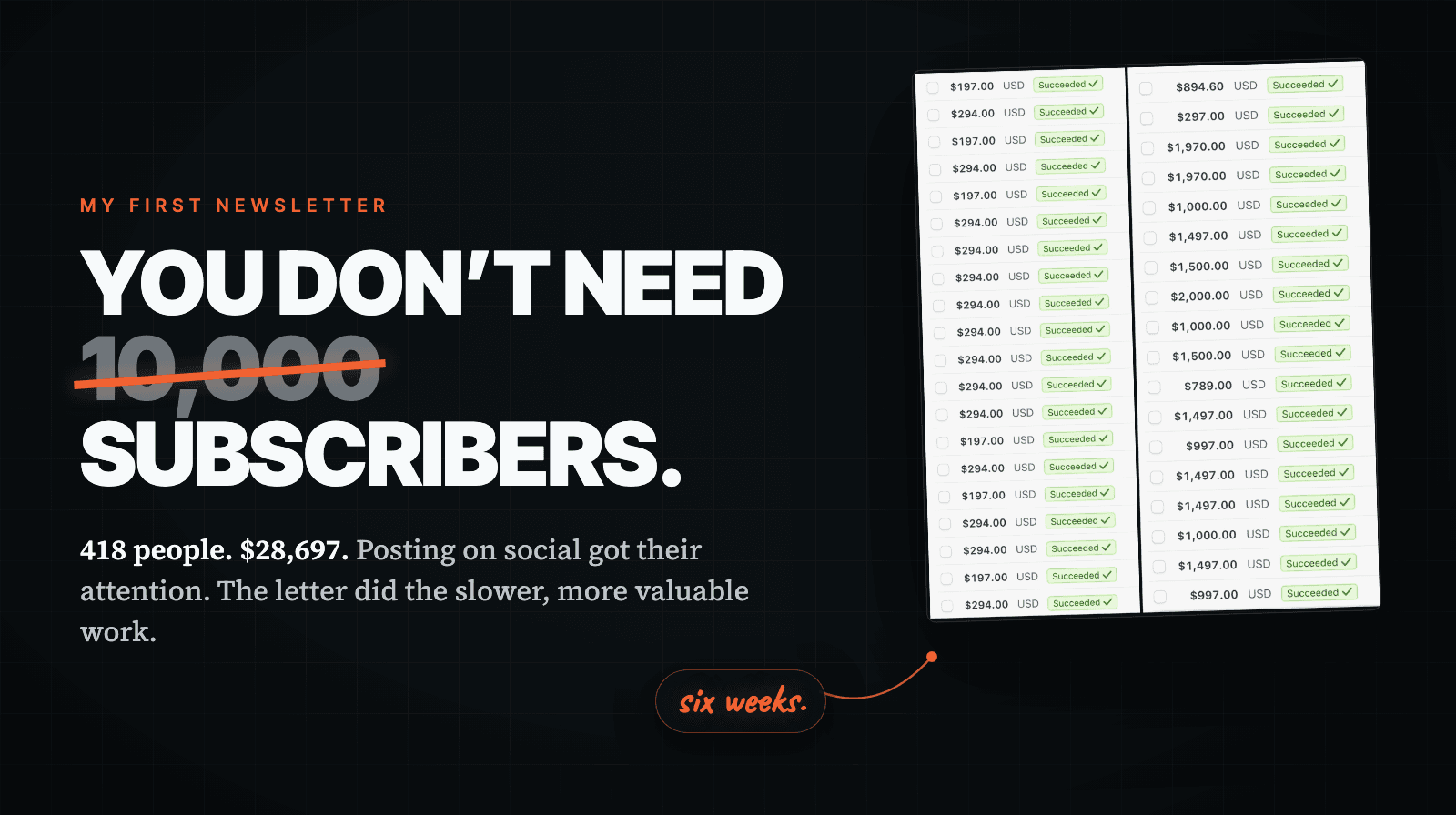
When I started this letter, I reached 418 subscribers and generated $28,697 in revenue over six weeks. I shared that result in the issue about building a newsletter that pre-sells your offers.
That was a result from a particular stretch of time, not what I'm promising a content system will earn for you.
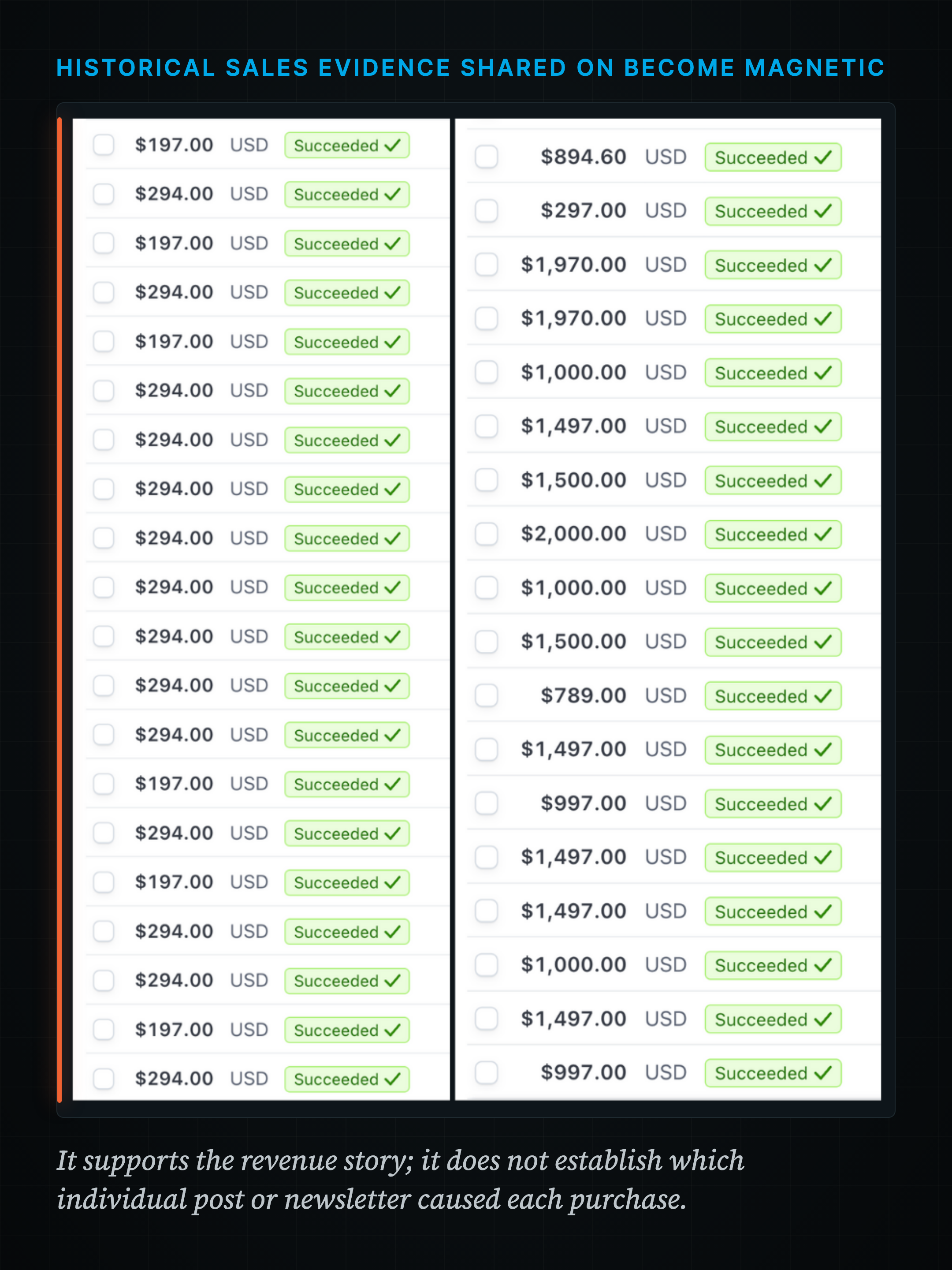
I'm interested in the whole path: what got attention, who clicked, who subscribed, and what people eventually bought.
Those aren't interchangeable numbers.
Here's an actual Facebook post shown on my Become Magnetic page. It's the comparison between me on a Tuesday morning and how my content looks to the world. The capture shows 144 comments and one share.
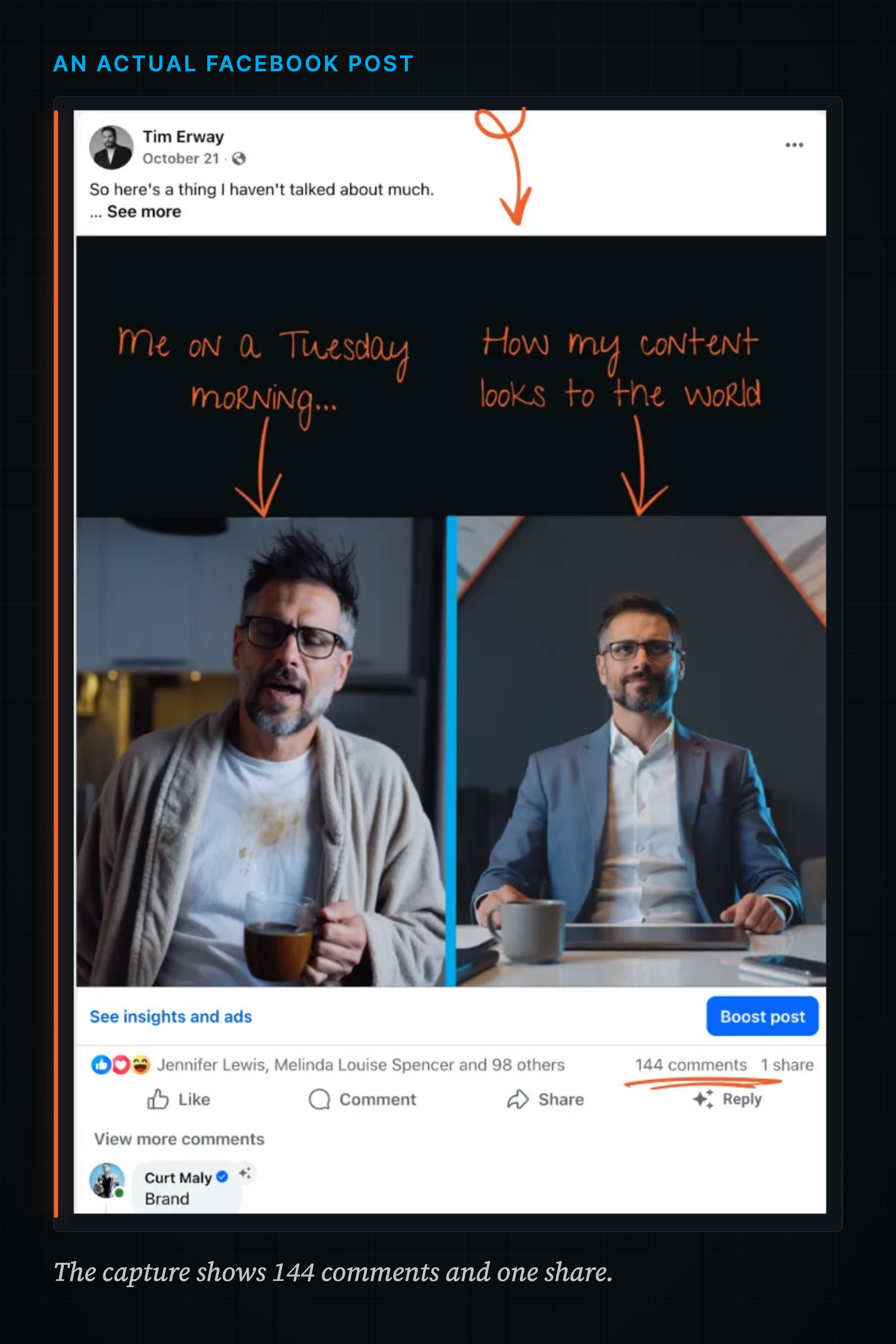
That's evidence that people responded to that particular post. It isn't 144 buyers, and I'm not going to pretend it is.
For your own flywheel, look for the stage that needs attention. If the posts get seen but nobody clicks, check whether the full piece offers a worthwhile next step. If readers subscribe but stop opening, look at the subjects and what the letters deliver. If the content gets praise but never attracts anyone who needs your work, look at the connection between the subjects and the offer.
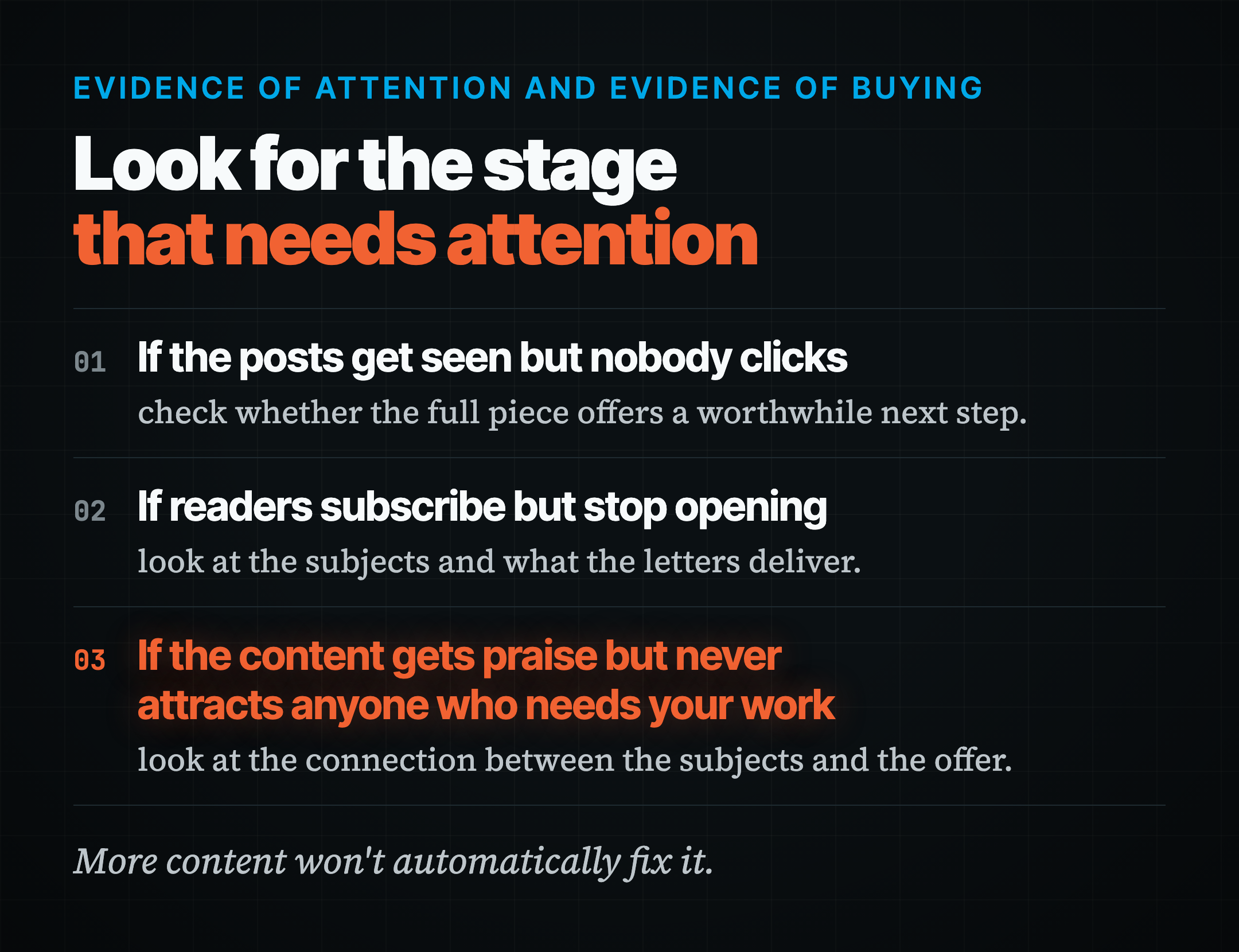
You can have a successful business already and still find a weak connection in that chain. More content won't automatically fix it.
Give the specialists a shared understanding of the business.
There's some setup behind the conversation.
The writer needs to know who you're helping, what you sell, how you talk, what you believe, and which stories and evidence it can actually use.
The social specialist needs that same context. So does the person or agent creating your graphics.
Otherwise you're repeatedly explaining the same business to different assistants, then fixing the places where they guessed.
I keep that context in files: my business brain. The writing system reads it before drafting. The creative system uses the visual guidance so the graphics belong to the same business as the words.
This week I found fake product examples in my email specialist's reference material, despite having actual promotions I'd run sitting elsewhere. So we replaced the synthetic examples with the real campaigns.
That matters. If you want an agent to learn how you sell, show it your actual selling. If you want it to sound like you, give it work you genuinely like, not a voice guide somebody wrote based on what a marketer is supposed to sound like.
You don't need a giant archive to begin. You need enough honest context to stop the agent filling the gaps with somebody else's business.
Then you can improve it as you work. Keep the corrections that matter, add examples you approve, and give the next piece a better starting point.
Set up one complete cycle before you add more platforms.
If you want to try the approach yourself, keep the first run manageable.
Pick one question your buyers care about. Give your specialist the relevant business context and your answer. Choose the framework that fits the lesson. Approve an outline, draft the letter, and edit it.
Then ask for three distinct social angles from that letter, each with a useful point of its own. Choose one platform to start with, and give interested people a clear route to the full piece and the option to subscribe.
Publish only after you've checked it. Watch what people do and ask. Use that information to plan the next issue.
That's a complete cycle. You can add platforms and more creative once you know where the work fits into your week.
You don't have to figure it all out from scratch, though. The workshop I've been talking about is now ready to join.
We're building your content flywheel together.
On Thursday, October 22, at 5 PM Eastern, I'm running a three-hour Content Flywheel Workshop.
We'll set up the system together and create your first content live: your newsletter draft and social posts built from it.
You'll get the three systems we're using:
Business Brain: the files that give your AI your audience, offers, voice, stories, and business context.
Content OS: the writing frameworks and workflows for the letter and platform-specific social content.
Creative OS: the system for producing graphics in your brand, with the words composed separately so a headline change doesn't mean generating the whole image again.
You'll also get all of my long-form and social content frameworks, including how to choose the right one for the idea in front of you.
The point is to put your business into a system you can keep using. You still bring the experience, check the work, and approve what goes out under your name.
The approach isn't tied to one AI brand. You can use the business context and methods with Claude, ChatGPT, Hermes, or Grok; the setup depends on the agent or app you're using. We'll work through the setup together rather than assume every chat app installs things the same way.
It's a working session, not three hours of me telling you that content is important. If you can't attend live, the recording is included.
The page has the price and everything you need to decide.
Until next time,
—Tim Erway

P.S. Bring a real offer, a question your buyers keep asking, and a few examples of your writing you actually like. That gives us something useful to build around. You don't need a polished idea before we start.